
Singapore has one of Southeast Asia’s most advanced retail technology markets. Supermarkets, convenience stores, specialist retailers and food businesses use local and regional software for point of sale, payments, inventory, self-checkout, loyalty, ERP and omnichannel operations.
Five companies stand out for a real Singapore base, clear retail technology capability and current market relevance: EPOS, Qashier, Edgeworks Solutions, HashMicro and MEGAPOS.
They solve different problems. EPOS and Edgeworks have deep local POS experience. Qashier combines POS, payments and loyalty across Southeast Asia. HashMicro targets larger businesses with ERP and retail operations software. MEGAPOS focuses on POS, inventory, kiosks, CRM and payment integration.
: Singapore supports a genuine Top 5 retail technology ranking without using generic software firms. EPOS has the longest specialist local POS track record in this shortlist. Qashier has the strongest regional payments-led growth profile. Edgeworks combines POS with omnichannel and self-checkout. HashMicro brings enterprise ERP depth. MEGAPOS provides a broad store-operations stack for retail and F&B.
Top retail technology companies in Singapore
| Company | Singapore base | Main retail technology | Scale indicator |
|---|---|---|---|
| EPOS | Singapore | POS, inventory, payments, CRM, e-commerce | 6,000+ Singapore businesses; 17+ years’ experience |
| Qashier | Singapore | POS, payments, loyalty, online ordering | 25,000+ businesses across four Southeast Asian markets |
| Edgeworks Solutions | Singapore | POS, self-checkout, inventory, omnichannel | 19 years; 3,000+ businesses; 30 staff |
| HashMicro | Singapore | ERP, retail POS, inventory, procurement, CRM | 600+ people across the wider group |
| MEGAPOS | Singapore | POS, CRM, inventory, kiosks and payments | Multi-industry Singapore platform |
Why Singapore is a strong retail technology market
Singapore combines dense urban retail, high digital payment use, strong government support for business digitalisation and consumers who expect fast, convenient shopping.
That creates demand for technology that can reduce queues, improve stock accuracy and connect stores with online channels.
The country is also a testing ground for more advanced supermarket technology.
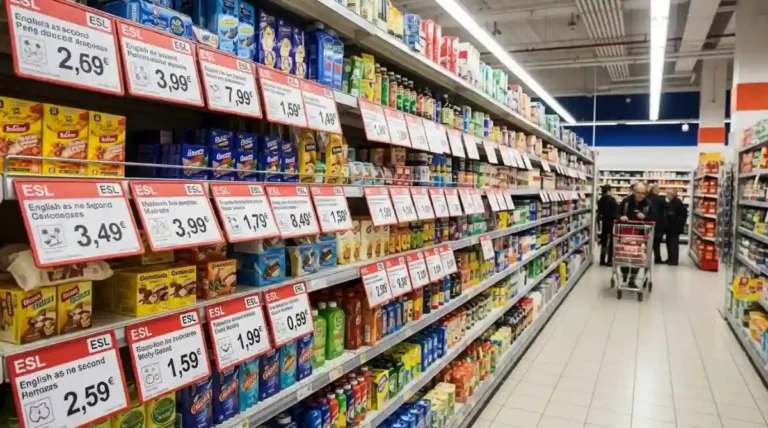
FairPrice Group, for example, is expanding smart carts, digital price cards, AI-assisted store tools and hybrid physical-digital shopping across dozens of outlets during 2026.
The retailer says more than 1,300 smart carts will be rolled out across 48 FairPrice Xtra and Finest stores by the end of 2026.
That kind of investment pushes technology expectations higher across the whole market.
How we selected the five companies
We focused on companies that directly support retail operations.
To qualify, each business needed:
- a real Singapore office or headquarters;
- POS, retail ERP, self-checkout, payments or inventory capability;
- current products in 2026;
- evidence of retail customers or store-focused solutions;
- enough public information to verify the business.
General IT consultancies were excluded if retail was only one small part of their work.
1. EPOS
EPOS is one of Singapore’s longest-running local point-of-sale specialists.
The company was established in 2009 and has spent more than 17 years building software and support services for Singapore retailers and SMEs.
Head office
EPOS is based at 2 Leng Kee Road, Singapore.
The company describes itself as a home-grown Singapore POS provider.
How large is EPOS?
EPOS says more than 6,000 Singapore SMEs and other businesses use its systems.
It also reports more than 3,000 five-star Google reviews and provides 24/7 local support.
These figures are useful because service and support are major parts of POS technology. A retailer does not only buy software. It buys the ability to keep trading when the till system has a problem.
What does EPOS provide?
Its retail technology includes:
- point of sale;
- inventory management;
- customer management;
- loyalty;
- multi-outlet control;
- accounting integration;
- e-commerce integration;
- payment acceptance;
- reporting;
- data analytics.
EPOS also offers retail systems tailored to minimarts and other store formats.
Self-checkout and automation
Singapore retailers are under pressure to manage labour efficiently.
EPOS has developed automated retail tools, while the wider Singapore market is encouraging self-checkout and digitalisation through government support schemes.
The business works within Singapore’s Productivity Solutions Grant ecosystem, helping SMEs adopt pre-approved technology.
Revenue and valuation
EPOS is privately held and does not publish current annual revenue or a public company valuation.
We therefore do not estimate either figure.
Market share
There is no independently audited percentage share for EPOS in Singapore’s POS market.
The company’s claim to leadership is supported by a large installed SME base, but this article does not turn that into an invented market-share number.
Why EPOS matters to grocery retail
Its strength is local market fit.
Singapore minimarts and smaller food retailers often need:
- barcode scanning;
- inventory;
- multiple outlets;
- PayNow;
- customer loyalty;
- local tax handling;
- support outside office hours.
EPOS builds directly around that operating environment.
2. Qashier
Qashier is one of Singapore’s fastest-growing retail technology and payments companies.
It was founded in 2019 by Christopher Choo and Franklin Zhao.
Head office and markets
Qashier is headquartered at Toa Payoh North in Singapore.
The company operates across:
- Singapore;
- Malaysia;
- Thailand;
- the Philippines.
It says more than 25,000 businesses across Southeast Asia use its platform.
What does Qashier provide?
Qashier combines several merchant functions in one system:
- POS;
- payments;
- inventory;
- loyalty;
- online ordering;
- e-commerce;
- customer data;
- reporting;
- multi-outlet control;
- business financing.
The company’s argument is that retailers should not need separate systems for every part of the customer journey.
Payments
Qashier is a Major Payment Institution licensed by the Monetary Authority of Singapore.
That gives the company a stronger payments position than a software-only POS vendor.
Its retail POS supports cards, PayNow, Apple Pay, Google Pay and other local payment methods.
2026 financial milestone
In June 2026, Qashier announced that it had reached profitability and was processing around US$1 billion in annual payment volume.
The company also raised US$6.125 million to support regional expansion.
That is not the same as annual revenue, and GTN does not present payment volume as revenue.
Employees
Public professional data places Qashier in the 51-200 employee range.
Because the company’s own website does not publish a precise current employee total, we do not claim an exact figure.
Valuation
Qashier is privately held.
A current company valuation is not publicly disclosed.
Why Qashier matters to retailers
Its strongest point is the connection between checkout and customer data.
Instead of ending the transaction at payment, Qashier links POS, loyalty and customer recognition.
That can help retailers understand repeat purchase, rewards and customer frequency.
3. Edgeworks Solutions
Edgeworks Solutions is another long-established Singapore retail technology specialist.
The company has operated for 19 years and is headquartered in Singapore.
Head office and employees
Edgeworks is based at 2 Kallang Avenue.
The company says it has around 30 staff across its Singapore and Indonesia offices.
It also reports more than 3,000 businesses powered by its solutions.
What is EQuipPOS?
EQuipPOS is Edgeworks’ main retail point-of-sale platform.
It includes:
- sales;
- inventory;
- multi-outlet control;
- loyalty;
- e-commerce integration;
- accounting integration;
- reporting;
- customer management.
Self-checkout
Edgeworks has a strong current position in self-checkout.
Its EQuipPOS self-checkout solution is pre-approved under Singapore’s SMEs Go Digital programme.
The company also offers RFID self-checkout for retail environments.
Omnichannel technology
Modern retailers need online and physical stock to remain synchronised.
Edgeworks supports integrations with:
- Shopify;
- WooCommerce;
- Magento;
- PrestaShop;
- OpenCart.
This allows inventory and orders to flow between channels.
Revenue and valuation
Edgeworks is privately held and does not publish current annual revenue or a company valuation.
Market share
No independent percentage share of Singapore’s POS market is public.
Why Edgeworks matters
Its strength is operational depth for growing retailers.
The company has enough local history to understand Singapore retail requirements while also offering more complex omnichannel and self-checkout capabilities.
4. HashMicro
HashMicro was founded in Singapore in 2015.
It is broader than a conventional POS company.
The company develops ERP and business software covering finance, inventory, procurement, CRM, HR, manufacturing and retail operations.
Head office and regional offices
HashMicro’s Singapore office is at Cecil Street.
The company also operates offices in:
- Indonesia;
- Malaysia;
- the Philippines;
- Thailand;
- Australia.
Employees
HashMicro says more than 600 people work across the wider group.
Professional databases place the company in the 501-1,000 employee range.
What does HashMicro provide to retailers?
Its retail systems can combine:
- point of sale;
- inventory;
- warehouse management;
- purchasing;
- accounting;
- CRM;
- loyalty;
- branch management;
- demand planning;
- reporting;
- ERP.
This makes HashMicro more suitable for larger or operationally complex businesses than a simple single-store POS.
AI and automation
HashMicro is increasingly positioning its software around AI-assisted business operations.
Its approach is to use operational data across the ERP rather than treat AI as a separate standalone tool.
Revenue and valuation
HashMicro is privately held.
Current annual revenue and a formal public valuation are not disclosed.
Market share
No audited share of Singapore’s retail ERP market is available.
Why HashMicro matters to supermarkets
Large retailers need more than checkout.
They need purchasing, warehouse management, stock planning, finance and store operations to use consistent data.
HashMicro’s advantage is its ability to connect those processes within a wider ERP environment.
5. MEGAPOS
MEGAPOS is a Singapore-based POS provider serving retail, foodservice, beauty and service businesses.
Its office is at SBF Center on Robinson Road.
What does MEGAPOS provide?
Its retail platform includes:
- POS;
- inventory management;
- barcode functions;
- customer database;
- membership and loyalty;
- cashless payments;
- multi-outlet management;
- online store integration;
- reporting;
- accounting integration.
Offline operation
MEGAPOS highlights offline operation as part of its retail POS design.
This matters because a store cannot simply stop trading every time an internet connection fails.
Self-ordering and kiosk technology
The company also offers:
- self-ordering kiosks;
- hybrid POS and kiosk terminals;
- QR ordering;
- kitchen management;
- integrated payments.
These products are more relevant to F&B than supermarkets, but the underlying store technology overlaps with retail operations.
Revenue, employees and valuation
MEGAPOS does not publish current annual revenue, employee numbers or a company valuation on the official pages reviewed.
GTN therefore leaves those figures as not publicly disclosed.
Market share
No independently verified Singapore market-share figure is public.
Why MEGAPOS matters
The company offers a practical mid-market option.
Retailers that need inventory, payments and multi-outlet management may not require a full enterprise ERP.
MEGAPOS sits between simple cash-register software and more complex enterprise platforms.
How do Singapore’s retail technology companies compare?
| Company | Best fit | Main advantage |
|---|---|---|
| EPOS | Singapore SMEs and local chains | Long local track record and support |
| Qashier | Fast-growing retail and F&B businesses | POS, payments and loyalty in one platform |
| Edgeworks | Multi-outlet and omnichannel retailers | Self-checkout and operational integrations |
| HashMicro | Mid-sized and larger enterprises | ERP depth and cross-department integration |
| MEGAPOS | SMEs and multi-outlet businesses | Broad practical POS stack |
What should supermarkets check before choosing retail technology?
Start with the operational problem.
- Checkout speed: how quickly can staff process a normal basket?
- Offline resilience: can the store continue selling during outages?
- Inventory: does stock update in real time?
- Multiple stores: can head office control pricing and products centrally?
- Payments: does the platform support local methods?
- Loyalty: can customer rewards work across store and online?
- E-commerce: is stock synchronised?
- Reporting: can managers see useful data without manual spreadsheets?
- Support: who answers when the system fails during peak trading?
- Integration: can POS connect to accounting, ERP and delivery platforms?
Why Singapore supermarkets are moving faster on AI
FairPrice’s Store of Tomorrow programme shows the direction of travel.
Current projects include:
- smart shopping carts;
- digital price cards;
- AI-powered staff tools;
- in-store navigation;
- personalised offers;
- hybrid physical and online shopping.
The key change is that AI is being moved into actual store operations rather than remaining a head-office experiment.
GTN’s AI demand forecasting platform comparison shows how another layer of retail technology is developing around stock planning and demand prediction.
Self-checkout in Singapore
Self-checkout is already common across supermarkets and larger retailers.
Singapore’s Enterprise Development Grant and SMEs Go Digital programmes continue to support eligible businesses adopting self-checkout technology.
The business case normally focuses on:
- queue reduction;
- labour productivity;
- customer control;
- extended checkout capacity;
- smaller front-end footprints.
But retailers also need to manage shrink, age checks, produce lookup and exception handling.
Smart carts
Smart carts move checkout into the trolley.
FairPrice says its trials reduced checkout time to an average of 36 seconds.
The carts can provide:
- product scanning;
- in-store navigation;
- personalised promotions;
- basket-based recommendations;
- scan-and-pay checkout.
The technology is impressive, but retailers still need to prove that the hardware is robust, the customer uses it and the economics work across hundreds of stores.
Electronic price cards
Digital price cards reduce the manual work involved in printing and changing promotional labels.
FairPrice estimates its rollout can save around 15,000 staff hours and S$138,000 annually in printing and replacement work.
Electronic shelf labels are a wider category than digital price cards alone. Our electronic shelf label companies guide compares the main international suppliers.
POS versus ERP
A POS system manages the transaction at the till.
An ERP manages broader business processes such as:
- purchasing;
- finance;
- warehouse;
- inventory;
- supplier management;
- reporting.
EPOS, Qashier, Edgeworks and MEGAPOS are more POS-led.
HashMicro is more ERP-led.
Large retailers may combine both types of technology.
Which company is the largest?
There is no clean revenue ranking because most of these companies are private and do not disclose annual sales.
HashMicro has the largest disclosed workforce, with more than 600 people across the wider group.
Qashier has the largest disclosed merchant base in this comparison, with more than 25,000 businesses across Southeast Asia.
EPOS reports more than 6,000 Singapore customers.
Which company has the longest history?
EPOS dates to 2009.
Edgeworks reports 19 years of operating experience, placing its origins around 2007.
HashMicro was founded in 2015 and Qashier in 2019.
Which company is strongest in payments?
Qashier has the strongest dedicated regulated payments position in this shortlist because it holds a Major Payment Institution licence from the Monetary Authority of Singapore.
Other POS providers also integrate with Singapore payment methods.
Which company is strongest for self-checkout?
Edgeworks has a particularly strong current self-checkout proposition, including a government pre-approved EQuipPOS solution and RFID self-checkout technology.
EPOS and MEGAPOS also provide automation and kiosk tools.
Which company is strongest for ERP?
HashMicro is the most ERP-focused company in this list.
Its software covers procurement, inventory, finance, CRM and other business processes beyond store checkout.
Which company is best for small retailers?
EPOS, Qashier, Edgeworks and MEGAPOS all target SMEs.
The best fit depends on whether the retailer prioritises local support, payments, omnichannel integration or low-complexity deployment.
What does a grocery retailer need from inventory technology?
Grocery inventory is harder than many other retail categories because products can expire.
The system needs to support:
- real-time stock;
- purchase orders;
- goods receiving;
- transfers;
- returns;
- wastage;
- expiry control;
- promotions;
- multiple units of measure.
Weak inventory data leads directly to out-of-stocks and waste.
Why omnichannel matters
Customers may shop in-store, online, through delivery apps and via marketplaces.
If each channel keeps separate stock, overselling becomes likely.
A strong retail technology stack should maintain one view of:
- products;
- prices;
- inventory;
- customers;
- orders.
What is changing next in Singapore retail technology?
Five areas are likely to accelerate:
1. AI inside store operations
Staff apps and smart carts are moving AI closer to daily retail work.
2. Payment-linked loyalty
Customer recognition can increasingly happen at payment rather than through a separate card.
3. Unified commerce
Retailers want one view of store, online and marketplace sales.
4. Automated pricing
Digital shelf technology reduces manual label changes.
5. Smarter inventory
Forecasting and real-time stock will become more connected to purchasing decisions.
Singapore’s supermarket market is highly concentrated and technically advanced, so technology suppliers that can prove measurable store results have a strong test market.
Frequently asked questions
Which POS company is based in Singapore?
EPOS, Qashier, Edgeworks, HashMicro and MEGAPOS all maintain Singapore headquarters or significant Singapore operations.
Which company supports the most merchants?
Qashier reports more than 25,000 businesses across Southeast Asia. EPOS reports more than 6,000 Singapore customers.
Is Qashier a payment company?
Yes. Qashier combines POS with regulated payment services and holds a Major Payment Institution licence in Singapore.
Does HashMicro provide POS?
Yes. HashMicro provides retail POS within a wider ERP and business-management ecosystem.
Which companies support multiple outlets?
All five provide multi-outlet or multi-location functionality in some form.
Can these systems work with e-commerce?
Yes. Several platforms connect with web stores, marketplaces or online ordering.
Does Singapore support self-checkout grants?
Eligible businesses can receive support for pre-approved self-checkout technology through government digitalisation schemes.
What payment methods should a Singapore POS support?
At minimum, retailers normally expect cards, PayNow and major digital wallets, depending on customer mix.
Can a small supermarket use enterprise ERP?
It can, but complexity and cost must be justified. A simpler integrated POS may be more practical for a small store network.
What should retailers test before rollout?
Test transaction speed, offline mode, stock accuracy, returns, promotions, payments, support response and real end-of-day closing before deploying across every store.
Editor’s Note: Company scale and product claims were checked against current official sources.