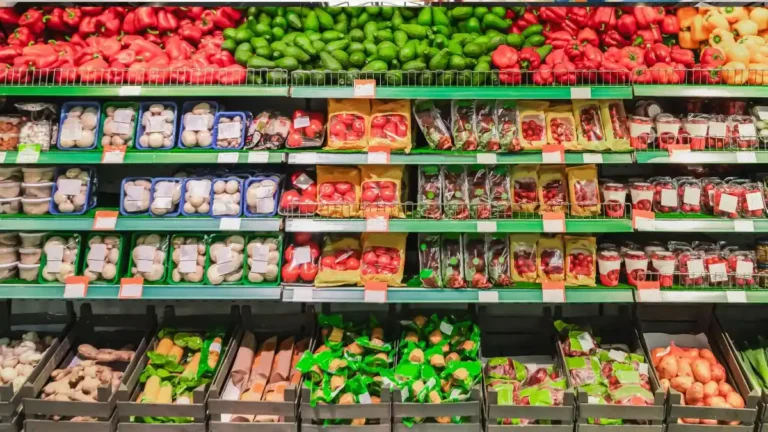

Spain remains Europe’s largest fresh fruit and vegetable supplier by export value, supported by a highly integrated grower-cooperative system.
Production is centred on intensive greenhouses in Almería and Murcia. Large-scale citrus and stone fruit operations sit in Valencia and Aragón.
By 2024, Spain’s horticultural export model had consolidated further. It now has several multi-hundred-million-euro platforms and at least three companies operating above the €1 billion threshold at group level.
This ranking analyses the Top 10 fresh produce companies in Spain using a mixed methodology based on:
- Latest available FY2023–FY2024 turnover
- Export footprint and production volume
- Category dominance
- Strategic innovation and structural relevance
The ranking reflects scale, operational importance, and sector impact entering 2026.
Spain Fresh Produce Sector: Structural Context in 2026
The Spanish horticultural system is built on three pillars:
- Export dependency (over 80% of production in several categories moves cross-border)
- Cooperative aggregation for bargaining power
- Intensive greenhouse efficiency in the southeast
The October 2024 DANA floods in Valencia significantly disrupted citrus and vegetable supply for the 2024–25 season.
Flood damage, infrastructure strain and water management challenges accelerated investment into climate resilience and irrigation modernization across the sector.
At the same time, consolidation has continued. Smaller cooperatives are increasingly integrating into larger commercial platforms to negotiate with European retail groups.
The “super-coop” model has strengthened significantly in the last two campaigns.
Top 10 Fresh Produce Companies in Spain (FY2023–FY2024 Data)
| Company | Approx. Turnover | 2026 Strategic Note |
|---|---|---|
| AM Fresh Group | €1.5bn+ (est.) | Global citrus and genetics leader |
| Anecoop (Group) | €1.12bn | Record cooperative results |
| Unica Group | €676m | Rapid expansion, tropical growth |
| Eurogroup España | €500m+ | Key EU sourcing platform |
| Bollo Natural Fruit | €400m+ | Regenerative agriculture leader |
| Vicasol | €250m+ | Almería greenhouse scale |
| Alhóndiga La Unión | €300m+ | Processed & frozen expansion |
| Nufri | €200m+ | Apple and stone fruit dominance |
| CASI | €200m+ | Europe’s tomato specialist |
| Agroponiente | €170m+ | Logistics-driven export platform |
Figures reflect latest publicly available disclosures or sector consensus for private groups.
1. AM Fresh Group
Founded in Murcia, AM Fresh has evolved into the most commercially dominant horticultural group headquartered in Spain.
The company operates across:
- Citrus genetics and proprietary varieties
- Table grapes and premium fruit
- Integrated production and marketing platforms
Industry consensus places global revenue above €1.5 billion. Its influence extends beyond volume into varietal development and IP-led citrus innovation.
AM Fresh’s scale allows direct integration with major European retail programmes. This makes it structurally significant in both sourcing and category planning.
Strategically, the group continues expanding genetics-driven premium fruit lines and international footprint.
2. Anecoop
Founded in 1975, Anecoop represents one of Europe’s largest fruit and vegetable cooperative groups.
Core categories:
- Citrus
- Persimmons
- Melons and watermelon
- Vegetables
The cooperative reported €945 million turnover for the 2023–24 campaign. At group level, including subsidiaries, turnover exceeded €1.12 billion. This reinforces its position as Spain’s leading cooperative exporter.
Anecoop’s structure aggregates dozens of producer organisations. This gives it bargaining leverage in retail negotiations and coordinated logistics capabilities.
Strategic direction includes international subsidiary expansion and strengthened supply diversification after the 2024 flood disruptions.
3. Unica Group
Established in 2009 in Almería, Unica has become one of Spain’s fastest-growing “super-cooperatives.”
Core categories:
- Greenhouse vegetables
- Snack formats
- Avocados and tropical expansion
The 2023–24 campaign closed at €676 million in turnover, with projections to exceed €750 million in 2025.
Unica’s growth reflects cooperative consolidation trends. The model integrates production, packaging, and retail programmes under unified commercial strategy.
Its move into tropical fruit categories signals diversification beyond traditional greenhouse vegetables.
4. Eurogroup España
Eurogroup España operates as one of Spain’s largest fresh produce sourcing and export coordination platforms.
Core categories:
- Multi-category fruit and vegetables
- Retail procurement programmes
- Cross-border sourcing integration
Turnover is reported above €500 million based on sector disclosures.
The company integrates Spanish production with major European supermarket programmes through centralized commercial management and logistics coordination.
Its scale and retail alignment position it as a structural component of Spain’s export-driven fresh produce system.
5. Bollo Natural Fruit
Formed through consolidation of The Natural Fruit Company and Bollo, this group now exceeds €400 million turnover.
Core categories:
- Citrus
- Melons
- Premium branded fruit
Bollo has positioned itself prominently in regenerative agriculture initiatives. The company has invested in sustainability metrics, carbon footprint transparency, and branded premiumisation strategies.
It represents the sector’s shift toward value differentiation rather than pure volume growth.
6. Vicasol
Based in Almería, Vicasol operates as a large greenhouse cooperative.
Core categories:
- Peppers
- Tomatoes
- Cucumbers
Turnover is reported above €250 million.
The cooperative model enables year-round production continuity, strong cold-chain coordination and EU supermarket integration.
Its operational scale makes it central to Spain’s protected horticulture system.
7. Alhóndiga La Unión
Founded in El Ejido, Alhóndiga La Unión has evolved from a traditional auction-based grower platform into one of Spain’s larger integrated horticultural groups.
Core categories:
- Greenhouse vegetables
- Melons and watermelons
- Value-added and processed lines
Estimated turnover surpasses €300 million.
The company aggregates grower production under centralized commercial and logistics coordination. It supplies European supermarket programmes across multiple categories.
Its expansion into processed and frozen formats reflects a strategic shift toward diversification beyond traditional fresh auction models.
8. Nufri
Founded over five decades ago, Nufri specialises in:
- Apples
- Stone fruit
- Year-round fruit supply
Turnover is estimated above €200 million.
The company operates significant cold-storage infrastructure. This allows extended supply windows and retail programme reliability.
Its relevance lies in pome fruit scale and supply continuity.
9. CASI
Cooperativa Agrícola San Isidro (CASI) is widely known as Europe’s tomato specialist.
Core categories:
- Tomatoes (multiple varietals)
- Specialised horticulture
Turnover is estimated around €200 million.
CASI’s category specialisation reinforces its reputation in tomato programmes across EU retail chains.
The cooperative continues upgrading traceability and packaging systems to maintain compliance with evolving retailer specifications.
10. Agroponiente
Agroponiente operates from Almería with turnover around €170 million.
Core categories:
- Mixed greenhouse vegetables
- Export-driven horticulture
Its operational strength lies in logistics coordination and export network efficiency.
Agroponiente remains a relevant mid-to-large scale player within Spain’s greenhouse ecosystem.
Industry Analysis
1. Climate Resilience as Strategic Priority
The October 2024 DANA floods in Valencia reshaped water management priorities and accelerated infrastructure investment.
Flood recovery and irrigation modernisation are now structural issues rather than temporary disruptions.
Companies with diversified regional supply bases demonstrated stronger resilience.
2. Cooperative Consolidation
Unica’s expansion and Anecoop’s scale highlight a broader consolidation pattern.
Smaller cooperatives are merging or aligning under larger commercial umbrellas. This strengthens negotiating leverage with concentrated retail buyers.
This trend is expected to continue through 2026.
3. Regenerative Agriculture and Sustainability
Regenerative practices have become a key 2025–26 positioning theme.
Bollo Natural Fruit has emerged as a visible leader in this narrative, linking agricultural methods with branded retail positioning.
Environmental traceability, packaging optimisation and carbon accounting are increasingly embedded in commercial agreements.
Frequently Asked Questions
Which is the largest fresh produce company in Spain?
AM Fresh Group ranks first, with revenue estimated above €1.5 billion. Anecoop follows at group level with €1.12 billion.
What impact did the 2024 DANA floods have?
The October 2024 floods in Valencia significantly disrupted citrus and vegetable supply for the 2024–25 season. They accelerated investment in climate resilience and irrigation modernization.
What is the “super-coop” model?
Smaller cooperatives integrate into larger commercial platforms to negotiate with European retail groups. Unica and Anecoop are cited as examples of this consolidation.
Conclusion
Spain fresh produce sector entering 2026 is defined by scale concentration, cooperative integration and climate adaptation.
The largest groups now exceed €1 billion in turnover at group level. Mid-tier greenhouse cooperatives maintain structural importance in EU supply chains.
Their role is particularly visible within the Spain supermarket system, where year-round availability and pricing stability remain central to category strategy.
Consolidation, logistics integration and sustainability compliance will continue shaping how Spanish producers interact with retail procurement structures. This includes the growing weight of Spain private label programmes across fruit and vegetable assortments.
Packaging specifications, traceability standards and water-efficiency requirements are increasingly embedded in long-term supply agreements.
Structural scale, climate resilience and commercial alignment with supermarket sourcing models will define the next phase of Spain’s fresh produce industry.
Editor’s Note: All information in this report is based on publicly available company financial disclosures, annual reports and sector publications for FY2023–FY2024. Figures for privately held companies reflect industry consensus estimates where official turnover disclosures are not published.
All values are expressed in euros.