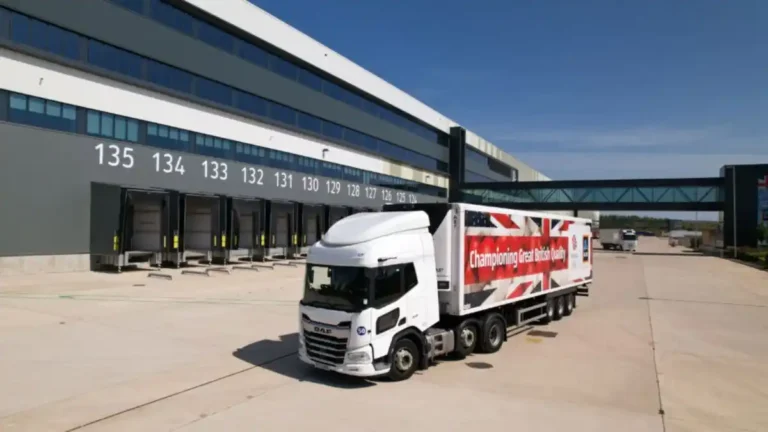

Aldi UK has started operations at its new £500 million distribution centre in Bardon, Leicestershire, marking the launch of what the retailer says is Britain’s largest supermarket warehouse. The site will support nearly 350 stores across the UK and forms part of Aldi’s wider £1.6 billion UK investment programme for 2026 and 2027.
The new warehouse is designed to improve supply-chain efficiency, support store expansion, and strengthen Aldi’s position as the UK’s lowest-price supermarket. Once fully operational, the site will handle almost seven million pallets of stock annually and employ around 1,000 workers.
What is Aldi’s Bardon distribution centre?
A distribution centre is a large logistics hub used by supermarkets to receive, store, sort, and deliver products to stores. Aldi’s Bardon site will also operate as a National Replenishment Hub, helping support stock flow across the retailer’s wider UK warehouse network.
The facility includes automated storage systems, chilled and frozen chambers, and high-capacity vehicle loading areas designed to improve delivery speed and warehouse productivity.
At a glance
- Aldi invested more than £500 million in the Bardon site
- The warehouse is located in Bardon, Leicestershire
- Operations officially began in May 2026
- Around 1,000 people will work at the facility
- The site will support nearly 350 Aldi stores
- Capacity is expected to reach almost seven million pallets annually
- Automation systems were installed with partners Dematic and Cimcorp
Why is this warehouse important for Aldi?
The Bardon facility plays a major role in Aldi’s long-term UK expansion strategy. The retailer is targeting 1,500 UK stores and needs additional logistics capacity to support future growth.
Improved warehouse automation and replenishment efficiency may also help Aldi reduce operating costs while maintaining competitive grocery pricing across the UK supermarket sector.
How large is Britain’s largest supermarket warehouse?
At 1.3 million square feet, the Bardon site is currently the UK’s largest supermarket distribution centre. Aldi said the facility is large enough to fit around 65 Aldi stores or nearly 17 football pitches inside the building.
The warehouse consists of five connected buildings with both ambient and temperature-controlled storage chambers for grocery products.
What technology is being used inside the warehouse?
Aldi worked with Dematic and Cimcorp to install advanced automated storage and handling systems throughout the facility.
The technology is designed to unpack supplier deliveries, move cases into high-level storage racks, and prepare goods for store delivery with reduced manual handling. Aldi said the systems will improve operational efficiency across its supply chain.
How does the site support sustainability goals?
The Bardon warehouse is described as the lowest carbon-density warehouse within the Aldi South Group network. Around 19,000 solar panels have been installed on the roof, with the potential to generate all electricity required by the site at certain times.
The facility also includes modern infrastructure intended to improve energy efficiency across transport and storage operations.
What does this mean for the UK supermarket industry?
The investment reflects a wider trend across the UK grocery industry, where supermarkets are increasing spending on logistics automation, warehouse capacity, and supply-chain resilience.
Retailers are under pressure to improve efficiency while managing labour costs, food inflation, and customer demand for reliable availability across stores. Large-scale automated distribution centres are becoming increasingly important in modern supermarket operations.
The move also highlights continued competition among UK discount retailers as operators expand store networks and invest in infrastructure to support long-term growth.
What happens next?
Aldi will continue ramping up operations at the Bardon site while progressing its broader UK expansion strategy. Recruitment is still underway for additional warehouse roles, and the company plans to continue opening new stores and distribution facilities across Britain.
As more automation systems come online, the site is expected to become a central part of Aldi’s national grocery distribution network for the coming years.
Editor’s Note: Information in this article is based on Aldi UK’s official announcement published on 28 May 2026 regarding the launch of operations at its new Bardon distribution centre in Leicestershire. Additional industry context has been added for editorial clarity and supermarket supply-chain analysis.