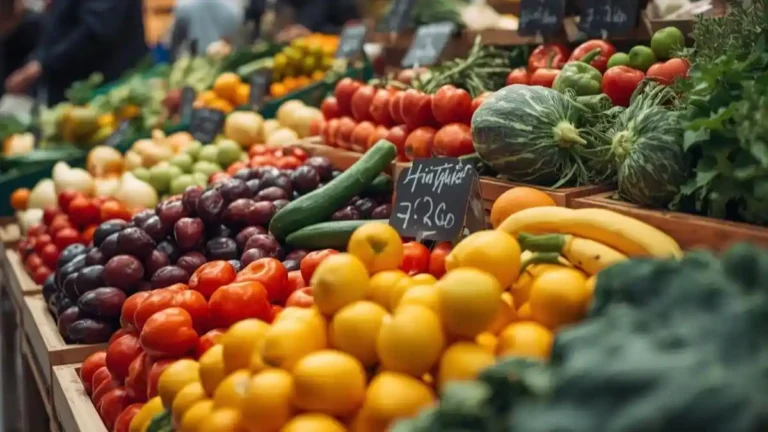

Euro area food inflation January 2026 reached 2.6% year-on-year, remaining above the overall inflation rate of 1.7%, according to official Eurostat data.
While headline inflation declined from 2.0% in December to 1.7% in January, grocery-related categories continued to exert upward pressure.
Key Food Inflation Data – January 2026
| Category | January 2026 | December 2025 |
|---|---|---|
| Food, alcohol & tobacco | 2.6% | 2.5% |
| Processed food | 2.0% | 2.1% |
| Unprocessed food | 4.2% | 3.5% |
Food, alcohol & tobacco contributed +0.51 percentage points to overall euro area inflation in January. Unprocessed food alone contributed +0.22 percentage points, reflecting stronger movement in fresh categories.
Fresh Food Showing Renewed Acceleration
Unprocessed food inflation increased from 3.5% in December to 4.2% in January, marking the strongest annual rate within grocery categories.
This compares with:
Services inflation: 3.2%
Energy inflation: -4.0%
Headline HICP: 1.7%
Energy prices declined sharply, but food inflation remained positive and above the overall rate.
Food Inflation in the Wider EU
Across the European Union, annual inflation reached 2.0% in January 2026.
Although Eurostat’s country breakdown focuses on headline figures, several high-inflation markets remain relevant for grocery pricing:
Romania: 8.5%
Slovakia: 4.3%
Estonia: 3.8%
Lower-inflation markets include:
France: 0.4%
Denmark: 0.6%
Italy: 1.0%
Inflation fell in 23 Member States compared with December, remained stable in one and rose in three.
Grocery Inflation vs Headline Inflation
Despite overall cooling in the euro area:
Headline inflation: 1.7%
Food inflation: 2.6%
Unprocessed food: 4.2%
Food prices therefore remain above the macro average.
Energy continued to reduce overall inflation by -0.39 percentage points, partially offsetting upward contributions from food and services.