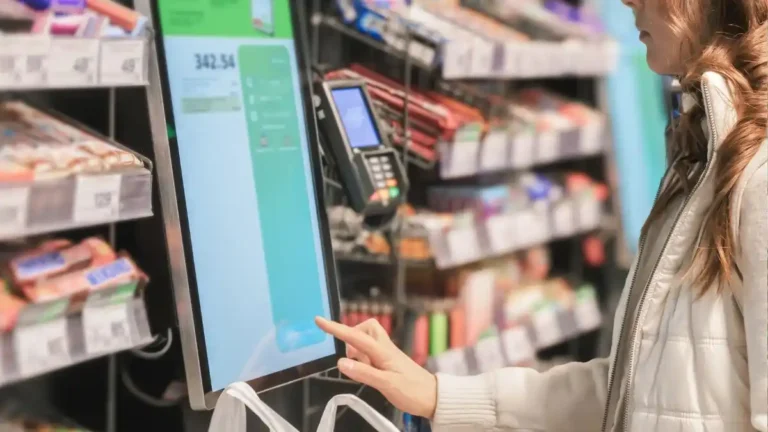

Estonia’s retail sector is no longer defined by floor space, but by the density of its tech stack. As we enter the second quarter of 2026, the traditional “brick-and-mortar” model has been entirely superseded by Unified Commerce—a state where inventory, point-of-sale (POS), and last-mile robotics operate as a single, living organism. The problem facing global retailers today is “Integration Friction”: the inability to make legacy systems talk to modern AI. Estonia has solved this by becoming a sandbox for the world’s most modular retail APIs.
This report promises an inside look at the five companies currently dictating the flow of goods and data in the Baltics. We will preview the architectural dominance of Erply, the automation hardware of Hansab, the logistical disruption of Starship Technologies, the grocery-specific precision of StrongPoint, and the deep-system integration expertise of Nixor.
In the 2026 context, Retail Technology Supply is defined as the provision of interoperable software-as-a-service (SaaS) and hardware-as-a-service (HaaS) that synchronizes physical storefronts with digital marketplaces. It encompasses cloud-based ERPs, AI-driven inventory forecasting, autonomous last-mile delivery, and friction-less checkout hardware.
At-a-Glance: Top 5 Retail Tech Suppliers (Estonia 2026)
| Rank | Entity (HQ) | Est. FY26 Rev | Strategic Impact |
| 01 | Erply (Tallinn) | €105M+ (Global) | Global API-first POS dominance |
| 02 | StrongPoint (Tallinn/Oslo) | $145M+ (Reg) | Grocery e-commerce & locker leader |
| 03 | Hansab (Tallinn) | €45M (Est. Reg) | Physical automation & ESL specialist |
| 04 | Starship (Tallinn/SF) | $220M+ (Valuation) | Autonomous last-mile logistics standard |
| 05 | Nixor (Tallinn) | €18M (Est. Reg) | Deep-tier systems integration partner |
01. Erply (Tallinn, Estonia)
Founded: 2009
HQ: Tallinn, Estonia (Global Offices in NYC, London, Sydney)
FY Revenue: €105M+ (Estimated Global 2026)
Employees: 350+
Core Segments:
Cloud-native POS (Point of Sale)
Inventory & Warehouse Management (WMS)
Mobile Inventory Apps & CRM
API-Integrated E-commerce
Operational Relevance
Erply functions as the “brain” of the retail operation. Unlike traditional ERPs that were built for accounting first, Erply was built for the floor. Its relevance in 2026 stems from its Headless Retail capability—allowing a brand like Garmin or Elizabeth Arden to use Erply’s back-end while building completely custom front-end experiences on web, mobile, or smart-mirrors.
Why it matters
Erply is winning because it anticipated the “death of the monolith.” While competitors tried to build every feature themselves, Erply focused on being the best at Data Agility. In 2026, their “Erply Books” and “Erply POS” ecosystem allows a retailer to set up a cross-border shop in hours, not weeks. However, the contrarian risk is their pivot to mid-market enterprise; by moving up-market, they leave a vacuum for hyper-local, low-cost competitors to bite at their heels in the Baltic micro-retail space.
Erply now processes over $25B in annual transaction volume across 100,000+ stores globally, with 2026 seeing a 15% uptick in “Scan-and-Go” adoption.]
02. StrongPoint (Tallinn / Oslo)
Founded: 2000 (Merged entities)
HQ: Tallinn Hub (Regional HQ) / Oslo, Norway
FY Revenue: $145M (Trailing 12-month Group Rev)
Employees: 500+
Core Segments:
Grocery E-commerce Solutions
Self-Checkout & Cash Management
Click-and-Collect Temperature-Controlled Lockers
AI Picking Software for Dark Stores
Operational Relevance
StrongPoint is the specialized muscle behind the “Grocery Revolution.” In Estonia, they are the primary architects of the automated pickup culture. Their tech ensures that when a customer orders frozen goods in Tartu, the item is picked with 99.9% accuracy via their Order Picking software and stored in a solar-powered, 3-zone temperature locker for 24/7 retrieval.
Why it matters
StrongPoint’s success is a direct result of their “Retailer First” philosophy. While Silicon Valley startups tried to replace supermarkets, StrongPoint gave supermarkets the weapons to fight back. Their Pricer Electronic Shelf Labels (ESL) integration is the gold standard in 2026, allowing stores to implement dynamic pricing (reducing food waste by discounting items approaching expiry automatically). Their only hurdle remains the high CAPEX of their hardware, which can be a barrier for independent grocers during inflationary cycles.
“The battle for retail in 2026 is won in the last 50 meters. Suppliers who control the locker and the picking algorithm, like StrongPoint, hold the keys to grocery profitability.” — Senior Analyst, Grocery Trade News
03. Hansab (Tallinn, Estonia)
Founded: 1991
HQ: Tallinn, Estonia (Regional hubs in Riga, Vilnius, and Helsinki)
FY Revenue: €48M (Projected 2025/26 Group Revenue)
Employees: 300+
Core Segments:
Automation & Robotics (Security/Service)
Electronic Shelf Labels (ESL) – Vusion specialist
Smart Parking & Physical Security Systems
Automated Cash Management & Payment Terminals
Operational Relevance
Hansab is the primary contractor for the “Physical Store of the Future.” They bridge the gap between software and hardware. In 2026, their dominance is anchored in the massive rollout of Vusion Electronic Shelf Labels (ESL) across major chains like Coop Hiiumaa and Selver. By automating price updates and stock-level indicators at the shelf edge, Hansab removes the single largest source of retail labor inefficiency: manual paper tagging.
Why it matters
Hansab has successfully pivoted from being a “hardware vendor” to a “solution integrator.” Their recent focus on Audiovisual and AI-driven security (e.g., Amersec EAS systems) allows retailers to treat their physical space like a digital heatmap. The contrarian take? Hansab is heavily tied to the physical footprint. While they are masters of the store, any significant shift toward “dark stores” (warehouse-only retail) could threaten their traditional service revenue unless they pivot faster into Starship-style warehouse robotics.
Hansab now manages over 1.5 million active Electronic Shelf Labels across the Baltics, with an estimated ROI for retailers of 14 months based on labor savings alone.]
04. Starship Technologies (Tallinn / San Francisco)
Founded: 2014
HQ: Tallinn (Engineering/R&D) / San Francisco (Commercial)
Valuation: $1.2B (Unicorn Status 2024-2026)
Employees: 600+
Core Segments:
Autonomous Last-Mile Delivery
Robotics-as-a-Service (RaaS)
Fleet Management AI
Micro-fulfillment Integration
Operational Relevance
Starship is the undisputed leader of the “Sidewalk Economy.” In Estonia, they have integrated directly into the retail apps of major grocery chains (like Prisma and Selver) and food delivery platforms (Uber/Wolt). Their 6-wheeled robots are no longer a novelty; they are critical infrastructure that reduces the cost of last-mile delivery by up to 80% compared to human-driven vans in dense urban centers like Tallinn’s Mustamäe and Kesklinn districts.
Why it matters
Starship is essentially a data company disguised as a robot company. By 2026, their robots have logged millions of miles, creating the most sophisticated high-resolution sidewalk maps in existence. This “Map Data” is an undervalued asset that could eventually be sold to city planners or autonomous vehicle firms. The risk: Regulatory “bottlenecking.” While Estonia is hyper-friendly to robots, other European markets remain skeptical. Starship must win the “lobbying war” as much as the “tech war.”
“Starship has moved past the ‘cool factor.’ In 2026, a retail brand in Tallinn without a robot-delivery integration is effectively invisible to the Gen Z consumer base.” — Lead Logistics Consultant, Baltic Trade Forum
05. Nixor (Tallinn, Estonia)
Founded: 1993
HQ: Tallinn, Estonia
FY Revenue: €18M+ (Estimated Regional 2026)
Employees: 80+
Core Segments:
Unified Commerce Systems Integration
Self-Shopping (Joya Smart) & AI Vision Tech
Unattended Payment Solutions
IT Infrastructure & Support
Operational Relevance
Nixor is the “Invisible Glue” of Estonian retail. They specialize in Systems Integration, ensuring that a retailer’s legacy ERP (like an old SAP or Microsoft Dynamics) can communicate with the newest AI-powered self-checkout kiosks from Datalogic. In 2026, they are leading the charge in AI-Powered Self-Shopping, deploying the Joya Smart series which uses computer vision to prevent “missed scans” at checkout.
Why it matters
Nixor’s strength is its longevity and trust. They aren’t chasing the “next big thing”; they are making the “current thing” work perfectly. Their recent takeover of major industry social channels for EuroShop 2026 signals their intent to be the thought leaders of the region. However, as “Low-Code/No-Code” platforms become more popular, the need for deep, custom systems integration may shrink, forcing Nixor to move more aggressively into proprietary AI software development.
Industry Outlook: The “E-stonian” Retail Standard
As we look toward the final quarters of 2026, the Estonian retail technology sector is entering a phase of Hyper-Convergence. The distinction between “Logistics” and “Retail” has vanished. Companies like Starship are no longer external delivery partners; they are integrated components of the store’s inventory flow.
Key Trends for 2027:
Energy-Autonomous Retail: Led by Hansab and StrongPoint, the next wave of hardware (lockers and ESLs) will focus on solar-integrated and ultra-low-power e-ink displays to meet the EU’s 2027 Green Retail mandates.
Predictive Stocking (AI-First): Erply and Nixor are shifting from “Reactive POS” to “Predictive Inventory,” where the system orders stock based on real-time Baltic weather patterns and social media sentiment analysis.
The Rise of the “Micro-Hub”: Expect traditional grocery stores to shrink their front-of-house footprints by 30%, converting that space into robotic fulfillment zones managed by the technologies detailed in this report.
Conclusion
Estonia’s retail landscape in 2026 shows that scale alone no longer defines success. Instead, seamless integration, automation, and real-time data flow drive efficiency and growth. Estonia has become a benchmark for how modern supermarkets operate digitally.
The lessons extend beyond technology. FMCG retailers now see that predictive inventory, automated checkout, and integrated logistics are essential to stay competitive. In Estonia supermarkets, these systems are no longer experimental—they are standard.
Meanwhile, the expansion of Estonia private label demonstrates how digital control of supply chains can enhance both profitability and responsiveness. Estonia’s model provides a live blueprint for modern retail operations.
Editor’s Note: This report was compiled using preliminary FY2026 performance data and market share analysis within the Republic of Estonia. While several companies listed (Erply, Starship) have significant global footprints, their “Regional Impact” score is based specifically on their contribution to the Estonian domestic retail infrastructure and digital ecosystem.