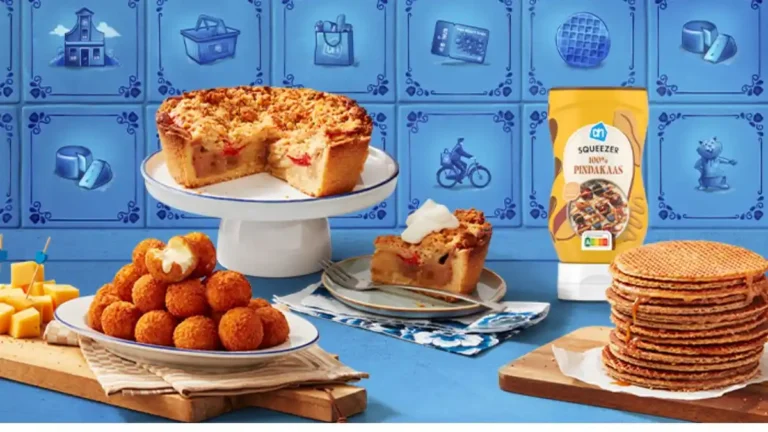

Albert Heijn has introduced a new private label product, the kaasstroopwafel, in the Netherlands as part of its “Het lekkerste van Nederland” campaign. The product is now available in stores from today, priced at €0.99, as the retailer focuses on combining familiar Dutch flavours to drive in-store engagement and product innovation.
What is the kaasstroopwafel?
The kaasstroopwafel is a hybrid bakery product that combines two traditional Dutch favourites: cheese and stroopwafels. It is developed as part of Albert Heijn’s private label range, bringing together sweet and savoury elements to create a new in-store offering aimed at local consumer preferences.
At a glance
- Albert Heijn launches kaasstroopwafel in the Netherlands
- Product available from today in in-store bakery section
- Retail price set at €0.99 per unit
- Part of “Het lekkerste van Nederland” campaign
- Developed with Zaanlander cheese
- Combines sweet and savoury flavour profiles
- Future listing depends on consumer response
Why is Albert Heijn launching this product?
Albert Heijn is focusing on well-known Dutch flavours to strengthen its connection with domestic consumers. The campaign highlights products such as stroopwafels, cheese, bitterballen and peanut butter, using familiar taste profiles to drive trial and repeat purchases in stores.
How big is the market for these products?
Consumer data shows strong demand for traditional Dutch foods. More than 220 million stroopwafels are sold annually in the Netherlands, while average cheese consumption reaches around 20 kilograms per person per year. Albert Heijn alone sells approximately 33 million bitterballen annually.
What other products are included in the campaign?
Alongside the kaasstroopwafel, Albert Heijn is introducing or promoting products such as the kaasbitterbal, pindakaassqueezer, and rhubarb-apple pie. These items are positioned as variations on familiar classics, designed to refresh the retailer’s private label assortment.
How does this fit into retail strategy?
The launch reflects a broader supermarket trend of combining traditional flavours with new formats. Retailers are increasingly using private label innovation to differentiate their offer, drive footfall, and respond to demand for both comfort foods and novel taste combinations.
What role does private label play here?
The kaasstroopwafel is part of Albert Heijn’s private label strategy, where the retailer controls product development and positioning. Supplier collaboration, such as the use of Zaanlander cheese, supports production while maintaining retailer ownership of the concept and branding.
What happens next?
The kaasstroopwafel is currently being tested in stores, with future listing decisions dependent on customer response. If successful, it may become a permanent product within Albert Heijn’s assortment, strengthening its position in Netherlands private label innovation and reinforcing its focus on local taste-led product development.
Editor’s Note: This article is based on official information released by Albert Heijn regarding its latest product launch in the Netherlands. It reflects confirmed product details, pricing, and campaign positioning at the time of publication, with no additional assumptions or external estimates added.