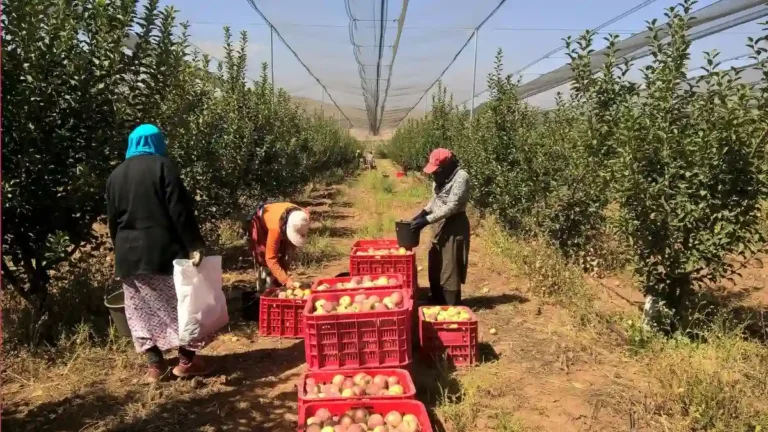

Poland still produces more apples than any other country in Europe. But volume is no longer the industry’s biggest competitive advantage.
Several changes have reshaped the economics of apple production:
- The loss of the Russian market
- Rising energy costs for cold storage
- More demanding supermarket specifications
The companies setting the pace in 2026 are investing in a few key areas:
- Advanced sorting technology
- Ultra-low oxygen storage
- Export diversification
- Premium varieties such as Gala, Red Jonaprince and Golden Delicious
For retailers and importers, consistency now matters as much as scale.
This ranking looks at the eight companies that have become some of the most important players in Poland’s commercial apple supply chain. It also examines how they are adapting to a tougher, more competitive global market.
At a Glance: Poland’s Leading Apple Companies
| Rank | Company | FY Revenue* | Strategic Role |
|---|---|---|---|
| 1 | Appolonia | Private | Export and scale leader |
| 2 | Wil-Sad | Private | Automation and premium varieties |
| 3 | Sadco | Private | Storage and year-round supply |
| 4 | Galster | Private | Producer-group integration |
| 5 | Grupa Gaik | Private | Certification and market diversification |
| 6 | AJApple | Private | International logistics specialist |
| 7 | Klimkiewicz Group | Private | Vertically integrated orchard business |
| 8 | Sady-Trzebnica | Private | Domestic supermarket programmes |
*Most Polish producer groups are privately held and do not publicly disclose revenue figures.
1. Appolonia
Founded: 2006
Headquarters: Biała Rawska, Poland
Core Operations
Fresh apple production, packing, export logistics and grower group coordination.
Market Position
If one company symbolises Poland’s rise as an international apple exporter, it is Appolonia. The company acts as a commercial engine for several producer organisations.
It pools very large volumes of fruit. This lets it manage programmes that individual orchards cannot support.
Its network handles well over 100,000 tonnes of fruit a year. It has also developed a wide international footprint.
Operational Relevance
Scale matters in export markets. Large supermarket and wholesale buyers increasingly want suppliers that can deliver multi-container programmes with consistent specifications.
Appolonia has built its reputation on exactly that capability. The company ships to destinations across Europe, Asia, Africa and the Middle East. Long transit times to these markets put great pressure on fruit quality.
Competitive Strength
Its biggest advantage lies in post-harvest management. Keeping firmness, colour and brix levels during sea freight requires advanced controlled-atmosphere storage. It also needs technologies such as 1-MCP treatments.
The company’s ability to preserve fruit quality over long journeys has become one of its defining strengths.
Industry Context
Export destinations are becoming more diverse. As a result, Appolonia’s logistics expertise has become almost as important as its production capacity.
2. Wil-Sad
Founded: 2007
Headquarters: Biała Rawska, Poland
Core Operations
Fresh apple production, automated packing and export programmes.
Market Position
Wil-Sad represents the new generation of Polish apple companies, where automation sits at the centre of the business model.
The company handles about 30,000 tonnes of fruit a year. It is known for supplying premium export varieties, particularly Royal Gala and Red Delicious.
Operational Relevance
European supermarkets have become extremely demanding. They increasingly expect uniform colour, precise sizing and minimal variation.
Wil-Sad’s modern logistics centre and advanced sorting equipment let the company deliver this consistency at scale.
Competitive Strength
Rapid pre-sorting systems assess fruit quality before final packing. This improves efficiency and reduces waste.
The investment also lets the company manage several customer specifications at once. This is an increasingly valuable capability as retail programmes become more customised.
Industry Context
Technology is becoming a key differentiator in Poland’s apple sector. Wil-Sad offers a clear example of how automation can create commercial advantages.
3. Sadco
Founded: 1999
Headquarters: Kujawsko-Pomorskie, Poland
Core Operations
Apple production, controlled-atmosphere storage and retail supply programmes.
Market Position
Sadco has built its reputation around one critical capability: year-round supply. The company operates in one of Poland’s most productive fruit-growing regions.
It has invested heavily in storage infrastructure. This keeps apples in excellent condition long after harvest.
Operational Relevance
Retailers increasingly want stable supply programmes that extend well beyond the harvest season. Sadco’s extensive ULO storage facilities let it keep supplying customers deep into spring and summer.
Competitive Strength
The company’s strength lies in reliability rather than sheer volume. It can maintain quality over long storage periods.
That makes it a valuable supplier for retailers that prioritise continuity and category planning.
Industry Context
As energy costs rise, the economics of long-term storage are becoming more challenging. Companies that can manage these costs efficiently are gaining a clear competitive advantage.
4. Galster
Founded: 2006
Headquarters: Kujawsko-Pomorskie, Poland
Core Operations
Producer-group coordination, packing and export distribution.
Market Position
Galster shows the continued importance of the producer-group model in Polish horticulture. The company brings together many growers under shared production standards.
This allows independent orchards to access larger markets and retail programmes.
Operational Relevance
Aggregation provides scale without sacrificing regional grower participation. Galster’s structure lets it offer significant volumes while keeping flexibility in production and packing.
Competitive Strength
The company handles a broad variety portfolio:
- Gala
- Golden Delicious
- Red Jonaprince
Its export network extends into Europe, the Middle East and Latin America. This gives it greater resilience against market disruptions.
Industry Context
Poland’s apple industry remains highly fragmented. Companies like Galster play an important role in creating scale and maintaining export competitiveness.
5. Grupa Gaik
Founded: 2008
Headquarters: Witalówka, Poland
Core Operations
Apple production, packing and export marketing.
Market Position
Grupa Gaik has built much of its business around quality frameworks and market diversification.
It is located in the Grójec region, often called the heart of Polish apple production. This gives the company a base in one of Europe’s most important fruit-growing areas.
Operational Relevance
Certifications such as GLOBALG.A.P. and other food safety standards have become essential for accessing premium retail channels. Grupa Gaik has invested heavily in meeting these requirements.
Competitive Strength
The company has also been proactive in developing new export opportunities in North Africa and the Middle East.
These markets have become increasingly important for Polish exporters seeking alternatives to traditional destinations.
Industry Context
The ability to enter and maintain new markets has become a critical skill for Polish apple companies.
6. AJApple
Founded: Private company
Headquarters: Poland
Core Operations
Export logistics and international apple programmes.
Market Position
AJApple operates as an export-focused specialist. The company’s expertise lies less in production scale and more in managing the complexities of long-distance trade.
Operational Relevance
Exporting apples to distant markets requires far more than simply loading containers. Companies must manage several factors:
- Phytosanitary requirements
- Shipping schedules
- Varying packaging standards
Competitive Strength
AJApple has built its reputation on understanding these requirements. It delivers fruit to international customers with minimal disruption.
Industry Context
Polish exporters increasingly target Asia, Africa and the Middle East. As they do, logistics expertise is becoming a more valuable asset.
7. Klimkiewicz Group
Founded: Family-owned business
Headquarters: Poland
Core Operations
Large-scale orcharding, packing and storage.
Market Position
Klimkiewicz Group represents the strength of vertical integration. Unlike producer groups that rely on many independent growers, the company controls much of its own production base.
Operational Relevance
This structure gives greater control over harvest timing, quality standards and traceability.
The company manages more than 250 hectares of orchards. It has built a fully integrated production system.
Competitive Strength
Owning orchards and storage facilities allows tighter management of fruit quality and operational planning.
Industry Context
Traceability is becoming more important for retailers. Vertically integrated operations have a natural advantage in this area.
8. Sady-Trzebnica
Founded: Private company
Headquarters: Lower Silesia, Poland
Core Operations
Fresh apple production and supermarket supply programmes.
Market Position
Sady-Trzebnica has established itself as one of Lower Silesia’s leading orchard operations. Its strength lies in supplying domestic and regional supermarket programmes with consistent volumes.
Operational Relevance
The company has invested in infrastructure that moves fruit quickly from storage to retail distribution.
This speed is increasingly important. Retailers want fresher products and tighter inventory management.
Competitive Strength
Its closeness to important regional markets provides logistical advantages and supports efficient distribution.
Industry Context
Regional suppliers continue to play a significant role despite the growing concentration of the industry.
Industry Outlook
Poland’s apple industry is entering a more capital-intensive era. Modern orchards, automated packing lines and advanced storage facilities require significant investment.
At the same time, growers face several pressures:
- Rising labour costs
- Higher energy prices
- More demanding customer specifications
Premium varieties continue to gain market share, while traditional varieties face growing pressure.
The result is a market where profitability depends less on producing the most fruit. It depends more on producing the right fruit, storing it efficiently and delivering it to the right markets.
Frequently Asked Questions
Which country produces the most apples in Europe?
Poland produces more apples than any other country in Europe.
Which Polish apple company handles the largest volumes?
Appolonia’s network handles well over 100,000 tonnes of fruit a year. It ships to destinations across Europe, Asia, Africa and the Middle East.
Why do Polish apple companies invest in ULO storage?
Retailers want stable supply programmes that extend well beyond the harvest season. ULO storage lets suppliers such as Sadco keep supplying customers deep into spring and summer.
What Happens Next?
Three trends are likely to shape Poland’s apple industry over the next five years.
Storage and automation investment will continue
Companies with advanced CA and ULO facilities and modern sorting technology will have a growing advantage.
Export diversification will remain essential
The industry’s future depends on keeping and expanding access to markets beyond Europe.
Premium varieties will gain more shelf space
Retailers increasingly favour apples that deliver consistent colour, crunch and eating quality.
Poland’s position as Europe’s largest apple producer is unlikely to change soon. The question is no longer how many apples the industry can grow. It is how well it can turn that production into profitable, high-value supply programmes.
Editor’s Note: This ranking represents Grocery Trade News’ 2026 guide to Poland’s commercial apple sector. Companies were selected based on production scale, packing infrastructure, export reach, market influence and their importance to supermarket and wholesale supply chains. The ranking includes only active companies with an established commercial presence and official corporate websites.