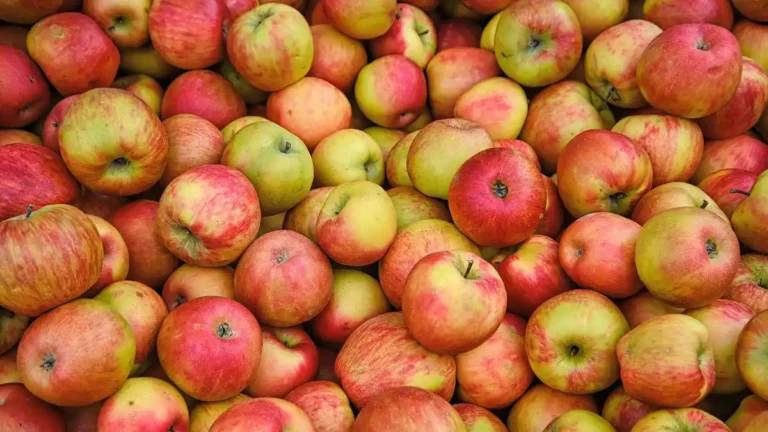

Australia’s apple industry is splitting into two parts. One is high-volume commodity production. The other is premium managed varieties that earn stronger margins and more supermarket attention.
Heat pressure, rising labour costs and changing consumer tastes have tightened supplies and pushed retail prices higher. Meanwhile, branded apples continue to reshape the category, including:
- JAZZ™
- Envy™
- Kanzi
- Soluna™
Australia produces fewer apples than major global exporters such as China, the United States and Poland. Even so, its growers have built an advanced industry. It is centred on premium fruit, strict quality standards and strong retail partnerships.
The country’s leading producers now compete on more than volume. They also compete on branding, export access and their own proprietary varieties.
For supermarkets, wholesalers and fresh produce buyers, knowing who controls Australia’s apple supply matters more and more. The category is shifting towards premiumisation.
Leading Apple Producers
| Rank | Company | FY Revenue* | Strategic Role |
|---|---|---|---|
| 1 | Montague Farms | Private | Australia’s largest integrated apple producer |
| 2 | Lenswood Apples | Private | Controls around 10% of national apple production |
| 3 | Piñata Farms | Private | Major multi-category fruit producer and marketer |
| 4 | Batlow Fruit Company | Private | Iconic branded apple supplier |
| 5 | Plunkett Orchards | Private | One of Victoria’s largest orchard businesses |
| 6 | R & R Smith | Private | Australia’s leading organic apple producer |
| 7 | Newton Orchards | Private | Major Western Australian grower and exporter |
| 8 | Reid Fruits | Private | Premium Tasmanian export specialist |
| 9 | Ardrossan Orchards | Private | Significant supplier of standard and club varieties |
| 10 | Fruit West Co-operative / WA Farm Direct | Private | Owner of the Bravo™ and Soluna™ apple programme |
*Most Australian apple businesses are privately owned and do not publicly disclose annual revenue.
Australia’s Apple Industry by the Numbers
- National apple production: about 285,000–295,000 tonnes annually.
- Industry retail value: about A$500 million.
- Around 500 commercial apple and pear growers nationwide.
- Victoria remains Australia’s largest producing state.
- Tasmania contributes roughly 10% of national apple production.
- Premium managed varieties now account for a growing share of category value.
1. Montague Farms
Founded: 1948
Headquarters: Narre Warren North, Victoria
Montague Farms is widely seen as Australia’s largest and most influential apple producer. It has grown from a family orchard into one of the country’s biggest integrated fruit businesses. It supplies major retailers and export markets.
Premium varieties and capabilities
Its importance goes well beyond production volume. Montague has built one of Australia’s strongest portfolios of premium managed varieties. These include JAZZ™, Envy™ and several proprietary apple programmes.
The company has invested heavily in advanced packing technology, cold storage and category management. These capabilities make it a preferred supplier to major supermarket chains.
Why it matters to supermarket buyers
Supermarkets are focusing more on premium fruit with stronger margins. Montague’s control over branded varieties gives it significant influence over where the category goes.
2. Lenswood Apples
Founded: Cooperative roots dating back decades
Headquarters: Adelaide Hills, South Australia
Leaving Lenswood Apples out of any ranking of Australian apple producers would be a major oversight. The cooperative manages about half of South Australia’s apple production. It is estimated to account for around 10% of Australia’s total apple output.
Key strengths
The Adelaide Hills region is known for good growing conditions. It produces premium apples with strong colour and quality.
Lenswood’s significance comes from scale and retailer relationships. The cooperative supplies major supermarket programmes. It has become a critical supplier during periods of tight national supply.
It gathers production from many growers. This gives it substantial bargaining power within the supply chain.
3. Piñata Farms
Founded: 1960s
Headquarters: Queensland
Piñata Farms is best known for pineapples and strawberries. However, it has also become a significant player in Australia’s apple sector through strategic acquisitions and investments.
The company’s strength lies in its national distribution footprint. It also understands supermarket requirements across many fresh produce categories.
How it differs from traditional orchards
Unlike many traditional orchard businesses, Piñata operates as a modern produce company. It has advanced marketing capabilities and diversified revenue streams.
Its scale helps it cope with swings in individual crop categories better than many smaller producers.
4. Batlow Fruit Company
Founded: 1922
Headquarters: Batlow, New South Wales
Few names in Australian apples carry the heritage and consumer recognition of Batlow Fruit Company. For decades, Batlow has been synonymous with Australian apples. It remains one of the country’s best-known fruit brands.
The company has gone through ownership changes and restructuring over the years. Even so, its brand remains highly valuable in the retail sector.
Why it matters to supermarket buyers
Batlow’s strength lies in consumer trust and strong recognition among Australian shoppers. In a market increasingly led by branded fruit, heritage still matters.
The company continues to play an important role in supplying domestic retailers. It also helps maintain the profile of Australian-grown apples.
5. Plunkett Orchards
Headquarters: Goulburn Valley, Victoria
Plunkett Orchards operates one of Australia’s largest orchard footprints. It has become a major supplier of both traditional and premium apple varieties.
The Goulburn Valley remains one of Australia’s most important fruit-growing regions. It benefits from established infrastructure and decades of horticultural expertise.
Key strengths
Plunkett’s production scale and efficiency make it a significant player in supermarket programmes where consistent supply is essential. The company has also invested in newer varieties that offer stronger returns than traditional commodity apples.
6. R & R Smith
Founded: 1950s
Headquarters: Tasmania
R & R Smith has become one of Australia’s leading organic apple producers. It is also one of Tasmania’s most important horticultural businesses.
The company supplies both domestic and export markets. It has developed strong capabilities in organic production systems.
The organic opportunity
Demand for organic produce remains fairly niche compared with conventional apples. However, the category commands premium pricing and attracts more health-conscious consumers.
Tasmania’s clean environment and biosecurity advantages have helped producers such as R & R Smith build strong positions in premium segments.
7. Newton Orchards
Headquarters: Manjimup, Western Australia
Western Australia’s apple industry is smaller than Victoria’s or South Australia’s. Even so, Newton Orchards remains one of the state’s leading producers and exporters.
The company has built strong export relationships across Asia. It has benefited from growing demand for premium Australian fruit.
Why it matters to supermarket buyers
Its location also gives it access to different harvest windows and export opportunities. For retailers, Newton is an important source of premium Western Australian fruit. It adds to supply diversity within the national market.
8. Reid Fruits
Founded: 1966
Headquarters: Tasmania
Reid Fruits has become one of Australia’s most respected premium fruit exporters. The company is heavily involved in export markets. It has a reputation for high-quality apples and cherries.
Tasmania’s cooler climate supports excellent fruit colour and eating quality. These qualities are increasingly important in premium markets.
Reid’s success shows how Australian apple producers can compete internationally by focusing on quality rather than scale alone.
9. Ardrossan Orchards
Headquarters: Victoria
Ardrossan Orchards is one of Victoria’s significant apple businesses. It supplies both traditional and premium varieties.
The company has increasingly joined managed variety programmes. Growers are seeking better margins and less exposure to commodity pricing pressures.
Key strengths
Its operational strength lies in consistent production, quality management and long-standing relationships with retail customers.
Like many leading growers, Ardrossan’s future growth depends less on expanding volumes. It depends more on producing higher-value fruit.
10. Fruit West Co-operative / WA Farm Direct
Headquarters: Western Australia
Fruit West may not be Australia’s biggest producer by tonnage. However, it is one of the country’s most strategically important organisations.
The cooperative owns and manages the highly successful Bravo™ apple programme. This is now increasingly marketed internationally under the Soluna™ brand.
The Soluna™ story
The development of Soluna™ has become one of the most significant stories in the Australian apple industry.
Mainland China recently opened to Australian apples under the Soluna™ programme. This marks a major milestone for export-focused producers. It also shows the commercial potential of proprietary varieties.
Fruit West’s influence reaches far beyond Western Australia. It has shown how intellectual property and brand ownership can create significant value in fresh produce.
Why Premium Apples Are Reshaping the Industry
Australia’s apple sector is increasingly driven by managed and proprietary varieties. Traditional apples such as Royal Gala still account for large volumes. However, category growth is increasingly concentrated in premium branded fruit.
Managed varieties offer several advantages:
- Better pricing.
- Greater supply discipline.
- Stronger retailer differentiation.
- More consistent quality standards.
- Higher grower returns.
This shift mirrors developments seen in other premium fruit categories around the world.
Industry Outlook
Australian apple growers continue to face substantial challenges:
- Labour shortages remain a significant issue.
- Climate volatility is increasing production risks.
- Rising compliance costs and higher input prices are squeezing margins.
At the same time, the industry is benefiting from several positive developments:
- Growing demand for premium fruit.
- Expanding export opportunities.
- Increased consumer interest in branded produce.
- Strong supermarket support for differentiated products.
The industry appears increasingly focused on value rather than sheer production volume.
Frequently Asked Questions
Who is the largest apple producer in Australia?
Montague Farms is widely seen as Australia’s largest and most influential apple producer. Founded in 1948, it is based in Narre Warren North, Victoria.
How many apples does Australia produce each year?
National apple production is about 285,000–295,000 tonnes annually. The industry’s retail value is about A$500 million.
Why are managed apple varieties growing in importance?
Managed varieties offer better pricing, greater supply discipline and higher grower returns. They also give retailers stronger differentiation and more consistent quality.
What Happens Next?
The next phase of competition in Australia’s apple industry will be defined by premiumisation and export growth.
Supermarkets are likely to give more shelf space to managed varieties. These deliver stronger margins and greater shopper differentiation.
Some growers control proprietary varieties, keep strong retailer relationships and invest in advanced production systems. These growers are expected to capture a larger share of future value growth.
For the wider Australian fresh produce sector, apples are becoming less of a commodity category and more of a branded food business.
For the Australian supermarket industry, the shift towards premium and managed varieties is expected to reshape category planning. Retailers are increasingly focusing on differentiated products that deliver stronger margins and encourage repeat purchases.
For the Australian fresh produce sector, the success of branded apples is a clear signal. Intellectual property, quality standards and export opportunities are creating new sources of value beyond traditional volume production.
For Australian grocery retailers and produce buyers, the challenge will be one of balance. They must weigh demand for affordable everyday apples against growing interest in premium varieties that offer higher returns and stronger category growth.
Editor’s Note: This analysis draws on industry information from Australian apple and pear industry organisations, grower associations, company disclosures. Supermarket category data and publicly available market reports covering production trends, retail value and export developments in 2025 and 2026.