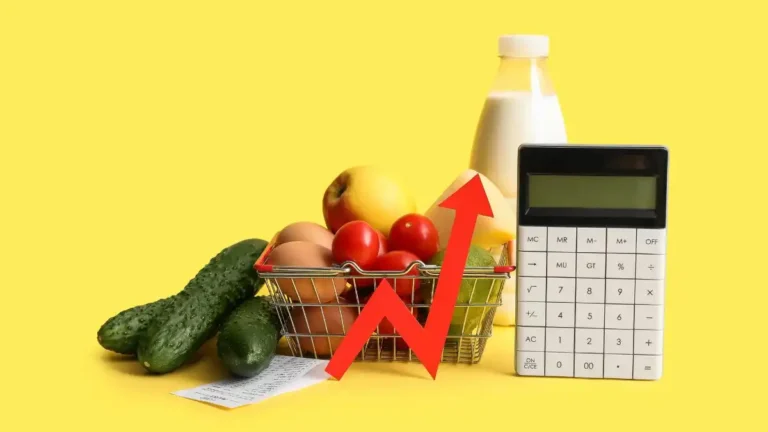

Canada’s food inflation eased to 2.8% year on year in August 2026, falling below 3% for the first time in 14 months as slower dairy price growth helped take pressure off the food basket, according to Statistics Canada.
The August reading marks a further cooling in food-price pressure after grocery inflation had already slowed in July. Dairy was the clearest source of relief: prices for dairy products rose just 0.7% year on year in August, down sharply from 3.1% in July, with cheese and yoghurt among the main contributors to the slowdown.
At a Glance
- Canada food inflation: 2.8% year on year in August 2026.
- Food inflation fell below 3% for the first time in 14 months.
- Dairy product inflation slowed to 0.7%, from 3.1% in July.
- Cheese and yoghurt were among the main drivers of the dairy slowdown.
- Headline CPI was 3.0%, putting food-price growth slightly below the overall inflation rate.
Food Inflation Drops Below 3%
The 2.8% reading is important for Canadian grocery retailers because it shows food-price growth moving back below the wider CPI rate after a prolonged period in which the supermarket basket had been a major pressure point for households.
It does not mean food prices are falling. Canadian consumers are still paying more for food than a year ago. The change is in the pace of increase: prices are rising more slowly, which can give retailers and suppliers more room to plan promotions, negotiate costs and protect entry-price points.
Earlier in 2026, Canada’s grocery inflation was running materially higher, keeping fresh food and supermarket value firmly in focus. August extends the recent cooling trend.
Dairy Takes Pressure Off the Basket
Dairy was the standout food category in the August release. Annual dairy inflation slowed to 0.7% from 3.1% in July, with cheese and yoghurt contributing most to that deceleration.
For supermarkets, softer dairy inflation matters beyond the dairy aisle. Milk, cheese and yoghurt are high-frequency purchases and often form part of weekly value comparisons between banners. Lower inflation in those categories can support sharper promotions and make price investment more visible to shoppers.
It can also change supplier discussions. When category inflation is easing quickly, retailers have a stronger basis for challenging broad cost increases and asking suppliers to show the underlying commodity, labour, packaging and freight pressures behind any new price request.
What It Means for Canadian Supermarkets
Canada’s largest grocery groups have spent much of the past two years competing heavily on value, discount formats and private label. A lower food-inflation rate does not remove that pressure, but it changes how retailers can respond.
More stable food costs can create greater scope for promotions, loyalty offers and sharper opening price points. It may also make it easier for retailers to hold prices on traffic-driving staples rather than absorb repeated supplier increases.
For major operators such as Loblaw, Empire, Metro, Walmart Canada and Costco, the challenge is likely to shift from managing rapid inflation towards proving value while maintaining margin discipline. GTN’s overview of the largest grocery stores in Canada shows how central discount formats, private label and supply-chain efficiency have become to that competition.
What It Means for FMCG and Private-Label Suppliers
For food manufacturers, slower inflation can make pricing negotiations tougher. Retailers are less likely to accept blanket increases when the official food index is cooling, particularly in categories where several branded and own-label alternatives compete directly.
Private-label manufacturers may see a different opportunity. Retailers can use own-brand ranges to reinforce value without relying entirely on headline shelf-price cuts. That puts more emphasis on efficient co-packing, flexible production runs and retailer-specific pack formats.
Co-packers able to switch quickly between recipes, pack sizes and retailer programmes can be better placed when buyers push for promotional packs or tighter price points. Slower inflation therefore does not simply reduce pricing pressure; it can increase competition for private-label contracts and put more weight on manufacturing efficiency.
The Grocery Basket Is Still More Expensive
The August slowdown should be read carefully. A 2.8% annual increase still means food prices are higher than they were a year ago, and the cumulative effect of several years of food inflation remains visible in household budgets.
That is why price perception is likely to remain a priority even if the monthly inflation rate continues to moderate. Consumers compare the actual checkout total, not only the rate at which it is rising.
For retailers, the practical question is whether easing supplier costs can be translated into more competitive shelf prices without giving up margin. For suppliers, it is whether input costs are cooling at the same pace as the retail food index.
What Happens Next?
Statistics Canada’s next monthly CPI release, covering September 2026, is scheduled for 19 October. Grocery buyers will be watching to see whether food inflation remains below 3% and whether the dairy slowdown broadens into more supermarket categories.
If food-price growth continues to cool, the competitive focus could move further towards promotions, private-label positioning and visible basket value rather than inflation-led price increases.
Editor’s Note: This report focuses only on the food and grocery elements of Statistics Canada’s August 2026 Consumer Price Index release and their implications for supermarkets, buyers and FMCG suppliers.