
Intermarché and its partners are backing a €5 million programme to support French cattle farming, targeting around 215 farms and nearly 17,000 fattening places by 2029.
The Groupement Mousquetaires announced Avenir Bœuf on 17 September at the SPACE agricultural exhibition. Delivered through Agrimousquetaires, the scheme supports construction and renovation within its Bœuf Junior supply chain.
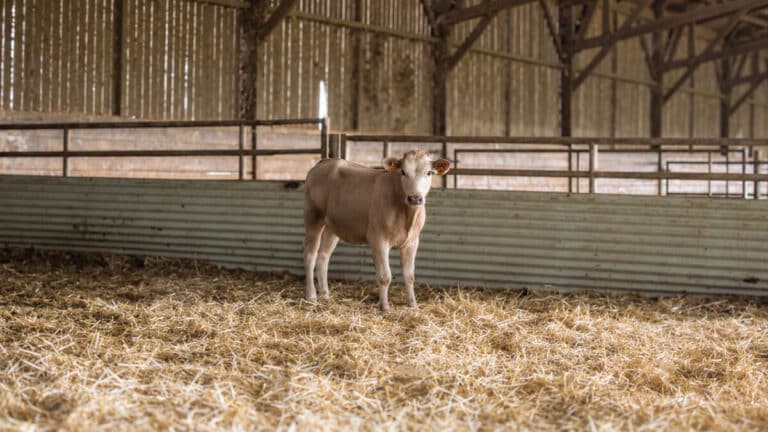
The group says the initiative responds to declining cattle numbers and fewer livestock farms. Its Bœuf Junior model develops French production from crossbred calves, linking dairy farms with specialist finishing operations.
Funding can reach €400 for each eligible place created or renovated, equivalent to approximately 20% of building costs, according to the group. Intermarché, Agrimousquetaires and Agromousquetaires’ beef division are co-financing the initiative.
For supermarket buyers, the commercial significance lies in securing future production capacity. The programme’s targets describe infrastructure and participating farms; they do not establish additional annual beef tonnage or promise an immediate change in retail prices.
The published application conditions show that this is a targeted supplier programme. Applicants must:
- Hold a Bœuf Junior integration or buyback contract with SVA Jean Rozé, part of Agromousquetaires.
- Qualify as a young farmer under 40, or have entered the relevant farming activity within the previous two years.
- Create or renovate at least 70 livestock places between 31 July 2026 and 31 July 2029.
- Have a Boviwell animal-welfare assessment rated “Supérieur”, completed within the previous three years.
Boviwell is an on-farm cattle welfare assessment covering feeding, housing, health, behaviour and the animals’ relationship with people.
Agrimousquetaires matches the beef division’s contribution for eligible farmers, bringing combined support to a maximum of €400 per place, with the amount depending on the livestock category and work undertaken.
Applications are reviewed twice yearly. Successful applicants sign a funding agreement, with payment due within two months of signing.
The scheme illustrates how competition among French supermarket groups extends into the farms and processing networks behind their assortments. A long-term purchasing relationship can give farmers greater confidence to invest, while giving the retailer a clearer view of future supply.
For procurement teams, however, buildings are only part of that equation. Calf availability, feed costs, animal performance and processing capacity will determine how investment translates into saleable beef.
Those factors matter when planning French-origin ranges and private-label sourcing, where buyers need consistent specifications and reliable deliveries alongside a credible provenance claim.
The next measure of progress will be approved projects and completed capacity. Buyers will then need evidence of how that capacity translates into contracted volumes and delivery schedules as the programme approaches its 2029 target.