
Colgate-Palmolive, Mars, Nestlé, PepsiCo, Procter & Gamble and Unilever have launched the PaperFlex Consortium to develop paper-based alternatives to flexible plastic packaging, bringing six major grocery suppliers into a shared research programme.
Announced on 16 September, the initiative is convened by the Ellen MacArthur Foundation and supported by environmental consultancy (RE)SET. Members plan to fund and run trials covering coatings, product protection and manufacturing performance over the next few years.
This is an R&D launch, not the introduction of a finished packaging range. The Foundation says materials meeting the required combination of performance, cost and scale are not yet available.
The initial focus is markets where flexible plastic is widely used but collection and recycling systems are limited. The ambition is to develop alternatives that can be recycled as those systems improve and biodegrade if they unintentionally escape into the environment.
For supermarket buying teams, that geographic focus matters. The announcement should not be read as a commitment to replace every plastic wrapper in UK or European stores, or as evidence that a new paper pack will be accepted by every local recycling service.
The Foundation places paper alternatives alongside reducing unnecessary small-format packaging, reuse and better waste collection. Its approach also calls for responsible fibre sourcing and avoiding harmful substances, rather than judging a pack simply by whether it looks like paper.
Unilever’s accompanying explanation shows why the technical work is demanding. Paper alone provides limited barrier protection, can tear during production and does not melt to form a seal. Existing paper-based structures can therefore still need thin plastic layers to protect their contents.
The company points to its already-launched UK Knorr stock cube wrappers as an example of progress outside the new consortium. Those wrappers need to resist grease from the cubes, and Unilever says it adjusted factory equipment to make the folded paper run reliably.
That distinction is useful for food manufacturers evaluating their next tender: evidence from one stock cube wrapper is not proof that the same structure will suit a sauce sachet, coffee pack or confectionery wrapper.
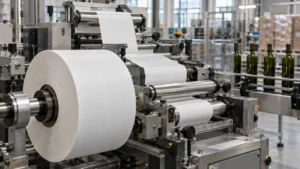
GTN’s assessment is that procurement teams should set the product requirements before choosing a material. Shelf-life testing should use the actual recipe and distribution conditions. Packing trials should record saleable output, seal failures, material waste and downtime, not just whether a short demonstration run succeeds.
Cost comparisons should then be made per saleable pack. A lower material price is of limited value if a line produces fewer acceptable units or if retailers receive more damaged stock.
Paper is also only one route under consideration. Buyers comparing it with mono-material food packaging should ask suppliers to test competing structures against the same shelf-life and production brief, rather than treating one material family as the automatic winner.
For European packaging suppliers, the consortium creates an opening to contribute coating and converting expertise. It is not a collective purchasing contract: each founding member will continue to make its own packaging decisions independently.
The next commercially useful milestone will be trial evidence showing which products, lines and markets the new structures can serve. Until that arrives, supermarket and FMCG teams can prepare specifications and testing programmes, but should avoid promising a store rollout or environmental outcome that the research has not yet demonstrated.