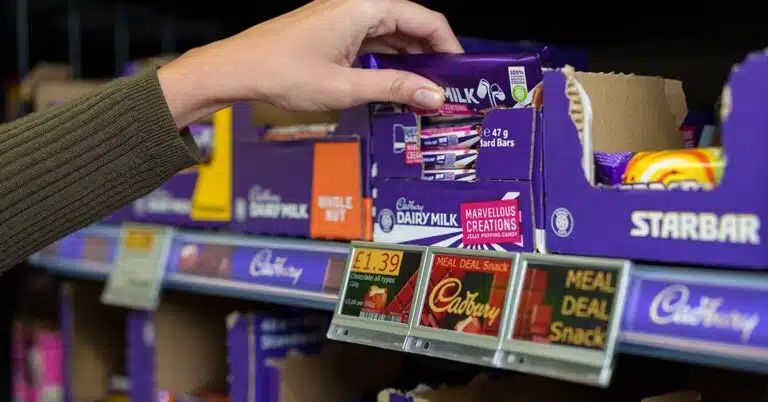

Pricer is presenting new supermarket trial data at NRF Europe showing its Avenue digital shelf-edge platform increased sales by an average of 2.2% at two East of England Co-op stores, with uplift reaching 4.8% when displays incorporated brand logos.
The findings provide an early indication that electronic shelf-edge technology could deliver value beyond price automation and labour savings, opening new opportunities around promotions, shopper engagement and in-store retail media.
Pricer is showcasing the results at NRF 2026: Retail’s Big Show Europe in Paris, which runs from 15 to 17 September.
The Swedish retail technology company is already included in Grocery Trade News’ analysis of the top electronic shelf label companies for supermarkets, alongside other major suppliers competing for supermarket digital shelf investment.
How Much Did Pricer Avenue Increase Sales?
The trial found an average 2.2% sales uplift across Avenue installations.
Sales uplift increased to 3.8% when product imagery was incorporated and reached 4.8% when displays featured brand logos.
The study was conducted with Retail Academics across 66 products at East of England Co-op’s Broke Hall and Heath Road supermarkets.
Researchers also found that shoppers identified promotional feature bays 43% faster when Avenue was installed.
In a direct comparison, 90% of participating shoppers said the high-impact display would make them more interested in buying from the shelf.
Those figures are important, but supermarket buyers should distinguish the maximum 4.8% result from the overall trial average of 2.2%.
The study involved two stores and 66 products, meaning the results should be viewed as evidence from a live retail trial rather than proof that every supermarket installation will generate the same uplift.
What Is Pricer Avenue?
Pricer Avenue is a modular digital shelf-edge communication platform designed to extend electronic shelf labels beyond displaying prices.
Unlike conventional battery-powered electronic shelf labels, Avenue uses a powered communication rail with modular displays that can be combined into larger digital areas.
Pricer calls these connected displays “Floating Canvases”.
Retailers can use them around promotional zones, end-caps and other high-value areas while continuing to display pricing and essential product information.
The system is battery-free at the shelf edge and integrates with the company’s Pricer Plaza cloud platform.
That allows retailers to combine pricing, promotions, store tasks and shelf-edge communication within the wider Pricer ecosystem.
Why the Co-op Trial Matters for Supermarkets
Electronic shelf labels have traditionally been sold primarily around operational benefits.
Automating price changes can reduce the staff time required to print, organise and replace paper labels while improving price consistency between central systems and supermarket shelves.
Pricer’s East of England Co-op deployment already demonstrates that part of the business case.
The retailer has previously rolled out approximately 500,000 Pricer electronic shelf labels across 125 stores, with around £1 million in targeted annual savings.
Avenue potentially adds another layer to that return.
If digital shelf-edge displays can measurably increase product sales, retailers can evaluate ESL infrastructure not simply as an operating-cost investment but as part of their merchandising and retail-media strategy.
Could the Shelf Edge Become Retail Media Inventory?
This may be the more significant long-term opportunity for grocery retailers.
Supermarkets are rapidly expanding retail-media businesses using first-party shopper data and advertising inventory across websites, apps and physical stores.
The shelf edge sits extremely close to the purchasing decision.
A digital display capable of combining essential product information with imagery, branding, promotional messages, QR codes and calls to action could therefore become another measurable in-store media surface.
East of England Co-op has highlighted the ability to align Avenue displays with omnichannel campaigns without sacrificing critical shelf information.
For FMCG suppliers, that could create opportunities to extend digital campaigns directly into the supermarket aisle.
For retailers, it raises the possibility of monetising premium shelf positions and promotional zones while measuring whether particular creative treatments actually increase sales.
That would potentially connect electronic shelf-label investment with the rapidly growing retail media network market rather than treating the two technologies as separate areas of supermarket infrastructure.
What Does the 4.8% Figure Really Mean?
The headline result requires context.
The trial did not report a uniform 4.8% increase across every product.
Average sales uplift was 2.2%.
Adding product imagery increased uplift to 3.8%, while displays incorporating brand logos produced the highest reported result of 4.8%.
That progression may be commercially significant because it suggests that how retailers use digital shelf displays could matter as much as installing the technology itself.
Simply digitising a traditional price label may therefore capture only part of the potential value.
Creative execution, promotional positioning, product imagery and brand communication could influence the commercial return.
Larger trials across more stores, categories and trading periods would be needed to establish how consistently those results can be reproduced.
Electronic Shelf Labels Are Moving Beyond Pricing
Pricer is also demonstrating its SmartTAG Color electronic shelf labels at NRF Europe.
The system supports four- and six-colour e-paper displays, rapid updates and LED alerts, with Pricer citing battery life of up to ten years.
These functions can support replenishment, markdown activity and staff navigation as well as customer-facing promotions.
Pricer Plaza provides the cloud layer behind the connected-store ecosystem, allowing retailers to manage pricing and store operations across anything from individual stores to international estates.
The direction of travel is therefore broader than replacing paper price tickets.
Shelf-edge infrastructure is increasingly being positioned as a platform connecting pricing, operations, merchandising, shopper communication and retail media.
How Pricer Competes With VusionGroup and Hanshow
Pricer is not alone in pushing electronic shelf labels beyond basic price changes.
VusionGroup, formerly known as SES-imagotag, has expanded its technology around connected stores, digital shelf infrastructure, data and in-store retail media.
Hanshow is also developing electronic shelf labels and connected-store systems designed to support pricing, promotions and wider store operations.
The competition is therefore shifting from individual electronic labels towards broader digital shelf platforms.
For supermarket technology buyers, that changes the procurement question.
Retailers increasingly need to compare not only label cost, battery life and update speed, but also whether a platform can support merchandising, replenishment, promotional execution, shopper engagement and retail media.
That is where Pricer’s Co-op trial becomes particularly relevant.
The 2.2% average sales uplift — rising to 3.8% with product imagery and 4.8% with brand-logo creative — provides an early attempt to quantify the commercial value of using the shelf edge as more than a pricing tool.
It also connects electronic shelf labels with the retail media network market.
Supermarkets are already monetising first-party shopper data and advertising inventory across ecommerce sites, apps and in-store screens.
Connected shelf-edge displays potentially add another media surface at one of the most commercially valuable locations in a supermarket: directly beside the product.
For Pricer, VusionGroup, Hanshow and other ESL suppliers, the competitive battleground may therefore increasingly centre on which platform can demonstrate measurable value across both store efficiency and revenue generation.
What Supermarket Buyers Should Watch Next
For grocery retailers considering electronic shelf labels, the commercial question is shifting.
The decision is no longer simply whether digital labels save enough staff time to justify installation costs.
Buyers and retail technology teams increasingly need to assess whether the same infrastructure can improve promotional execution, reduce pricing errors, support replenishment, generate measurable sales uplift and create additional media inventory.
Pricer’s Co-op trial provides encouraging early evidence, particularly because it was conducted in live supermarkets rather than a laboratory environment.
But the scale of the research remains important.
Two stores and 66 products provide a useful signal rather than a universal benchmark for supermarket ROI.
The next significant evidence will be whether similar sales improvements can be reproduced across larger store estates, different grocery categories and longer trading periods.
If they can, electronic shelf labels could move from being primarily a store-efficiency investment to becoming part of the revenue-generating infrastructure of the supermarket itself.