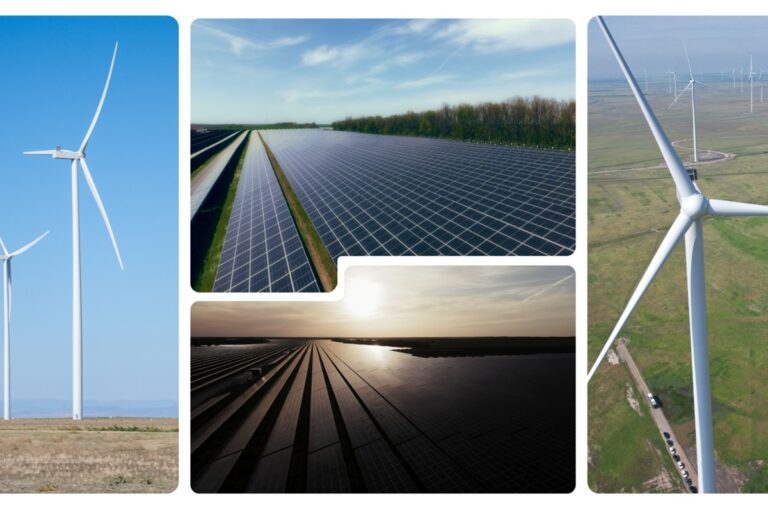

Ahold Delhaize has signed a ten-year renewable electricity agreement with Rezolv Energy in Romania, supporting new wind and solar projects expected to begin operating in 2029.
The deal, announced on 5 November, covers part of the output from the Dunarea East wind farm in Constanta County and the Dama solar project in Arad County. It adds a long-term energy commitment in the Romanian supermarket market, where the group operates Mega Image and Profi.
Specialist coverage puts the contracted annual volume at approximately 370 GWh. That is Ahold Delhaize’s share, rather than the combined generation of the two developments. The company describes its commitment as about 14% of their expected output.
The structure is a virtual power purchase agreement. Such contracts financially link a buyer and renewable generator while electricity enters the grid. They do not mean a named supermarket receives electricity directly from a particular turbine or solar panel. Stores still need their normal physical electricity supply.
Ahold Delhaize will receive Guarantees of Origin over ten years from 2029. The group says the agreement enables it to match its projected European electricity consumption with renewable electricity by 2030, five years ahead of its previous timetable.
That is a future electricity-matching goal. It does not establish that every European store already runs on renewable power, that renewable generation matches demand in every hour, or that the group’s wider emissions have reached net zero.
The contract price and any expected reduction in store electricity bills were not disclosed. Buyers should therefore distinguish the renewable procurement commitment from a claim of immediate operating-cost savings.
For grocery procurement teams, the start date matters as much as the contract term. A development-dependent agreement needs a plan for electricity sourcing before generation begins, along with clear rules for delays and the transfer of energy certificates.
Suppliers also need to keep the boundary of the claim clear. A retailer’s electricity agreement does not by itself reduce emissions from the food, packaging or transport services it buys. Those require their own evidence and measures.
The announcement follows the group’s latest trading update. It adds a longer-term procurement commitment alongside the nearer-term pressures on the business.
The next operational milestone is the projects’ expected commissioning in 2029. Delivery, certificate transfers and the consumption assumptions behind the 2030 target will determine how the commitment translates into reported progress.
Editor’s Note: Based on Ahold Delhaize’s 5 November announcement, specialist energy coverage and official explanations of virtual power purchase agreements. Procurement implications are GTN analysis.