
Switzerland’s confectionery packaging industry includes producers of premium chocolate cartons, moulded praline inserts and flexible films. Six businesses with relevant Swiss operations are PAWI Packaging Schweiz, Stäger & Co, Bachmann Forming, Wipf, ProAmpac Flexibles and SÜDPACK Bioggio.
These companies are not interchangeable. PAWI is known for folding cartons and presentation boxes. Stäger and Bachmann specialise in thermoformed packaging. Wipf and ProAmpac supply flexible packaging expertise, while SÜDPACK’s Bioggio operation is a centre for gravure printing and lamination.
The sector’s main competitive questions concern materials, factory capabilities, investment, production geography and food-contact requirements. Company-wide revenues and staff counts are not the same as a Swiss confectionery division’s results.
At a glance
Which companies make confectionery packaging in Switzerland? PAWI, Stäger, Bachmann Forming, Wipf, ProAmpac Flexibles and SÜDPACK Bioggio have relevant Swiss operations. They produce or support different formats, including chocolate cartons, praline trays, twist-wrap films and laminated packaging. Group sales and Swiss factory figures must be compared separately.
- 6 companies profiled: Swiss-headquartered specialists and international groups with Swiss operations.
- Premium chocolate boxes: PAWI.
- Praline inserts: Stäger and Bachmann Forming.
- Flexible films: Wipf and ProAmpac; SÜDPACK Bioggio specialises in printing and lamination.
- Financial benchmark: Wipf Group reported CHF 145m revenue in FY2024/25.
Six confectionery packaging suppliers in Switzerland
| Company | Swiss base | Specialism | Headquarters / group position |
|---|---|---|---|
| PAWI Packaging Schweiz | Winterthur | Chocolate cartons and gift boxes | Swiss-headquartered PAWI Group |
| Stäger & Co | Muri | Praline trays and clear thermoformed packs | Swiss-headquartered Stäger group |
| Bachmann Forming | Hochdorf | Chocolate and biscuit trays | Swiss Bachmann Group |
| Wipf | Volketswil | High-barrier packaging films and pouches | Swiss Wipf Group |
| ProAmpac Flexibles AG | Kirchberg | Twist-wrap and flow-wrap materials | Part of international ProAmpac group |
| SÜDPACK Bioggio | Bioggio, Ticino | Printing and lamination of flexible films | Part of German-headquartered SÜDPACK group |
Company revenue, employees and production sites
| Company | Revenue | Employees | Manufacturing footprint |
|---|---|---|---|
| PAWI Group | CHF 56.5m in 2022, before its Polish acquisition | About 370 across group in its 2024 environmental reporting | Winterthur, Singen and Warsaw |
| Stäger group | Comparable recent audited amount not established | More than 200 internationally | Operations in Switzerland, UK, Germany and Czechia |
| Bachmann Group | Comparable recent audited amount not established | About 310 group-wide | Hochdorf and German group activity |
| Wipf Group | CHF 145m in FY2024/25, versus CHF 157m previously | 464 group-wide; 241 at Wipf AG on 30 April 2025 | Swiss packaging operations and other group businesses |
| ProAmpac Flexibles AG | Swiss-entity amount not established | Swiss-entity count not established | Kirchberg presence plus international production network |
| SÜDPACK Bioggio | Swiss-site amount not established | Approximately 150 at Bioggio | Swiss gravure printing and lamination centre in wider group |
Important: These are figures from different years and reporting perimeters. They are not a like-for-like league table by revenue. Confectionery-specific market shares for the six companies were not substantiated by comparable public data.
1. PAWI Packaging Schweiz — premium chocolate cartons
- Founded: 1960.
- Headquarters: Winterthur, Switzerland.
- Revenue: CHF 56.5m group sales in 2022, before the Printmax acquisition.
- Employees: about 370 across the group, according to 2024 reporting.
- Production: Winterthur, Singen and Warsaw.
- 2026 development: award-winning Läderach chocolate carton.
PAWI is a Swiss family-owned packaging business founded in 1960 and headquartered in Winterthur. It produces folding cartons and presentation packaging for food, confectionery and other applications. Its international manufacturing network includes Winterthur, Singen in Germany and Warsaw in Poland.
The company reported CHF 56.5 million in consolidated 2022 sales before acquiring Polish producer Printmax in 2023. Its environmental reporting later described approximately 370 employees across its three manufacturing locations. Neither figure should be represented as the annual turnover or employee count of its Swiss confectionery unit alone.
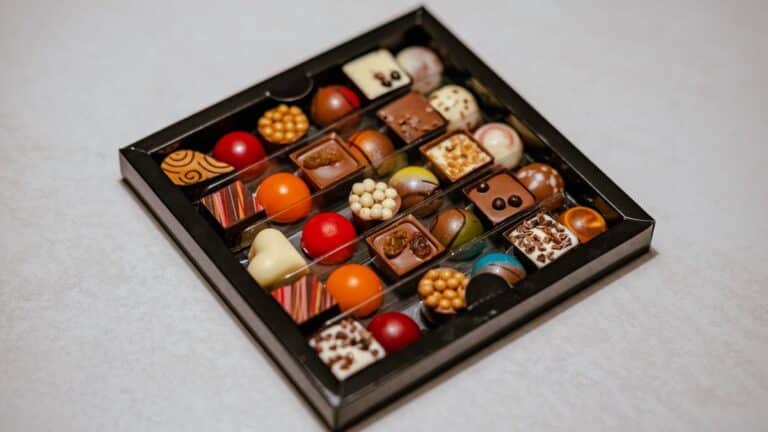
PAWI’s confectionery products include chocolate boxes, window cartons, praline packaging, gift packs and decorative finishing. It has cited work with Swiss confectionery brands including Confiserie Honold, Kägi and Chocolats Kaufmann. These examples indicate its position in premium presentation packaging, where shelf appearance and structural design are important.
In September 2026, PAWI announced that its Läderach chocolate-bar packaging had won Gold in the Confectionery category at the European Carton Excellence Awards. Its single-piece construction replaced a previous three-part design. The package is delivered flat, supports automatic erecting and closing and includes a reclosure feature.
The award is evidence of recent design and converting work, not a measure of company market share. PAWI also reported a Swiss Packaging Award for a Confiserie Honold Advent calendar. These projects highlight the role of seasonal innovation in chocolate packaging.
Its commercial position combines Swiss design and manufacturing with production capacity elsewhere in Europe. For retailers and confectionery manufacturers, the relevant competitive factors include print quality, carton assembly, costs and the location of the plant supplying each order.
2. Stäger & Co — formed praline trays and transparent displays
- Headquarters: Muri, Switzerland.
- History: more than 50 years in thermoformed packaging.
- Employees: more than 200 internationally.
- Locations: Switzerland, UK, Germany and Czechia.
- Specialism: praline inserts and transparent chocolate displays.
- Comparable annual revenue: not established in reviewed sources.
Stäger is based in Muri, Switzerland, and describes more than 50 years in transparent and thermoformed packaging. It operates internationally across Switzerland, the United Kingdom, Germany and Czechia. Its company information refers to more than 200 employees across the group.
Its confectionery range includes transparent packaging for seasonal chocolate figures, formed trays for pralines and biscuits, and coloured or metallic inserts for gift assortments. These products protect fragile items and help position chocolates within presentation cartons.
The group identifies production activity in Muri, Coventry and Pilsen, alongside its German presence. It has also described more than CHF 20 million of investment over an eight-year period. That historical investment is not annual turnover, and it should not be treated as a current revenue figure.
Stäger publishes information about quality systems, including ISO and food-packaging standards. The exact current certificate, plant and scope must be established from up-to-date documents. A historical certificate that expired in 2021 does not demonstrate present compliance.
The company’s market position is tied to precision forming and decorative inserts rather than high-volume chocolate-bar wrapping film. Its relevant competitors include other specialist thermoformers, some with production outside Switzerland.
A comparable 2025 group turnover, Swiss plant staffing and confectionery-only market share were not established in the reviewed material.
3. Bachmann Forming — chocolate and biscuit packaging
- Base: Hochdorf, Switzerland.
- History: family group with about six decades of activity.
- Employees: approximately 310 group-wide.
- Operations: Switzerland and Germany.
- Products: chocolate and biscuit trays and formed packaging.
- Innovation: NETPAC material-reduction concept.
Bachmann Forming operates from Hochdorf near Lucerne as part of the family-owned Bachmann Group. The wider business traces its activity back roughly six decades and reports about 310 employees across its operations, including related activities and a location in Germany.
Its food-packaging product range expressly includes trays and formed packs for chocolate, biscuits and chocolate-coated marshmallow products. The company also develops packaging made with plastic, aluminium and paper-based structures.
Food manufacturing certification is a significant part of its industrial profile. Published FSSC 22000 documentation relates to primary food packaging.
The certificate reviewed covers the period from March 2025 to March 2028. Its ISO 9001 and ISO 14001 documentation lists validity through March 2028 for the specified development and manufacturing activities.
Bachmann has also highlighted NETPAC, a shaped mesh packaging concept. It describes potential plastic savings of up to 50% in suitable applications. That is a product-specific performance claim. It cannot be applied to every chocolate or biscuit tray without testing.
The company competes in technically demanding formed packaging where production tools, material weight and pack-line compatibility affect manufacturing economics. Current audited revenue attributable solely to confectionery packaging was not identified.
4. Wipf — flexible films and a CHF 145m packaging group
- Base: Volketswil, Switzerland.
- Incorporated: 1946.
- Group revenue: CHF 145m, FY2024/25; CHF 157m in prior year.
- Group workforce: 464; Wipf AG reported 241 employees in April 2025.
- Investment: CHF 8.5m in FY2024/25.
- Products: high-barrier films and flexible bags.
Wipf AG is based in Volketswil, Switzerland, and was incorporated in December 1946. Its core packaging activities include high-barrier films, laminated materials and bags for food, pharmaceuticals and other applications.
The Wipf Group reported CHF 145 million in sales for FY2024/25, compared with CHF 157 million in the prior year. Its report attributed the decline to weaker demand and the exclusion of revenue from three group companies sold during FY2023/24.
Despite the lower group sales, Wipf reported CHF 8.5 million invested in expanding and modernising its facilities. It also reported 464 employees across the group. Wipf AG’s separate sustainability information recorded 241 employees at 30 April 2025, including apprentices.
The distinction between group scale and Swiss operations is important. Wipf’s global figure reflects several businesses, while the Swiss company is one operating entity. Neither establishes revenue from confectionery packaging alone.
Wipf differs from carton and tray specialists through its focus on flexible packaging technology. High-barrier structures may be relevant to chocolate and sweets where moisture, oxygen and aroma protection matter. However, broad food-packaging capability does not establish that every twist-wrap or cold-seal format is commercially supplied by Wipf.
Its current investment programme offers evidence of continued manufacturing development. The supplier’s exact place in Swiss confectionery wrapping cannot be expressed as a credible percentage without comparable category-specific sales figures.
5. ProAmpac Flexibles — specialist confectionery films
- Swiss operation: Kirchberg.
- Swiss entity history: registration history dates to 1953; not the foundation date of the global group.
- Group: international flexible-packaging business.
- Applications: twist wraps and flow-wrap films for sweets and chocolate.
- Swiss-entity revenue and employees: comparable current figures not established.
ProAmpac is an international flexible-packaging group with a Swiss legal presence through ProAmpac Flexibles AG in Kirchberg. Swiss business-registration-based records identify a corporate history dating to 1953 for the local entity. This is not the foundation date of the present global group.
The wider company markets twist-wrap materials for chocolates, caramels, hard sweets and related confectionery. Its product information covers twist retention, metallised finishes, film and foil laminates, and cold- or heat-seal materials for flow-wrapped products.
These are industrial formats used in automated confectionery packing. Film performance affects production speed, wrapper appearance, seal integrity and waste levels. The manufacturing site supplying a particular grade can therefore be as commercially important as the registered sales entity.
The company’s Swiss presence should not be taken to mean every globally advertised ProAmpac film is made in Kirchberg. Plant-of-origin data, printing and converting capabilities are product-specific.
A current audited sales figure for the Swiss legal entity, local workforce total and Swiss confectionery market share were not established. Global group figures from a different reporting perimeter would give a misleading comparison against independent Swiss packaging companies.
6. SÜDPACK Bioggio — printing and lamination in Ticino
- Swiss site: Bioggio, Ticino.
- Group history: established in 1964; acquired Picotti site in 2002.
- Employees: approximately 150 at Bioggio.
- Specialism: rotogravure printing and solvent-based or solvent-free lamination.
- Swiss-site revenue: not separately established.
SÜDPACK is a German-headquartered flexible-packaging group whose history dates to 1964. It acquired the Picotti plant in Bioggio, Switzerland, in 2002. The site became a specialised centre for rotogravure printing within the group’s international production network.
According to SÜDPACK, the Bioggio operation has approximately 150 employees and modern printing machinery. Its capabilities also include solvent-based and solvent-free lamination.
These processes are important for printed flexible packaging. Gravure printing supports consistent image reproduction at industrial scale, while lamination combines material layers with different performance properties.
The plant’s role should not be confused with responsibility for every stage of finished confectionery packaging. Extrusion, printing, lamination, slitting and pouch conversion can take place at different facilities within an international group.
For food and chocolate applications, printed films must meet the relevant food-contact and migration requirements. The site’s industrial specialisation is well documented, but an individual chocolate-film format requires separate product evidence.
Current Swiss-site revenue and the site’s share of Switzerland’s confectionery-packaging market were not established from directly comparable published data.
Swiss confectionery packaging market: demand and materials
Euromonitor’s September 2026 analysis estimated around 1.5 billion confectionery packaging units in Switzerland during 2025. Flexible packaging represented approximately 84% of those units. The market estimate covers chocolate, sugar confectionery and gum; it does not identify the suppliers behind each unit.
The high share of flexible packs reflects the widespread use of wrapped bars, bagged sweets and other everyday products. Premium cartons, shaped inserts and seasonal gift boxes serve different requirements. Their commercial importance cannot be assessed solely by unit count.
Cocoa costs, pack-size changes, sustainability requirements and retailers’ private-label strategies all influence packaging specifications. Manufacturers are balancing material reduction with shelf life, appearance and line performance.
PAWI’s award-winning chocolate cartons illustrate changes in premium presentation. Bachmann’s formed mesh structures show another direction in material efficiency. Flexible-film groups continue to develop barrier and sealing technologies.
However, a market-wide packaging-unit estimate cannot be multiplied by an assumed selling price to invent the revenue of individual converters. Nor does it establish national market share for any of the six suppliers.
How the six companies compete
| Packaging segment | Companies with relevant capability | Main competitive factors |
|---|---|---|
| Premium folding cartons | PAWI | Print quality, construction, decoration and production efficiency |
| Praline and chocolate inserts | Stäger; Bachmann | Precision forming, food contact, material use and protection |
| Flexible confectionery wrappers | ProAmpac; Wipf | Seal performance, barrier properties, line speed and supply consistency |
| Printed and laminated film | Wipf; SÜDPACK Bioggio | Printing, lamination, material structures and production geography |
These companies do not all compete for identical contracts. A chocolate gift pack may combine an outer PAWI-type carton with a formed insert from another manufacturer.
A chocolate bar or bag of sweets may use flexible packaging instead. Production geography also affects freight, lead times and supply resilience.
Swiss manufacturing versus international production
PAWI’s three plants, Stäger’s international operations, Wipf’s group businesses, ProAmpac’s multinational network and SÜDPACK’s cross-border converting operations illustrate a wider industry pattern. A Swiss sales office or legal subsidiary does not always mean the finished product is manufactured in Switzerland.
Nor does a Swiss manufacturing site imply all its raw materials originate in the country. Paperboard, films, resins, inks and other inputs may move through international supply chains. This distinction affects origin claims, customer specifications and production continuity.
The relevant measure of physical scale is the number and capability of manufacturing plants, not a retail-style count of branches. A group with several factories may still depend on one specialist production line for a particular material.
Industry developments to watch
The next developments for Swiss confectionery packaging are likely to centre on material reduction, food-contact compliance, more efficient converting, higher-quality printed cartons and the pressure to maintain margins during fluctuating demand.
Recent company news already shows several approaches: PAWI’s 2026 award-winning carton designs, Wipf’s CHF 8.5 million investment in modernisation and SÜDPACK’s established gravure and lamination capability in Bioggio.
Switzerland’s industry also forms part of a wider European network. Production developments among Austrian confectionery packaging companies, Spanish converters and Belgian packaging businesses provide regional context. Across adjacent food categories, European dairy packaging manufacturers face some of the same material and compliance pressures, although their packaging needs differ.
Future company accounts, factory investments, product launches and new packaging regulations will offer a clearer basis for measuring competitive change. Until then, dated group figures and confirmed plant capabilities provide more reliable comparisons than speculative market-share rankings.
How Swiss confectionery packaging companies developed
Switzerland’s packaging suppliers have different industrial histories. PAWI’s origins lie in paperboard conversion and printed cartons.
Stäger and Bachmann developed expertise in formed packaging. Wipf’s long-established operations focus on flexible materials.
The Swiss businesses attached to ProAmpac and SÜDPACK form part of wider international converting networks.
Those differences explain why the companies cannot be ranked simply by total group turnover. Carton manufacture, thermoforming and multilayer film production use different equipment and serve different parts of the confectionery market. A company with large pharmaceutical or industrial packaging sales is not necessarily the largest producer of chocolate wrappers.
Industry structure also reflects cross-border production. German and Polish plants appear within groups headquartered in Switzerland, while international packaging companies retain operations in Swiss cantons. A manufacturer’s location therefore describes where certain activities are carried out, not necessarily the origin of every finished packaging format it sells.
Recent manufacturing investment and product development
Wipf Group’s CHF 8.5 million investment in FY2024/25 provides a tangible measure of capital expenditure during a year when reported group sales fell. That contrast matters because packaging groups may continue upgrading machinery and technical capability even when demand weakens.
PAWI’s 2026 Läderach project provides a separate example of product development. A one-piece carton replaced a previous three-piece construction, according to the company.
Automation-ready design can affect how manufacturers fill, assemble and dispatch packs. Its commercial result depends on the finished structure and production process, not the award alone.
Bachmann’s NETPAC concept highlights material efficiency in formed packaging. It is marketed with potential plastic savings in suitable uses.
SÜDPACK’s Bioggio operation demonstrates the importance of printing and lamination technology within international flexible-packaging production. The innovations are not directly comparable, but each addresses a separate manufacturing requirement.
Food safety, packaging design and regulatory pressure
Confectionery packaging must protect products while controlling the risk of unwanted chemical transfer. Chocolate contains fats that can make packaging-material selection particularly important. Printed inks, adhesives, coatings and the final layer in contact with food all require appropriate assessment.
Packaging companies describe these requirements through product specifications, material testing and plant certifications. Bachmann has made food-packaging certification a visible part of its public industrial profile.
Stäger’s application information discusses product protection, odours and taste. Flexible-film groups focus on barrier behaviour, sealing and converting performance.
These factors affect the competition between paperboard and plastic-based materials. A premium cardboard gift box may be supplied with a separate plastic insert or inner wrapper. The complete pack, rather than the outer component alone, determines the product’s material composition and recycling claims.
What company size does — and does not — reveal
PAWI’s CHF 56.5 million 2022 revenue predates its Polish acquisition. Wipf’s CHF 145 million FY2024/25 revenue covers a different mix of businesses. Comparing those amounts without stating their dates and scope would give an inaccurate impression of current confectionery market position.
Employment data need similar context. The 464 workers reported by the Wipf Group are not all employed by Wipf AG in Volketswil. SÜDPACK’s roughly 150 workers at Bioggio describe a plant, not the complete German-headquartered group. Stäger and Bachmann report international or group-wide workforces.
Comparable chocolate-packaging market shares would require measured sales or production volumes within a common Swiss product market. None of the available company information provides a reliable full breakdown. Broad packaging sales, factory headcounts and the number of plants cannot supply that missing denominator.
Confectionery packaging and supermarket competition
Large chocolate manufacturers, artisan producers and private-label operators use different pack formats. Premium assortments emphasise presentation and protection. Mass-market chocolate bars need repeatable industrial wrapping. Bags of sweets require reliable sealing and consistent distribution performance.
Those formats create demand for several types of packaging company in the same supply chain. A chocolate producer may source a presentation carton from one specialist and a formed inner tray from another. Flexible wrappers can involve separate printing, lamination and converting operations across different countries.
For the Swiss industry, growth depends not only on confectionery sales but also on packaging redesign, material specifications, production efficiency and export competitiveness. Dated financial reports, confirmed factory investments and recent packaging launches provide a stronger basis for industry reporting than an unsupported ranking by market share.
Swiss confectionery packaging: key questions answered
Who makes chocolate boxes in Switzerland?
PAWI produces folding cartons and premium chocolate presentation packaging. Stäger and Bachmann Forming specialise in formed inserts and trays.
Which companies supply flexible confectionery packaging?
ProAmpac markets twist-wrap and flow-wrap materials. Wipf produces high-barrier flexible packaging. SÜDPACK Bioggio provides printing and lamination capabilities. Individual product availability depends on the production site.
How much revenue does Wipf make?
Wipf Group reported CHF 145 million in FY2024/25 sales. This is group revenue, not revenue from Swiss confectionery packaging alone.
Who has the largest Swiss confectionery packaging market share?
A comparable supplier-by-supplier market-share ranking was not established from reliable public data.
Editor’s Note: Based on company history and product information, PAWI’s September 2026 award announcement, Wipf Group’s FY2024/25 report, SÜDPACK’s Bioggio site description, packaging certification records and market data attributed to Euromonitor. Group and plant-level statistics are identified separately. No unsupported confectionery-only revenue, market-share or employee figures have been invented.