
ALDI Nord has announced a long-term expansion strategy for Berlin that will run through 2030, with plans to open new supermarkets, relocate selected stores and modernise existing branches across the German capital. Announced on 13 July 2026, the programme aims to strengthen ALDI Nord’s local presence, improve access to grocery shopping in densely populated urban areas and transport hubs, and support future growth through modern retail formats and mixed-use developments.
What is ALDI Nord’s Berlin expansion strategy?
ALDI Nord’s Berlin expansion strategy is a multi-year investment programme focused on increasing the retailer’s presence across Germany’s capital through new supermarket openings, store relocations and extensive modernisation projects. The strategy also incorporates mixed-use developments that combine supermarkets with residential housing to maximise urban land use and improve neighbourhood access to grocery retail.
At a glance
- ALDI Nord has announced its Berlin expansion strategy through 2030.
- The retailer currently operates around 140 stores across Berlin.
- Between 2026 and 2027, ALDI Nord plans two new stores, one relocation and 14 modernisation projects.
- Between 2028 and 2030, the company plans five additional stores, five relocations and 10 further expansions or revitalisations.
- Around 500 residential units have already been built or are under construction above ALDI Nord stores in Berlin.
- Future mixed-use developments could add around 350 more residential units.
- The strategy focuses on expanding in densely populated districts and transport hubs.
Why is ALDI Nord expanding in Berlin?
ALDI Nord is adapting its store network to changing shopping habits and increasing demand for convenient grocery shopping in urban locations. The company is prioritising densely populated neighbourhoods and transport hubs where modern supermarket formats can better serve local communities while supporting long-term business growth.
The investment also reflects the retailer’s broader strategy of modernising its property portfolio to improve store efficiency, accessibility and customer convenience.
What projects has ALDI Nord already completed?
Between 2021 and 2025, ALDI Nord completed nine new store openings, one relocation and 32 store expansions or revitalisations across Berlin.
During this period, the retailer opened several notable locations, including the Checkpoint ALDI store on Friedrichstrasse, a mixed-use supermarket with 103 residential units on Dietzgenstrasse in Berlin-Pankow, stand-alone branches on Späthstrasse and Potsdamer Chaussee, and two new stores on Sewanstrasse and Gerichtsstrasse that opened during 2026.
These developments have expanded ALDI Nord’s presence while introducing newer store formats designed for urban environments.
What will happen between 2026 and 2030?
The next phase of the programme continues ALDI Nord’s long-term investment in Berlin.
Between 2026 and 2027, the retailer plans to open two additional supermarkets, complete one relocation, and carry out 14 store expansions or revitalisations.
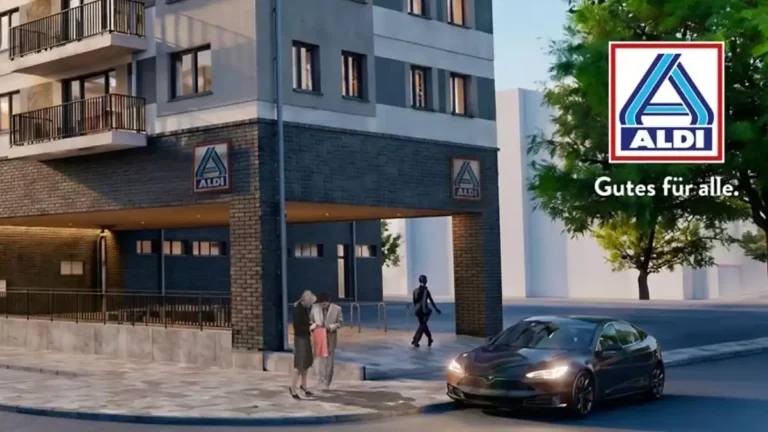
Construction has already begun on a new mixed-use development on Weinstrasse in Berlin’s Friedrichshain-Kreuzberg district, combining an ALDI supermarket with residential apartments.
Between 2028 and 2030, ALDI Nord plans to deliver five additional stores, five relocations and ten further modernisation projects, extending its network across the capital.
How do mixed-use developments support supermarket expansion?
Mixed-use developments combine supermarkets with residential housing within the same building, allowing retailers to expand in densely populated urban areas where land is limited.
ALDI Nord has already delivered or is developing around 500 residential units above its Berlin supermarkets. Planned projects could add another 350 homes, with developments delivered through partnerships with investors and property developers.
This approach supports urban regeneration while improving access to local grocery stores.
What does this mean for Germany’s supermarket sector?
Berlin remains one of Germany’s fastest-changing grocery markets, where discounters, full-service supermarkets and convenience retailers continue investing in modern urban store formats.
Mixed-use supermarket developments are becoming increasingly common as retailers seek to maximise land use, support residential growth and improve accessibility for city residents. At the same time, store modernisation programmes help operators improve energy efficiency, optimise layouts and enhance the overall shopping experience.
ALDI Nord’s latest programme reflects wider investment across Germany’s food retail sector as supermarkets adapt their networks to evolving consumer behaviour and urban development patterns.
What happens next?
Editor’s Note: This article is based on an official announcement published by ALDI Nord on 13 July 2026 regarding its long-term Berlin expansion strategy through 2030. Information has been presented in an editorial news format with additional industry context for retail professionals. No facts or figures from the original announcement have been altered.