
Austria’s confectionery packaging sector connects local manufacturing with international food supply chains.
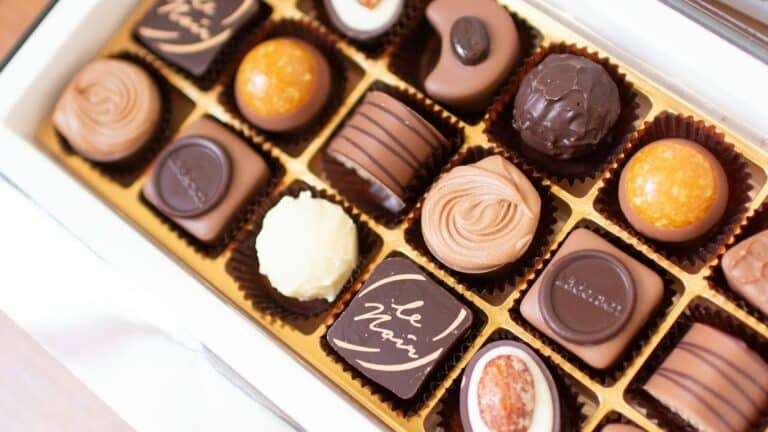
The country is home to suppliers of foil, flexible films, printed cartons and labels. These materials support chocolate bars, pralines, sweets and seasonal gift ranges.
The sector serves several parts of the grocery industry:
- Confectionery manufacturers
- Supermarket private labels
- Premium chocolate brands
- Artisan producers
- Food distributors
Material changes are reshaping the market. Paper-based formats are expanding. Manufacturers also need packaging that protects products and runs reliably on existing equipment.
This report examines ten companies serving Austria’s confectionery packaging industry. Their roles range from primary wrapping materials to cartons and shelf presentation.
For the wider sector, see our Austria packaging companies report.
At a glance: 10 confectionery packaging suppliers serving Austria
| Supplier | Austrian position | Best-fit confectionery work | Verified size or revenue |
|---|---|---|---|
| MM Food & Premium Packaging | Vienna-based MM Group | Premium folding cartons, branded board packaging | €1,538.4m Food & Premium divisional sales, FY2025 |
| Constantia Flexibles | Vienna-headquartered | Foil for tablets, pralines, seasonal figures and candy | Group-wide current comparable sales not confirmed |
| Coveris | Head office in Vienna | Twist wraps, flow wraps, printable paper | About 2,500 staff; current facts page lists 18 sites |
| RATTPACK | Austrian converter | Wax-laminated sweet and chocolate wrappers | €145m turnover, 590 employees and eight locations, group facts for 2025 |
| Schwarzach Packaging | Austrian manufacturer | High-finish sweets and chocolate cartons | Confectionery-only revenue not disclosed |
| Cardbox Packaging | Vienna HQ; Austrian factories | Recyclable carton design and chocolate display packs | 5 plants and about 250 staff, company site |
| Marzek Etiketten+Packaging | Austrian printing group | Labels, decorative food packs, variable print | Confectionery-only revenue not disclosed |
| Karba Pack | Vienna business | Bonbon foil, praline sheets and flexible films | More than 100-year business heritage |
| Idee & Werk | Graz-based distributor | Small-batch praline boxes and customised chocolate packs | Disclosed group revenue unavailable |
| Mondi | Austrian paper production; international group | Premium papers and secondary food packaging | Austria-only confectionery share not disclosed |
How to read the figures: These are the latest scope-labelled figures checked for this report. A group or business-division figure is not Austrian confectionery sales.
Private suppliers often do not publish product-line revenue, branch counts or market shares. ‘Not disclosed’ is more accurate than a made-up number. No audited, like-for-like Austrian confectionery packaging market-share ranking was found.
1. MM Food & Premium Packaging — large-scale cartons and board
- Headquarters: Vienna, Austria.
- Ownership and shareholders: MM Group is publicly listed. It has core family shareholders and other investors.
- Revenue and earnings: €1,538.4 million Food & Premium Packaging sales in 2025, including interdivisional sales; adjusted divisional operating profit was €157.3 million. MM Group revenue was €3,885.3 million and group profit for the year €77 million.
- Employees: MM Group reported 13,080 employees at 30 June 2026, excluding temporary workers. This is not a confectionery-only headcount.
- Sites and branches: MM’s 2025 annual report lists 60 group locations across 23 countries. A comparable confectionery-only site count was not verified.
- History: MM grew from an Austrian paperboard business into an international packaging group.
Company operations
MM is a major European paperboard and packaging producer with a long Austrian base.
Its Food & Premium Packaging business offers high-quality carton conversion for branded goods.
The division is relevant when a chocolate manufacturer needs high-volume printed cartons, a structurally reliable outer pack or consistent finishing across several markets.
This is a different requirement from the foil in direct contact with a chocolate bar.
Position in the market
MM supplies the printed cartons used around branded and private-label confectionery. Its scale supports packaging programmes across several markets.
The carton protects the product and carries the brand on shelf. It serves a different purpose from the foil touching the chocolate.
2. Constantia Flexibles — technical confectionery foil
- Headquarters: Vienna, Austria.
- Ownership and shareholders: Owned through an affiliate of One Rock Capital Partners. The acquisition closed in January 2024.
- Revenue and earnings: A 2025 or 2026 revenue figure was not verified. Its 2023 ESG report disclosed approximately €2 billion sales for 2023; this is historical and predates subsequent acquisitions.
- Employees: About 8,500 worldwide, according to its October 2026 company information.
- Sites and branches: 37 sites in 18 countries. These are group figures.
- History: The group expanded through acquisitions. One Rock’s acquisition closed on 4 January 2024; this is not the founding date of its individual factories.
Company operations
Vienna-headquartered Constantia has one of the clearest direct confectionery portfolios in the group.
Its published products include Tablet Foil for chocolate bars, BarsWraps for folding applications, Coin Foil for deep-drawn chocolate coins and dedicated Seasonals & Pralines substrates.
Unlike a general printing directory, these specifications show which material is intended for which wrapping operation.
Position in the market
Constantia supplies materials for chocolate bars, pralines, coins and seasonal figures. Barrier performance helps protect flavour and shelf life.
Folding and sealing properties also affect production speed. This places the company within the primary-packaging side of Austria’s confectionery supply chain.
3. Coveris — paper twist-wrap and high-speed flow-wrap options
- Headquarters: Vienna, Austria.
- Ownership and shareholders: The Coveris brand brought together Sun Capital Partners packaging businesses. A current ownership percentage breakdown was not verified.
- Revenue and earnings: €609 million annual sales on its current company facts page. The page does not specify the financial year.
- Employees: About 2,500 across the business.
- Sites and branches: 18 sites on the current facts page. Other company pages still list 17.
- History: The Coveris brand was established through consolidation from 2013.
Company operations
Coveris is headquartered in Vienna and supplies paper and flexible food packaging across Europe.
In 2026 it introduced MonoFlexFibre Pure Twist, a lightweight functional-paper approach aimed at confectionery uses including hard candy, lollipops and chocolate pralines.
The company also identifies heat-seal flow-wrapped bars and sticks among the intended formats.
Position in the market
Coveris is developing paper options for twist-wrapped sweets and flow-wrapped confectionery. These formats reflect manufacturers’ efforts to change packaging materials.
The commercial challenge is maintaining protection and production speed. A paper-based pack still depends on its coating, seal and final construction.
4. RATTPACK — wax-laminated candy and chocolate wrappers
- Headquarters: Dornbirn, Austria.
- Ownership and shareholders: A third-generation family business.
- Revenue and earnings: €145 million turnover for 2025, according to RATTPACK. A comparable profit figure was not verified.
- Employees: 590 employees in the company’s 2025 facts.
- Sites and branches: Eight locations in the company’s 2025 facts. Locations are not necessarily all production plants.
- History: Hugo Ratt founded the business in Dornbirn in 1953. It initially made cardboard shoe boxes.
Company operations
RATTPACK is especially relevant to businesses buying bonbon wrappers, praline foils and specialised paper or aluminium laminates.
The Austrian converter describes its own wax-lamination plant and offers partial as well as full-area constructions.
Its applications specifically include sweets, chocolate wrapping and fat-sensitive food uses.
Position in the market
RATTPACK combines printing with specialist wax lamination. Its materials serve different confectionery applications.
Pralines, chewy sweets and fat-rich chocolate products have different protection needs. This technical range gives the Austrian group a role beyond standard carton production.
5. Schwarzach Packaging — premium presentation cartons
- Headquarters: Schwarzach, Vorarlberg, Austria.
- Ownership and shareholders: A private company. Its current shareholder percentages were not verified.
- Revenue and earnings: Current annual turnover was not publicly verified.
- Employees: About 400, according to the company.
- Sites and branches: The Schwarzach manufacturing base is confirmed. A complete current branch count was not verified.
- History: Its roots date to 1913. Packaging and paper-label production began in 1955.
Company operations
Schwarzach Packaging presents a dedicated sweets-packaging offering from Austria.
Its confectionery programme emphasises standard cartons, special constructions and printing or decorative finishing that make chocolate boxes stand out on shelves.
The company states that packs must be neutral in taste and odour, protective and suited to relevant hygiene requirements.
Position in the market
Schwarzach supplies printed cartons for premium and seasonal confectionery. These packs carry much of a product’s shelf presentation.
Shape, colour and decorative finishes help distinguish ranges. The outer carton works alongside the tray, insert or wrapper protecting the food.
6. Cardbox Packaging — tested cardboard substitution for chocolate
- Headquarters: Vienna, Austria.
- Ownership and shareholders: Privately held. A current shareholder breakdown was not verified.
- Revenue and earnings: Comparable current group revenue was not publicly verified.
- Employees: About 250, according to the company.
- Sites and branches: Five plants are listed. Austrian locations include Pinkafeld and Wolfsberg.
- History: Cardbox Packaging was founded in 2012. Its Wolfsberg predecessor printing business dates to 1877. The Neubuz plant opened in 2025.
Company operations
Cardbox Packaging is headquartered in Vienna with Austrian manufacturing at Pinkafeld and Wolfsberg and an international plant network.
Its website lists five plants and approximately 250 staff.
These are group figures and should not be treated as the staffing of a specific chocolate line.
Position in the market
Cardbox’s Lindt & Sprüngli confectionery project received a packaging award in 2022. Its cardboard design replaced a plastic insert and outer film in chocolate ladybug packaging.
The project shows how carton engineering can change a pack’s material mix. Product protection remains part of that work.
7. Marzek Etiketten+Packaging — labels and shelf presentation
- Headquarters: Traiskirchen, Austria.
- Ownership and shareholders: A family-owned company.
- Revenue and earnings: The company’s presentation named Marzek_Praesentation_2024 reports €80 million turnover, without identifying a financial year. This is a corporate size indicator, not verified FY2025 or FY2026 revenue.
- Employees: More than 700, according to its company profile.
- Sites and branches: Four production sites in Austria, Hungary and Ukraine, including Traiskirchen, according to the company presentation.
- History: Founded in 1879. It developed from printing into labels and packaging.
Company operations
Marzek is an Austrian specialist in printed labels and packaging solutions.
Its food-sector materials explicitly include sweets alongside dairy, bakery and meat products.
The company describes sheet-fed and reel-fed labels, multilayer formats, variable print, special finishes and foil effects.
Such capabilities can support complex seasonal SKUs and multilingual packaging.
Position in the market
Marzek supplies the printed information and decoration around food products. Its label formats support seasonal launches and multilingual ranges.
Labels also carry barcodes, batch information and other product details. This gives the business a different role from a supplier of food-contact barrier films.
8. Karba Pack — Vienna-based praline and sweets flexible films
- Headquarters: Vienna, Austria.
- Ownership and shareholders: A private limited company. Current ownership percentages were not verified.
- Revenue and earnings: Current annual turnover was not publicly verified.
- Employees: A reliable current headcount was not publicly verified.
- Sites and branches: The Vienna location is confirmed. A full branch count was not verified.
- History: Founded in 1895 by Max Feigl as Wiener Gelatine-Waren-Industrie. It subsequently concentrated on flexible packaging.
Company operations
Karba Pack describes more than a century of business history and a focus on flexible packaging for food, pharmaceutical and other applications.
Its public range includes coated papers, cellophane-type films and aluminium formats.
Crucially, the company specifically lists confectionery and bonbons or pralines among the intended uses.
Position in the market
Karba Pack serves smaller and specialist confectionery manufacturers alongside other food customers. Its range includes films, foils and cut sheets.
These formats suit products packed individually or in short runs. The business adds flexibility to Austria’s confectionery packaging supply.
9. Idee & Werk — practical praline packs and short runs
- Headquarters: Graz, Austria.
- Ownership and shareholders: The current website names VERA good GmbH, company number FN 452478i, as its operator. This must be distinguished from the older Idee & Werk R. Tauder GmbH legal entity.
- Revenue and earnings: Current annual turnover was not publicly verified.
- Employees: A reliable total headcount was not publicly verified.
- Sites and branches: The current website identifies IDEE & WERK in Graz as a branch of VERA good GmbH, whose registered address is in St. Margarethen an der Raab. A wider branch total was not verified.
- History: The company has served bakery and confectionery customers since 1978.
Company operations
Graz-based Idee & Werk is a packaging wholesaler and customisation partner.
It should not be presented as the manufacturer of every item it distributes.
Its product catalogue provides unusually clear detail on praline boxes, inserts, decorative tubes, rigid cases, transparent packs and tailored sleeves.
Position in the market
Idee & Werk supplies boxes, inserts and customised presentation packs. It operates as a wholesaler and customisation partner.
Its catalogue serves artisan confectioners and smaller product launches. This distinguishes the business from industrial converters producing large volumes of packaging material.
10. Mondi — paper materials and secondary confectionery packaging
- Headquarters: Group offices include Vienna, Austria, and Weybridge, UK.
- Ownership and shareholders: Mondi plc is publicly listed. It is owned by its shareholders.
- Revenue and earnings: €7,663 million group revenue in 2025. Underlying EBITDA was €1,001 million.
- Employees: Mondi describes approximately 24,000 employees worldwide. This is not an Austrian confectionery-only workforce.
- Sites and branches: More than 100 production sites across more than 30 countries, according to Mondi’s group profile. An Austria-only confectionery total was not verified.
- History: The business traces its origins to South African paper production in 1967.
Company operations
Mondi operates internationally and has important Austrian paper production, including the Neusiedler mill.
In 2025 it presented premium papers made in Austria for high-quality packaging.
Its broader food portfolio also includes corrugated and solid-board options for retail presentation and supply-chain handling.
This is a different role from a specialist who manufactures the foil immediately wrapped around a praline.
Position in the market
Mondi supplies paper and secondary packaging used across food manufacturing and distribution. Its Austrian paper operations connect local production with an international group.
Food protection and material change
Confectionery packaging has several jobs. It protects the product. It carries brand information. It also supports transport and shelf display.
Chocolate is sensitive to storage conditions. Wrapping materials can affect protection from moisture and odours. The printed carton usually plays a different role.
That distinction runs through Austria’s supplier base. Constantia and RATTPACK have documented primary-wrapping applications. Cardbox and Schwarzach have clear carton capabilities.
Other businesses work around these formats. Marzek supplies labels and decoration. Idee & Werk distributes and customises presentation packaging.
Packaging changes are therefore rarely a simple exchange of one material for another. An outer carton, inner tray and direct-contact wrapper perform different tasks. Their combined performance affects the finished product.
The wider regulatory context is covered in our Austria food safety certifications report. Material development also features in our European mono-material packaging report.
Three parts of Austria’s confectionery packaging market
1. Primary wrapping materials
This segment includes films, foil and coated papers. These materials sit closest to the product. They also interact directly with wrapping equipment.
Constantia’s product range covers chocolate tablets, coins and seasonal shapes. RATTPACK’s wax laminates address different sweets and fat-rich products. Karba Pack adds films and cut-sheet formats.
Coveris is developing paper-based formats for twist wrapping and flow wrapping. This work sits within the broader search for alternative confectionery materials.
2. Cartons and presentation packaging
Cartons connect protection with presentation. They hold products together and provide space for branding. Inserts can also support individual pieces during distribution.
MM’s Food & Premium Packaging division operates at international scale. Cardbox has documented chocolate-pack development work. Schwarzach supplies printed and finished cartons for premium products.
These companies do not perform exactly the same role. Their production systems and product ranges differ. Their place in the market depends on the packaging format.
3. Labels, distribution and supporting materials
Marzek supplies printed labels and decorative formats. These help communicate product identity and information across different retail markets.
Idee & Werk offers a distribution and customisation route. Its praline boxes and inserts serve smaller confectionery ranges alongside other packaging applications.
Mondi supplies paper and secondary-packaging materials across a wider international network. Its Austrian operations connect the local sector with paper production and distribution markets.
Together, these businesses show the range behind a finished confectionery pack. The visible box is only one part. Printing, substrates, converting and distribution each contribute to the product reaching a supermarket shelf.
Revenue, employment and production scale
The figures in this report cover different company structures. MM publishes divisional sales. Mondi reports worldwide group results. Several private suppliers do not publish comparable turnover figures.
Employment figures also have different boundaries. Constantia’s headcount covers its international business. Marzek’s figure covers its European operations. Schwarzach reports a company workforce of about 400.
Site counts describe manufacturing scale. They are not supermarket branch counts. A group may operate several factories without running consumer-facing shops.
No comparable public market-share ranking was established for Austrian confectionery packaging. The numbered companies therefore represent the sector’s different commercial roles. They are not presented as a revenue league table.
What happens next?
Austria’s confectionery packaging companies serve different parts of the same supply chain. Foil and film producers protect the food. Carton and label specialists shape its presentation.
Future investment will centre on material efficiency, production performance and packaging recovery. The balance between these priorities will influence product development across the sector.
Editor’s Note: Updated on 1 November 2026. GTN reviewed company disclosures, official websites and available accounts. Revenue is labelled by year and reporting scope. Revenue is not profit. Factories and depots are counted separately from retail branches. Unverified figures are marked clearly.