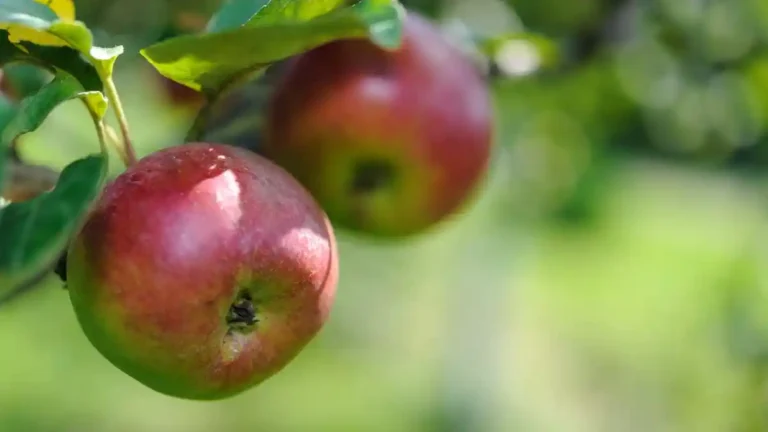

France’s apple sector is moving deeper into premium retail territory.
Lower-cost origins can compete on volume. But French suppliers are defending value through:
- branded fruit
- protected origin labels
- club varieties
- agroecological production
For supermarket buyers, the strongest French apple companies are no longer judged only by harvest size.
They are judged by:
- consistency
- shelf-life
- residue control
- traceability
- packaging flexibility
- export reliability
This ranking looks at the organisations shaping France’s fresh table apple market in 2026. It runs from Blue Whale’s export scale to Perlim’s AOP origin model and Innatis’ club variety portfolio.
At a Glance: Top French Apple Companies
| Rank | Company | FY Revenue | Strategic Role |
|---|---|---|---|
| 1 | Blue Whale | Private | Scale, exports and retail programmes |
| 2 | Innatis | Private | Club varieties and premium genetics |
| 3 | Cofruid’Oc | Private | Southern France retail supply |
| 4 | Les Vergers de la Blottière | Private | Eco-responsible apple innovation |
| 5 | Mesfruits | Private | Export and wholesale supply |
| 6 | Perlim | Private | AOP origin-based premium apples |
| 7 | Pom’Evasion / Select Fruit | Private | Agroecology and premium branding |
| 8 | Alpes Coop Fruits | Private | Alpine apple supply |
| 9 | Groupe Castang | Private | Dordogne apple grower-packer |
| 10 | SICA Pomme Alpes | Private | Haute-Durance PGI apple production |
Why French Apples Command Premium Shelf Space
French apple suppliers have built value by turning apples into more than a bulk produce line. They rely on four main advantages.
- Origin. AOP and PGI labels allow specific regions to defend quality and provenance in a way that generic apples cannot. Perlim’s Pomme du Limousin AOP is the clearest example. It uses protected origin to support a premium Golden Delicious position.
- Club varieties. Companies such as Innatis and Blue Whale use branded apples. These help retailers create differentiated ranges with clearer consumer appeal.
- Agroecology. French retailers increasingly want suppliers that can show progress on biodiversity, reduced inputs, traceability and packaging. That gives companies such as Les Vergers de la Blottière and Pom’Evasion a stronger role in premium supermarket programmes.
- Brand equity. Blue Whale, Perlim, Select Fruit and others have invested in consumer-facing names, packaging and export identity.
This is where France differs from pure volume markets.
The product is not only an apple. It is a branded, traceable and marketable retail item.
1. Blue Whale
- Founded: 1950
- Headquarters: Montauban area, France
- FY Revenue: Private
- Core Operations: Fresh apple marketing, packing, grower coordination and exports.
Blue Whale is the scale leader in French fresh apples. It is also one of the country’s most important produce export brands.
The organisation brings together hundreds of growers across several production areas:
- Garonne Valley
- Loire Valley
- Provence
- Centre
- the Alps
Why it matters to supermarket buyers
Its commercial strength lies in combining a large grower base with centralised marketing, export coordination and a recognisable consumer brand.
For supermarket buyers, Blue Whale offers something many fragmented supply bases cannot. It provides a broad range of French apples, consistent quality standards and the ability to support large retail programmes across multiple markets.
Its apple portfolio includes both mainstream varieties and branded premium lines. That matters because supermarket apple shelves are becoming more segmented.
Retailers need entry-level apples, premium apples, snacking formats and promotional varieties. Blue Whale has the scale to serve several of those needs at once.
Export role
The company is also one of France’s strongest apple exporters. Its presence across Europe and Asia gives it a useful role for retailers and importers seeking French-origin apples with reliable commercial support.
Blue Whale’s strategic importance is not only its volume. It is the way it turns a large French grower network into a coordinated supply brand.
That is the core of France’s apple model: many farms, one market-facing identity.
2. Innatis
- Headquarters: France
- FY Revenue: Private
- Core Operations: Apple production, premium varieties, organic programmes and club apple marketing.
Innatis gives the French apple industry one of its strongest premium variety stories. The group is closely linked with exclusive apple brands such as:
- HoneyCrunch
- Choupette
- LoliPop
- Zingy
It also has organic apple programmes, including organic versions of several proprietary varieties.
Why club varieties matter
This matters because the apple category has changed. A standard red or yellow apple no longer creates enough margin on its own.
Retailers increasingly want apples with a name, story and eating profile that can justify premium shelf space. Innatis is built around that shift.
Its strength is not simply that it grows apples. Its strength is that it helps control differentiated varieties that retailers can use to build premium ranges.
These apples are marketed on crunch, flavour, colour and seasonal availability rather than commodity pricing alone.
What it means for retailers
For supermarket buyers, this creates a cleaner category structure. Instead of selling anonymous fruit, retailers can merchandise branded apples with defined quality standards and consumer recognition.
The company also shows how intellectual property is reshaping fresh produce. Club varieties limit uncontrolled planting. They help avoid the price crashes often seen in open varieties when supply becomes too high.
That makes Innatis one of the most important companies in France’s apple sector. This is true even though it does not operate in the same way as a large cooperative exporter.
3. Cofruid’Oc
- Founded: 1962
- Headquarters: Southern France
- FY Revenue: Private
- Core Operations: Apple production, packing, export supply and supermarket programmes.
Cofruid’Oc is an important southern French apple supplier with a long history in both domestic and export markets.
The company’s commercial position is built around technical production, packing standards and a strong range of apple varieties.
Its location in southern France gives it a different growing and supply profile from western, Alpine or Limousin-based apple companies.
Why it matters to supermarket buyers
For supermarket buyers, Cofruid’Oc’s relevance comes from reliability. Retail customers need fruit that meets strict specifications for size, colour, firmness and appearance.
A supplier’s packhouse capability is often as important as its orchard base. Cofruid’Oc has positioned itself around that technical supply function.
Its role in the market is also helped by exports. French apple companies have had to compete against lower-cost European and Southern Hemisphere origins. This means technical quality and service levels are essential.
Cofruid’Oc’s long-standing export activity gives it experience in managing different customer specifications across markets.
Regional diversity
The company also reflects a wider French advantage: regional diversity. France does not depend on one single apple belt. Its supply comes from several production zones, each with different climatic conditions and commercial strengths.
Cofruid’Oc gives the ranking a clear southern France anchor. It reinforces the idea that France’s apple sector is not only about large national brands. It is also built on specialist regional operators serving demanding retail customers.
4. Les Vergers de la Blottière
- Founded: 1961
- Headquarters: Saint-Georges-sur-Loire, Loire Valley, France
- FY Revenue: Private
- Core Operations: Apple growing, packing, marketing and export.
Les Vergers de la Blottière has built its reputation by focusing on quality before quantity.
The family-owned business is one of France’s best-known premium apple producers. It has become a reference point for environmentally responsible orchard management.
Many growers compete through production scale. This company has instead concentrated on innovation, sustainability and consumer confidence.
Its orchards produce a broad portfolio of apple varieties, including:
- Gala
- Granny Smith
- Fuji
- Golden Delicious
- Pink Lady®
- Jazz™
- the French-developed Antarès® variety
Market Position
The company holds a premium position within the French apple market.
Its strength lies in combining family ownership with modern production methods. This lets it respond quickly to changing retailer requirements while keeping close control over orchard management.
Unlike larger producer organisations, Les Vergers de la Blottière keeps a highly integrated production model. Growing, packing and marketing remain closely connected.
Operational Relevance
European retailers continue to strengthen sustainability requirements across fresh produce.
Les Vergers de la Blottière has responded through long-term investments in biodiversity, reduced-input production systems and environmentally responsible orchard management.
Its work with the Antarès® apple also shows how French growers keep investing in proprietary varieties. These can offer retailers something different from standard supermarket ranges.
Competitive Strength
Rather than relying on commodity production, the company focuses on premium fruit with strong visual appeal, eating quality and traceability.
Its investment in environmentally responsible production also supports retailers looking to strengthen ESG commitments without compromising product quality.
Industry Context
French apple producers increasingly compete on environmental performance alongside quality and consistency.
Les Vergers de la Blottière shows how sustainability has become a commercial advantage rather than simply a compliance requirement.
5. Mesfruits
Headquarters: Cavaillon, Provence, France
FY Revenue: Private
Core Operations: Fresh fruit marketing, packing, exports and wholesale distribution.
Mesfruits is one of southern France’s important commercial fruit organisations. It supplies both domestic retailers and export markets.
Its portfolio extends beyond apples. Even so, the company has established itself as an important supplier of premium French apples to customers across Europe and overseas.
Its commercial structure combines grower relationships, modern packing operations and export logistics. This allows it to serve both supermarket chains and wholesale customers.
Market Position
Mesfruits has developed a diversified commercial model.
Rather than depending solely on the French market, the company has expanded exports into regions including the Middle East and South America. This reduces dependence on any single destination.
This diversification has become increasingly valuable as international trade patterns continue to evolve.
Operational Relevance
Export programmes require much more than fruit production.
Different countries demand different packaging, phytosanitary documentation and logistics planning.
Mesfruits has invested in these capabilities, allowing it to support customers with varying commercial requirements.
Competitive Strength
The company’s ability to balance domestic retail supply with export programmes gives it greater commercial flexibility.
Strong relationships with growers also allow Mesfruits to assemble programmes that meet retailer specifications for quality, presentation and consistency.
Industry Context
French exporters increasingly compete in premium markets rather than commodity channels.
Companies that can serve multiple regions while keeping quality consistent continue to strengthen France’s international position.
6. Perlim
Founded: Family business
Headquarters: Limousin, France
FY Revenue: Private
Core Operations: Premium apple production, packing, marketing and export.
Few companies show the commercial value of origin as effectively as Perlim.
The company specialises in Pomme du Limousin AOP, the only French apple protected under the Appellation d’Origine Protégée system.
That legal recognition gives retailers something increasingly valuable: independently verified origin.
Market Position
Perlim has become synonymous with premium Golden Delicious production from the Limousin region.
Rather than competing with large-volume commodity apples, the company has positioned itself around quality, terroir and traceability.
Its portfolio also includes premium branded varieties and organic apple programmes:
- Evelina®
- Rubis Gold®
- Dolce Vita®
Operational Relevance
Consumers increasingly want to know where food comes from.
For retailers, protected origin labels add an extra layer of trust while supporting premium pricing.
Perlim has built its commercial strategy around exactly this principle.
Competitive Strength
The company combines regional identity with modern commercial infrastructure.
Its orchards operate under recognised environmental standards. Advanced packing facilities provide flexible retail packaging for both domestic and export customers.
That combination allows Perlim to keep traditional production values while meeting modern supermarket requirements.
Industry Context
France remains one of Europe’s strongest advocates of geographical origin protection.
Perlim shows how AOP certification can turn a familiar apple variety into a premium retail product. That product is supported by provenance, quality assurance and long-term brand recognition.
Why Origin Matters
France’s apple industry has shown that consumers are willing to pay more when products have a clear identity.
Origin labels, recognised brands and sustainable production systems all contribute to that perception.
Rather than competing directly against lower-cost apples, many French producers have chosen to compete through trust, quality and differentiation.
That strategy continues to shape procurement decisions across Europe’s supermarket sector.
7. Pom’Evasion (Select Fruit)
Founded: Producer organisation
Headquarters: Western France
FY Revenue: Private
Core Operations: Apple production, grower coordination, packing, marketing and retail supply.
Pom’Evasion has positioned itself around one of the fastest-growing areas of the European produce market: environmentally responsible apple production.
Through its Select Fruit brand, the organisation supplies premium apples to retailers. These retailers want products backed by sustainable farming practices, quality assurance and modern packaging.
Rather than competing solely on production volume, Pom’Evasion focuses on creating added value through production standards and consumer confidence.
Market Position
The organisation has become recognised for promoting agroecological farming methods while keeping commercial-scale production for supermarkets.
Its growers work within common production standards designed to:
- improve orchard biodiversity
- optimise natural resources
- reduce environmental impact
These initiatives align closely with changing retailer procurement requirements across Europe.
Operational Relevance
Major supermarket chains increasingly evaluate suppliers on environmental performance alongside price and quality.
Pom’Evasion has responded by combining sustainable orchard management with modern packing and marketing programmes.
Its Select Fruit brand helps retailers communicate these values directly to consumers. It also keeps a premium presentation in the produce department.
Competitive Strength
The organisation combines regional production with flexible commercial operations.
It has invested in environmentally responsible farming, recyclable packaging and strong grower coordination. This has helped strengthen relationships with retailers seeking long-term supply partners rather than seasonal suppliers.
Industry Context
Across Europe, sustainability is becoming part of commercial competition rather than simply regulatory compliance.
Pom’Evasion shows how environmental commitments can support premium positioning without losing focus on operational efficiency.
8. Alpes Coop Fruits
Founded: Cooperative
Headquarters: Provence-Alpes-Côte d’Azur, France
FY Revenue: Private
Core Operations: Alpine apple production, packing, storage and marketing.
Alpes Coop Fruits is one of France’s important mountain fruit cooperatives.
The organisation specialises in apples produced in Alpine growing conditions. Cooler temperatures and large day-to-night temperature differences support colour development, firmness and storage quality.
These natural advantages have helped position Alpine apples within premium supermarket programmes.
Market Position
Some national marketing organisations spread production across multiple regions. Alpes Coop Fruits, by contrast, focuses on fruit grown in the Alpine environment.
This regional identity gives the cooperative a distinctive market position while supporting consistent product quality.
Operational Relevance
Mountain-grown apples often develop characteristics valued by retailers, including strong colour, crisp texture and good storage performance.
These qualities, combined with modern grading and packing operations, help the cooperative supply premium retail programmes throughout the marketing season.
Competitive Strength
The cooperative’s close relationships with member growers allow common production standards across the supply chain.
Shared storage, grading and marketing also let smaller orchards join commercial programmes. These would otherwise be difficult to access independently.
Industry Context
Regional cooperatives continue to play an important role within French horticulture.
Their ability to combine local production with professional marketing strengthens competition while preserving regional fruit-growing traditions.
9. Groupe Castang
Founded: Family-owned company
Headquarters: Dordogne, France
FY Revenue: Private
Core Operations: Apple growing, packing and exports.
Groupe Castang has developed into one of southwestern France’s recognised apple specialists.
Some diversified horticultural businesses spread production across many fruit categories. Castang instead keeps a strong commercial focus on fresh apples for domestic and export customers.
Its long experience in orchard production and post-harvest handling has helped establish the company as a reliable supplier within premium fresh fruit markets.
Market Position
Operating from the Dordogne Valley, Groupe Castang benefits from one of France’s established fruit-growing regions.
The company combines orchard production with packing and commercial marketing. This gives retailers access to a coordinated supply programme from a dedicated apple specialist.
Operational Relevance
Retail procurement increasingly depends on suppliers that can deliver consistent quality throughout extended supply seasons.
Castang supports these programmes through careful variety selection, professional packing operations and long-standing customer relationships.
Competitive Strength
The company’s specialist focus allows continuous attention to apple quality, rather than balancing priorities across many fruit sectors.
This concentration helps maintain strong standards throughout harvesting, grading and packing.
Industry Context
Dedicated apple companies continue to play an essential role alongside larger producer organisations.
Their flexibility and close customer relationships strengthen the diversity of France’s premium apple supply base.
10. SICA Pomme Alpes
Founded: Producer cooperative
Headquarters: Alpes-de-Haute-Provence, France
FY Revenue: Private
Core Operations: Apple production, grower coordination, packing and marketing.
SICA Pomme Alpes completes this ranking. It represents another important element of France’s premium apple industry: high-altitude regional production combined with innovation.
The cooperative has played an active role in developing premium apple programmes while supporting growers across the Alpine production zone.
Market Position
The organisation is recognised for producing apples suited to premium retail markets. In these markets, appearance, firmness and eating quality remain key purchasing criteria.
Its regional identity provides extra differentiation within the competitive European apple sector.
Operational Relevance
Working collectively lets member growers access professional grading, storage and marketing facilities while keeping independent orchard ownership.
This structure has remained a defining feature of the French apple industry.
Competitive Strength
SICA Pomme Alpes combines regional production expertise with cooperative efficiency.
Taking part in premium variety programmes further strengthens its commercial relevance as retailers keep expanding differentiated apple ranges.
Industry Context
France’s apple sector continues evolving through innovation as much as production.
Regional cooperatives such as SICA Pomme Alpes show how collaboration can support both grower sustainability and supermarket requirements.
Industry Outlook
France’s apple industry is entering a period where commercial success will depend less on increasing production and more on protecting value.
Consumer expectations continue to rise. Alongside competitive pricing, supermarkets increasingly require suppliers to show:
- environmental responsibility
- reliable traceability
- consistent quality
- flexible packaging solutions
French apple organisations have responded by investing in:
- branded varieties
- protected geographical indications
- agroecological production systems
- advanced post-harvest technology
These investments help set French apples apart from lower-cost competitors. They also support stronger long-term retailer relationships.
Club varieties are also expected to play a larger role over the rest of the decade. Producers are seeking greater control over supply and pricing.
At the same time, origin-based marketing and sustainability certifications are likely to become even more important purchasing criteria. This applies to retailers across Europe and international export markets.
Frequently Asked Questions
Which is the largest French apple company?
Blue Whale is the scale leader in French fresh apples. It brings together hundreds of growers and is one of France’s strongest apple exporters.
What is Pomme du Limousin AOP?
It is the only French apple protected under the Appellation d’Origine Protégée system. Perlim specialises in it, using protected origin to support a premium Golden Delicious position.
Why are club apple varieties important?
Club varieties limit uncontrolled planting. This helps avoid the price crashes often seen in open varieties when supply becomes too high. Innatis is closely linked with club brands such as HoneyCrunch, Choupette, LoliPop and Zingy.
What Happens Next?
Several trends are expected to shape the French apple industry over the coming years.
Premium branding will continue to grow. Producer organisations and growers are expected to invest further in branded and club apple varieties. Retailers want to differentiate their fresh fruit ranges beyond price alone.
Protected origin will remain a competitive advantage. Apples carrying AOP or PGI status are likely to keep strong appeal with buyers. These buyers seek authentic regional products that add value to French supermarket shelves.
Sustainability will play a bigger role in procurement. Retailers are strengthening their sourcing standards across the French fresh produce sector. Environmental certifications, biodiversity initiatives, recyclable packaging and responsible orchard management are becoming increasingly important.
Technology will continue to improve quality. Investments in advanced grading, cold storage and digital traceability are expected to help suppliers deliver more consistent fruit throughout longer marketing seasons. They should also reduce waste across the supply chain.
Private label programmes are also expected to expand. Alongside premium branded apples, many French producers are likely to work more closely with retailers on private label ranges. This gives supermarkets greater flexibility across premium and value segments.
France’s competitive advantage has never depended on producing the largest apple harvest. Instead, it has been built on regional expertise, producer organisations, premium branding and sustainable production.
Those strengths are expected to keep French fresh produce suppliers well positioned to support both domestic and international supermarket programmes in the years ahead.
Editor’s Note: Information for this report was compiled from official company websites, producer organisation publications, industry associations, publicly available corporate information and French fresh produce sources. Including Blue Whale, Innatis, Cofruid’Oc, Les Vergers de la Blottière, Mesfruits, Perlim, Pom’Evasion, Alpes Coop Fruits, Groupe Castang and SICA Pomme Alpes.