
General Mills K-12 school foods are now made without certified colors, the company announced, completing the transition ahead of its summer 2026 commitment.
The milestone means the company’s full portfolio of foods supplied to U.S. schools now meets the updated ingredient standard, reinforcing General Mills’ role as a major supplier to school breakfast and meal programs.
The announcement was made from the company’s headquarters in Minneapolis as part of its ongoing nutrition and product reformulation strategy across its foodservice and retail portfolios.
What are certified colors in food?
Certified colors are synthetic food dyes that require approval and certification by the U.S. Food and Drug Administration before they can be used in food products.
These color additives are commonly used in cereals, beverages, snacks and confectionery products to maintain consistent appearance and visual appeal.
Food manufacturers have increasingly reviewed their use of certified colors as consumer demand grows for simpler ingredient lists and cleaner product formulations.
At a glance
General Mills has removed certified colors from all K-12 school food products
The transition was completed ahead of the company’s summer 2026 target
The final reformulation included Lucky Charms 25% Less Sugar cereal
The K-12 portfolio includes cereals and other meal components supplied to schools
The company plans to remove certified colors from all U.S. cereals by summer 2026
Removal from the full U.S. retail portfolio is targeted by the end of 2027
Why did General Mills remove certified colors?
The reformulation is part of the company’s broader ingredient strategy focused on nutrition standards, school regulations and evolving consumer expectations.
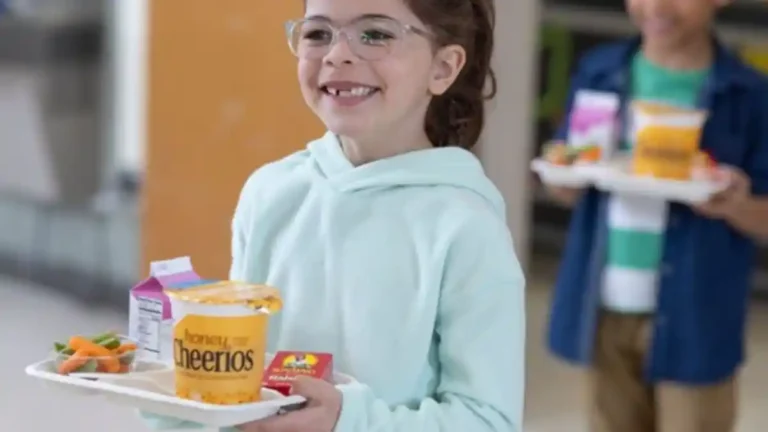
General Mills supplies a wide range of products to school cafeterias across the United States, including ready-to-eat cereals that are widely used in school breakfast programs.
According to the company, the final step in achieving the milestone involved reformulating Lucky Charms 25% Less Sugar cereal, allowing the K-12 portfolio to reach 100% compliance with the updated ingredient approach.
The company works directly with school districts and state authorities to provide products designed to meet nutrition standards for school meals.
How large is the General Mills school food portfolio?
General Mills Foodservice supplies products to a variety of institutional foodservice channels, including:
K-12 schools
hospitals
restaurants
bakeries
university dining programs
Within schools, cereals are a significant part of breakfast menus and are a major source of whole grains in many meal programs.
This makes ingredient changes in cereal formulations particularly important for school nutrition standards.
What happens next?
General Mills is continuing its broader plan to remove certified colors across its U.S. product range.
The company says it remains on track to eliminate certified colors from its entire U.S. cereal portfolio by summer 2026, followed by the full U.S. retail product portfolio by the end of 2027.
These changes form part of the company’s long-term strategy to adjust product ingredients while maintaining brand recognition across major FMCG categories.
Editor’s Note: General Mills is a U.S. food manufacturer headquartered in Minneapolis. The company produces a wide range of consumer food brands including Cheerios, Nature Valley, Pillsbury, Häagen-Dazs, Betty Crocker and Blue Buffalo. According to company disclosures, General Mills generated approximately $19 billion in net sales in fiscal 2025.