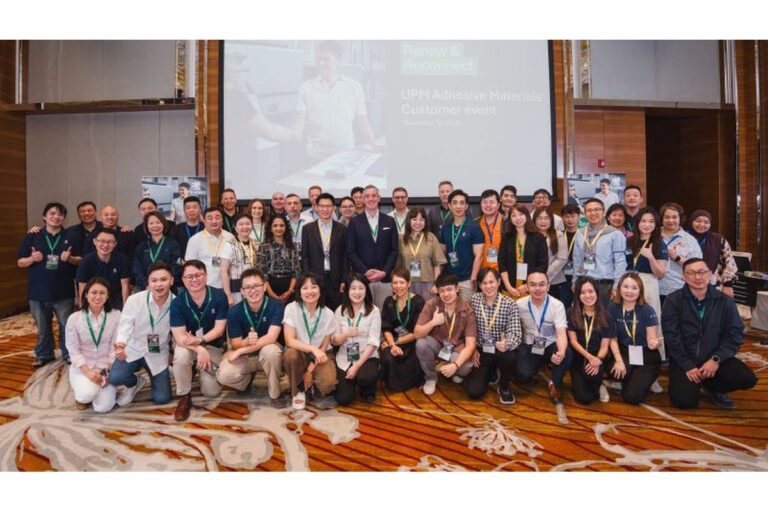

UPM Adhesive Materials has commissioned a new label-material coating line at its Johor Bahru factory in Malaysia, expanding production capacity and upgrading finishing, packaging and material handling.
The Finnish group confirmed completion on 19 November. It said the investment would improve production consistency and shorten customer lead times, although it did not disclose the investment value, additional capacity or the size of any delivery-time improvement.
The coating line has inline quality-control technology. UPM said this would support more consistent material quality, alongside the factory’s upgraded finishing and packaging operations.
Johor Bahru forms part of a wider Asia-Pacific supply network. UPM also operates a factory in China and slitting and distribution terminals across Southeast Asia, North Asia and Oceania.
The distinction matters for food and drink brands sourcing printed labels. Coating capacity produces the material that label converters subsequently print and finish. It does not, by itself, establish the delivery time for a finished label order.
Henning Krebs, UPM Adhesive Materials’ vice-president for Asia-Pacific, said the line would help the business “support our customers’ growth today and meet their evolving business demands in the future”.
The project began in April 2025 and was announced that August. At the time, UPM expected the line to be operating around the middle of 2026. Today’s statement confirms commissioning but does not specify the commercial start date, so the announcement date alone does not establish whether that original timetable changed.
UPM is among the major groups in Finland’s packaging industry. Its Adhesive Materials business, formerly called UPM Raflatac, recorded nearly €1.7 billion in sales in 2025 and employs around 3,300 people. Those figures cover the business globally, rather than the Malaysian factory.
For supermarket own-label teams and FMCG suppliers, the practical questions concern availability by material grade, order volumes and converter location. A regional capacity increase may improve supply options, but purchasing decisions still depend on confirmed specifications and service terms.
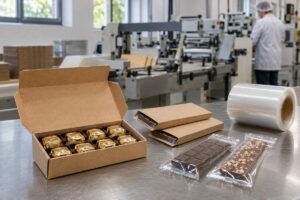
UPM’s food-label materials span a separate set of application requirements. Adhesion to the pack, resistance to moisture or grease, print performance and barcode readability need to be assessed for the finished label construction. The Malaysian commissioning announcement does not identify new food-contact approvals or guarantee performance for a particular grocery product.
The next commercial test will be whether the additional coating and finishing capabilities translate into more reliable supply for converters and their food, beverage and other customers across the region.