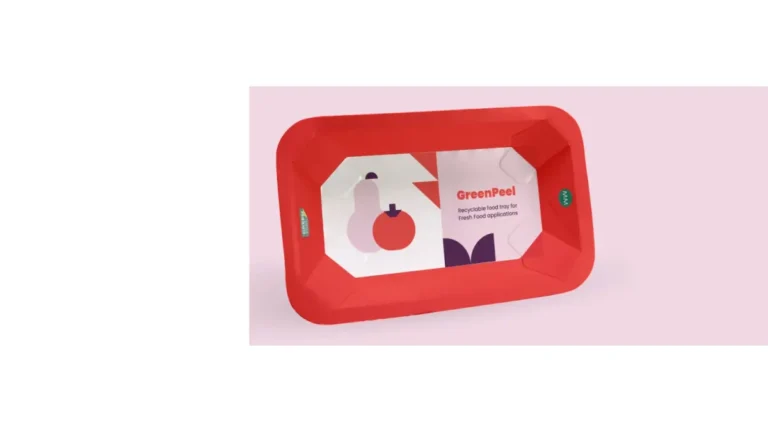

MM Packaging has strengthened its GreenPeel fibre-based food tray with a continuous double-rim design aimed at improving rigidity and sealing performance for fresh meat, poultry and other chilled protein products.
The first 20mm version has been developed with a major French poultry producer, while MM Packaging has also modified machinery and tooling to support production of the new format.
The company says GreenPeel can reduce plastic use by up to 90% compared with conventional plastic trays by combining cartonboard with a removable plastic liner.
Why the upgrade matters for supermarket buyers
Fresh-protein packaging needs to withstand skin sealing, chilled distribution, stacking and shopper handling without increasing leaks or product waste.
The double-rim design is intended to reinforce the sealing area and improve pack stability, which could make fibre-based trays more practical for high-volume supermarket meat and poultry programmes.
For retail buyers, the key question is whether the format can maintain shelf life, run efficiently on existing packing lines and deliver reliable sealing performance at commercial scale.
What is the GreenPeel liner made from?
MM Packaging’s existing GreenPeel technical data identifies PE and PET liner options, including barrier structures using EVOH depending on the application.
The liner is designed to peel away from the cartonboard after use so the materials can be separated where local recycling systems accept them.
Older GreenPeel technical data also shows examples where the pack is made predominantly from cartonboard, with the plastic liner accounting for a much smaller share of total pack weight.
However, the exact material structure of the newly released 20mm tray developed with the French poultry producer has not been publicly confirmed.
That leaves a small but important blind spot for supermarket technical teams carrying out immediate packaging-line qualification, because liner chemistry can affect sealing temperature, barrier performance, recycling classification and compatibility with existing packing equipment.
Production-line impact still needs more disclosure
MM Packaging has confirmed that machinery and tooling were modified to manufacture the new double-rim structure.
What has not been disclosed is the capital expenditure involved, the exact production changes required, or whether the new format affects line speed compared with conventional trays.
For large poultry and meat suppliers, those details matter. A packaging format can offer strong material savings but still face resistance if it requires expensive tooling changes, slower throughput or higher reject rates on high-speed lines.
Supermarket procurement teams will therefore want commercial evidence on line speed, downtime during changeovers, denesting performance and pack rejection rates before approving wider adoption.
Plastic reduction is only part of the decision
The claimed plastic saving is significant, but supermarket buyers will need to compare the complete pack rather than the tray alone.
That includes the liner, skin film, labels and any additional materials required, alongside food-waste performance and real-world recyclability.
A lower-plastic tray only delivers a stronger environmental outcome if it can maintain equivalent product protection, shelf life and logistics performance.
Poultry rollout could be an important test
Fresh poultry is a demanding category for alternative packaging because leakage, hygiene and shelf life are critical.
If the new GreenPeel structure performs reliably at industrial scale, the same approach could become more relevant to fresh meat, fish and other chilled food categories.
MM Packaging plans wider use of the double-rim construction across the GreenPeel range.
For supermarket buyers, the next stage will be judged on practical performance: line speed, seal integrity, shelf life, waste rates, packaging cost and recyclability.
MM Packaging is already included in GTN’s guide to leading packaging companies in Austria, reflecting its wider role in European consumer packaging.
Editor’s Note: This article is based on information released by MM Packaging in September 2026 about its upgraded GreenPeel fresh-protein tray. Grocery Trade News also reviewed MM Packaging technical information and current industry coverage, adding supermarket-buyer context on liner composition, separation, sealing performance, line compatibility and the commercial information not yet publicly disclosed.