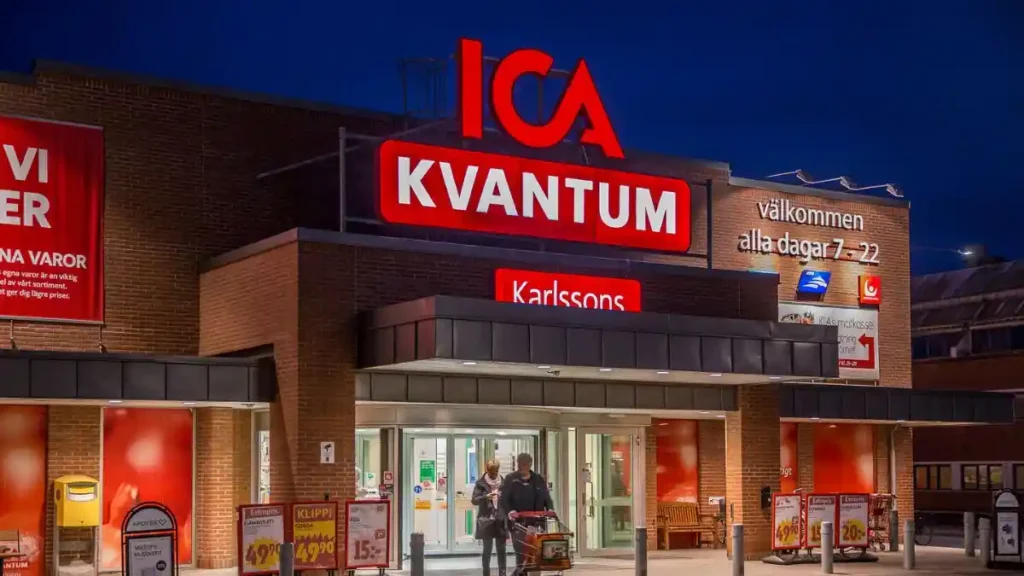
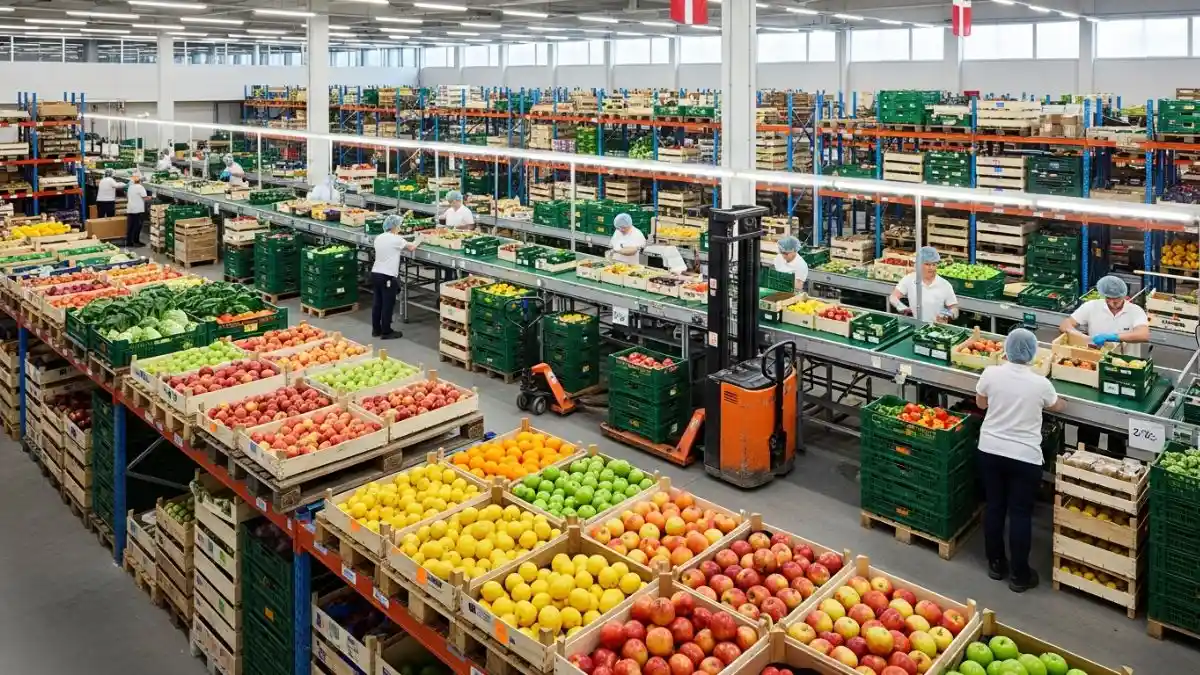

Denmark’s fresh produce sector is driven by a mix of established importers, growers, processors, and distributors that supply supermarkets, foodservice operators, and export partners across Northern Europe. While the market is smaller than Germany or France, Denmark has become a high-value, quality-focused sourcing destination with strong logistics integration and strict retail compliance standards.
This ranking highlights the country’s leading fresh produce companies based on revenue scale, operational footprint, supply chain reach, and relevance for professional B2B buyers.
Company Overview (2025/26 Estimates)
| Rank | Company | Revenue | Employees | Primary Operations |
|---|---|---|---|---|
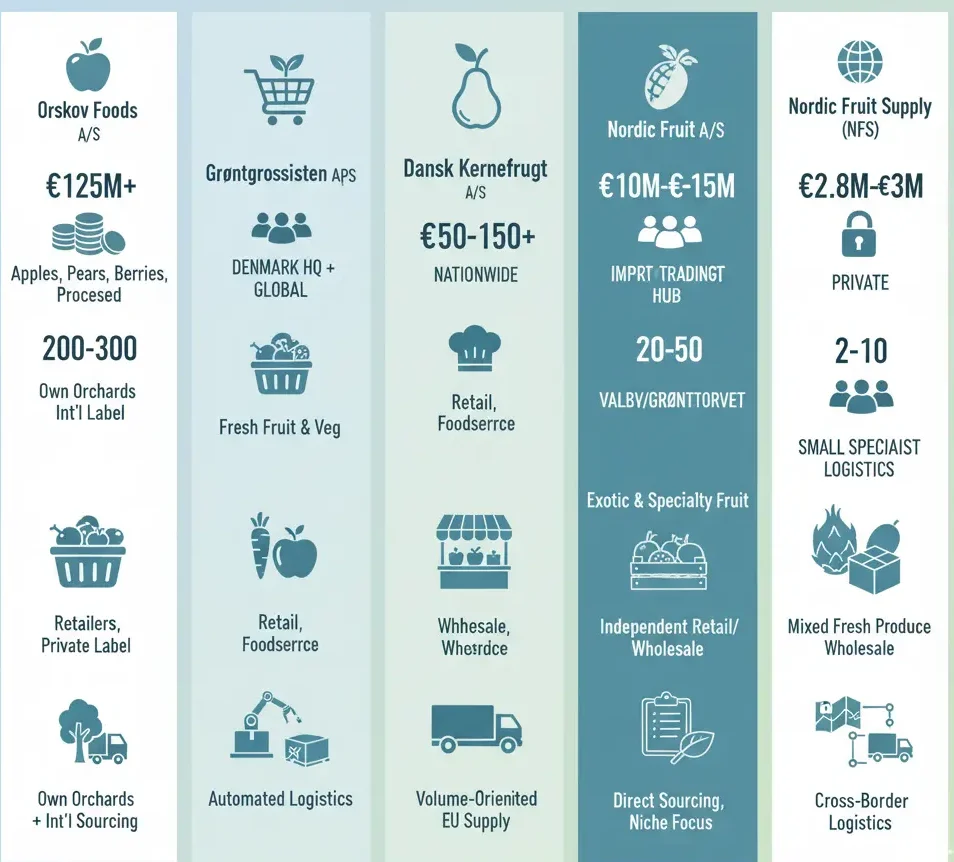
| 1 | Orskov Foods A/S | €125M+ | 200–300 | Production, processing, retail supply |
| 2 | Grøntgrossisten ApS | €35M+ | 50–150 | Nationwide distribution |
| 3 | Dansk Kernefrugt A/S | €10M–€15M | 20–50 | Wholesale & import/export |
| 4 | Nordic Fruit A/S | €2.8M–€3M | 2–10 | Specialty imports |
| 5 | Nordic Fruit Supply (NFS) | Private | Small team | EU logistics sourcing |
Top Product Categories & Market Coverage
| Company | Main Categories | Supply & Export Reach |
|---|---|---|
| Orskov Foods A/S | Apples, pears, berries, processed fruit | Scandinavia, EU |
| Grøntgrossisten ApS | Fruit and vegetables | Denmark-wide retail & foodservice |
| Dansk Kernefrugt A/S | Imported fruit categories | Copenhagen wholesale & national distribution |
| Nordic Fruit A/S | Exotic and specialty produce | Danish wholesale |
| Nordic Fruit Supply | Mixed seasonal produce | Nordic region and EU hubs |
Orskov Foods A/S
Orskov Foods is Denmark’s largest fresh produce company by revenue and one of the strongest Nordic fruit suppliers. The company operates across production, sourcing, processing, and distribution, with core strengths in apples and pears.
In recent years, Orskov Foods has expanded into fruit processing and value-added production, including juices and puree applications. This vertical integration strategy helps reduce food waste, stabilise margins, and improve supply chain efficiency. The company supplies both branded and private label programs to major Nordic retailers and wholesale buyers.
Revenue: €125M+
Employees: 200–300
Branches: Denmark headquarters with overseas growing operations
Category coverage: Apples, pears, berries, processed fruit
Buyer relevance: Supermarket chains and private label supply contracts
Production scale: Own orchards combined with international sourcing
Grøntgrossisten ApS
Grøntgrossisten is one of Denmark’s most important fresh fruit and vegetable distributors. The company operates a nationwide supply network serving supermarkets, catering suppliers, and professional kitchens.
To address labour shortages and efficiency demands, Grøntgrossisten has invested heavily in automated cold storage systems and warehouse robotics. These upgrades allow faster order picking, improved cold chain stability, and higher daily throughput.
Its ability to consolidate multi-origin sourcing into one supply channel makes it a key partner for retail buyers seeking simplified procurement.
Revenue: €35M+
Employees: 50–150
Branches: Nationwide distribution footprint
Category coverage: Fresh fruit and vegetables
Buyer relevance: Retail chains, foodservice operators
Supply scale: Multi-origin sourcing with automated logistics
Dansk Kernefrugt A/S
Dansk Kernefrugt remains a stable mid-sized produce wholesaler with strong positioning at Copenhagen’s wholesale produce market (Grønttorvet). The company specialises in fruit import, redistribution, and wholesale trade.
Its location and market integration allow it to serve independent retailers, foodservice distributors, and regional wholesalers efficiently. Dansk Kernefrugt continues to operate as a volume-oriented supplier with strong supplier relationships across European growing regions.
Revenue: €10M–€15M
Employees: 20–50
Branches: Valby operations base
Category coverage: Imported fruit categories
Buyer relevance: Wholesale buyers and foodservice supply
Supply scale: National distribution reach
Nordic Fruit A/S
Nordic Fruit operates as a specialist importer focused on exotic and premium produce categories. Although smaller in workforce size, the company plays an important role supplying niche fruit products to wholesalers and selected retail partners.
Its lean structure allows flexibility in sourcing, fast reaction to seasonal changes, and closer cooperation with international growers. Nordic Fruit is positioned for buyers that prioritise category specialisation over mass-volume sourcing.
Revenue: €2.8M–€3M
Employees: 2–10
Branches: Import trading hub in Denmark
Category coverage: Exotic and specialty fruit
Buyer relevance: Independent retail and wholesale buyers
Supply scale: Direct sourcing partnerships
Nordic Fruit Supply (NFS)
Nordic Fruit Supply operates as a specialised sourcing and logistics partner focused on EU produce flows. The company works across Denmark and major European logistics corridors to coordinate seasonal supply programs.
Its strength lies in cross-border sourcing coordination, quality compliance support, and flexible delivery planning. NFS supports retailers and wholesalers that require adaptable supply chains rather than fixed-volume contracts.
Revenue: Private
Employees: Small specialist team
Branches: Denmark with EU logistics integration
Category coverage: Mixed fresh produce portfolio
Buyer relevance: Retail sourcing programs and wholesale distribution
Supply scale: Cross-border logistics coordination
How Denmark’s Produce Supply Chain Operates in 2026
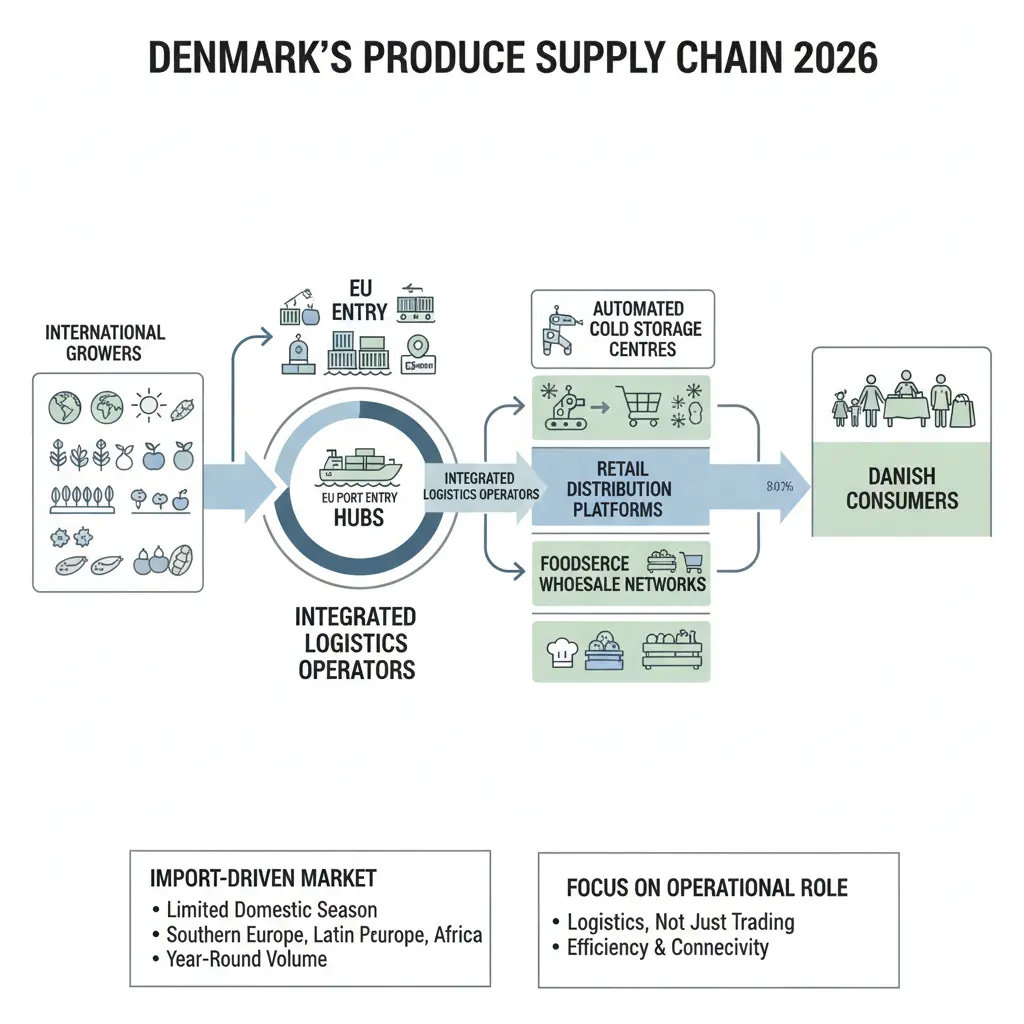
Denmark’s produce market remains heavily import-driven due to limited domestic growing seasons. Southern Europe, Latin America, and African growing regions supply much of the year-round fruit and vegetable volume.
Fresh produce companies now function as integrated logistics operators connecting:
International growers
EU port entry hubs
Automated cold storage centres
Retail distribution platforms
Foodservice wholesale networks
This operational role has become more important than simple trading activity.
Retail Contract Requirements
Danish supermarket groups now require suppliers to meet advanced compliance standards, including:
SKU-level ESG documentation
Carbon footprint reporting
Full product traceability
Packaging sustainability reporting
Major buyers increasingly favour suppliers that operate digital traceability platforms capable of integrating production, logistics, and environmental reporting in real time.
Sustainability and Reporting Pressure
Sustainability compliance is no longer optional. Produce suppliers must document:
Transport emissions
Packaging material usage
Food waste handling
Supplier audit compliance
Companies that invested early in traceability software and reporting infrastructure now hold competitive advantage during retail tender processes.
Automation and Cold Chain Investment
Denmark has emerged as a regional hub for automated cold storage solutions. Distribution companies continue investing in:
Robotics-based picking systems
Smart temperature monitoring
AI-assisted inventory forecasting
These upgrades improve delivery reliability while addressing labour availability challenges.
Market Outlook
Denmark’s fresh produce market will remain stable and premium-focused. Retailers are strengthening control over supply standards while maintaining high demand for year-round product availability.
For growers and exporters, Denmark offers:
Stable purchasing volumes
High-quality retail demand
Strong payment reliability
Structured long-term contracts
Final Takeaway
The leading fresh produce companies in Denmark are no longer simple traders. They now operate as logistics platforms, sustainability compliance partners, and retail integration specialists serving both Denmark supermarket buying systems and international sourcing networks.
For suppliers, exporters, and buyers, these companies form the backbone of Denmark’s modern produce supply chain, supporting private label programs, fresh food brands, and high-volume retail distribution. Their role will continue shaping how fruit and vegetables move through the Nordic grocery market in the years ahead.
Editor’s Note: This ranking is based on publicly available company filings, industry disclosures, and market information available at the time of publication. Revenue figures are indicative estimates where full financial data is not publicly disclosed. The list reflects relative market scale and operational presence rather than exact audited financial performance.