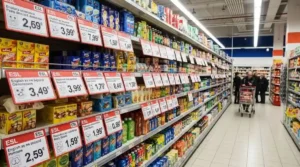
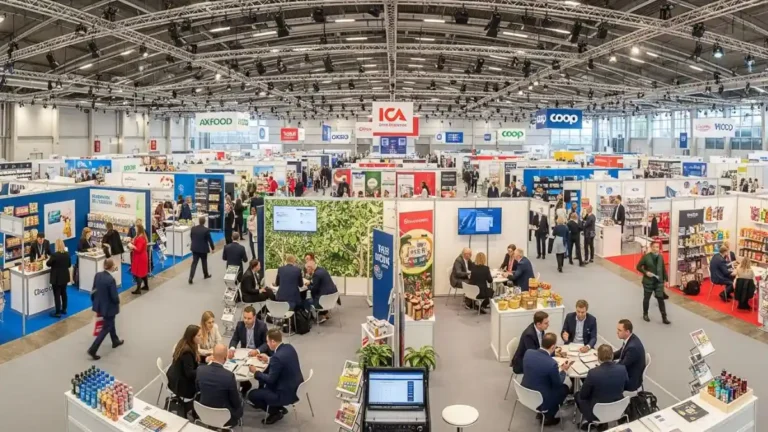

Sweden’s grocery and FMCG sector enters 2026 under continued structural change. Private label expansion, higher sustainability requirements, packaging regulation pressure and rising logistics costs are reshaping how retailers and suppliers work together.
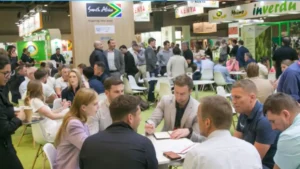
At the same time, physical trade events remain central to deal-making. Despite digital sourcing tools, most high-volume grocery buying decisions in Sweden still start with face-to-face meetings, sampling sessions and category reviews held at regional and Nordic trade exhibitions.
These events are where supermarket buyers, wholesalers, foodservice groups and brand owners align on assortments, seasonal planning and supply contracts.
Below is the current 2026 landscape of the most relevant grocery and FMCG trade events in Sweden.
Top Grocery & FMCG Trade Events in Sweden — 2026 Overview
| Rank | Event Name | Location | Estimated Visitors | Estimated Exhibitors |
|---|---|---|---|---|
| 1 | Nordic Organic Expo | Malmö | 5,000+ | 400+ |
| 2 | Fastfood & Café & Restaurant Expo | Stockholm | 3,000+ | 150+ |
| 3 | GastroNord (Food & Beverage Edition) | Stockholm | 20,000+ | 800+ |
| 4 | Linköping Beer & Beverage Expo | Linköping | 1,000+ | 100+ |
| 5 | Regional FMCG Buying Shows (Various) | Multiple cities | Varies | Varies |
Attendance figures reflect recent public editions and industry estimates based on pre-2025 performance.
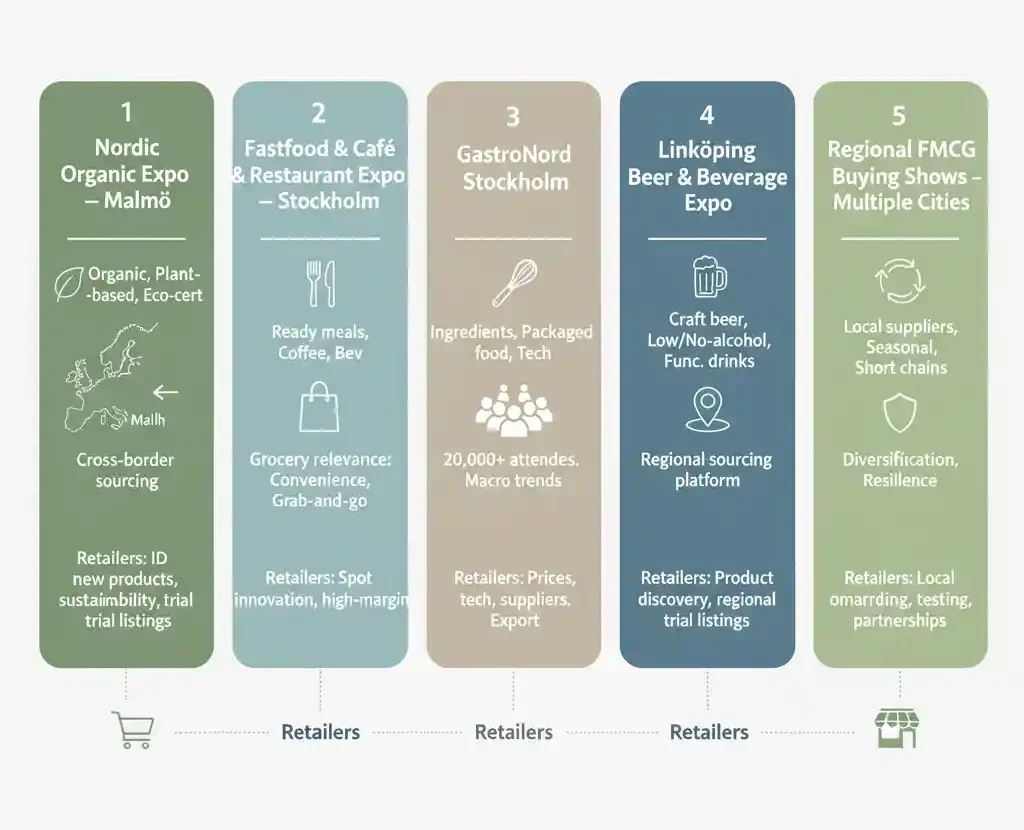
1. Nordic Organic Expo — Malmö
Nordic Organic Expo remains Sweden’s most strategically important sourcing platform for certified food and sustainable FMCG products.
Held at Malmömässan, the event benefits from direct access to Danish and continental European suppliers, making it a cross-border buying hub rather than a domestic-only exhibition.
Core sectors covered
Organic packaged food
Plant-based products
Free-from and functional foods
Natural beverages
Sustainable household products
Eco-certified cosmetics
Market relevance
Swedish grocery chains continue to expand organic private label and branded shelf space. Regulatory targets for climate reporting and Scope 3 emissions tracking are pushing retailers toward suppliers with documented sustainability credentials.
Nordic Organic Expo functions as a filtering platform. Buyers use the show to pre-qualify suppliers based on certification status, supply reliability and packaging compliance.
Buyer activity patterns
Large retail groups typically use the event to:
Review upcoming organic product launches
Identify Nordic sourcing alternatives
Compare packaging sustainability standards
Negotiate trial listings and seasonal pilots
For suppliers, the event offers direct access to category managers responsible for premium and health-oriented assortments.
2. Fastfood & Café & Restaurant Expo — Stockholm
While positioned as a foodservice exhibition, this Stockholm-based event has become increasingly relevant for grocery retail.
Convenience food, ready meals, frozen snacks and grab-and-go beverages displayed at this show often move quickly into supermarket assortments.
Core sectors covered
Ready meals and chilled food
Frozen snacks
Bakery and coffee concepts
Beverage solutions
Foodservice packaging
Market relevance
Sweden’s convenience retail segment continues to grow. Urban supermarkets and forecourt stores now allocate more shelf space to foodservice-style products.
This event serves as an early-stage innovation filter. Retail buyers use it to spot:
New convenience formats
High-margin impulse categories
Ready-to-scale foodservice brands
Supply chain relevance
Packaging suppliers also attend in growing numbers. Single-serve sustainability solutions, compostable packaging and returnable container systems are increasingly showcased for foodservice-to-retail crossover use.
3. GastroNord — Stockholm
GastroNord remains the largest broad food industry exhibition in Sweden.
Although it serves both hospitality and retail, its grocery relevance has increased due to stronger packaged food participation and private label supplier presence.
Core sectors covered
Food ingredients
Packaged foods
Beverage systems
Bakery products
Processing and packaging technology
Market scale impact
With attendance often exceeding 20,000 industry professionals, GastroNord acts as a macro-industry checkpoint. Retail buyers use the event to track:
Category price movements
New production technologies
Supplier consolidation trends
Import availability
Strategic relevance
For mid-sized FMCG manufacturers, GastroNord offers access to both domestic retailers and Nordic export partners. Many suppliers use the event to announce product relaunches and packaging upgrades.
4. Linköping Beer & Beverage Expo
Beverage remains one of the fastest-moving categories in Swedish grocery.
Craft beer, alcohol-free alternatives, functional drinks and premium imports continue to expand shelf presence.
The Linköping Beer & Beverage Expo serves as a regional sourcing platform for beverage buyers looking beyond the main metropolitan hubs.
Core sectors covered
Craft beer
Low- and no-alcohol beverages
Energy drinks
Specialty soft drinks
Import distributors
Retail relevance
While not a mass grocery trade fair, the event plays an important role in product discovery. Smaller beverage brands often secure regional trial listings after direct meetings with independent retailers and regional buying groups.
5. Regional FMCG Buying Shows — Multiple Cities
Beyond national exhibitions, Sweden maintains a network of smaller regional sourcing events.
These include local food festivals with trade sections, regional supplier days and closed buyer-supplier matchmaking sessions organized by trade groups and logistics partners.
Core functions
Local supplier onboarding
Regional product testing
Seasonal sourcing
Short supply chain partnerships
Structural importance
As retailers seek shorter supply chains and domestic sourcing resilience, regional trade events gain strategic relevance. They support diversification away from centralized procurement models.
Where Swedish Grocery Buyers Actually Meet
In practice, procurement teams use multiple event formats depending on category focus.
High-volume sourcing happens primarily at:
Nordic Organic Expo
GastroNord
Innovation and trend scouting often happens at:
Fastfood & Café & Restaurant Expo
Beverage-focused exhibitions
Regional supplier engagement relies heavily on:
Smaller FMCG buying events
Closed buyer forums
This layered event ecosystem reflects the fragmentation of grocery categories and growing specialization across supplier segments.
Market Structure Impact
Sweden’s grocery market remains dominated by a small number of large retail groups. Centralized buying teams increasingly manage national assortments while allowing limited regional flexibility.
Trade events now serve three structural purposes:
1. Supplier consolidation filtering
Retailers use exhibitions to benchmark suppliers side by side. Smaller brands face direct competition with international producers. Only scalable, compliant suppliers tend to progress beyond pilot phases.
2. Packaging compliance verification
With EU packaging regulations tightening, trade fairs function as compliance showcases. Retail buyers increasingly request:
Material traceability
Recyclability certification
Deposit return compatibility
Carbon footprint reporting
3. Price structure alignment
Volatile raw material prices make in-person negotiation more important. Events allow suppliers to communicate cost pressures while buyers assess realistic pricing frameworks.
Category Dominance Trends
Several category shifts are visible across Swedish trade events. Organic and plant-based food continues to expand, but the segment is now entering a more mature phase. Retailers are placing less emphasis on novelty and more focus on margin performance, repeat purchase rates and long-term shelf stability.
Convenience and ready meals remain one of the strongest growth areas. Urban store formats, extended opening hours and hybrid foodservice concepts inside supermarkets are continuing to push demand for ready-to-eat and time-saving meal solutions.
Beverage diversification is also highly visible across exhibition floors. Alcohol-free alternatives, functional drinks and premium imported beverages are taking up increasing space as retailers look to broaden assortment depth and respond to changing consumer preferences.
Sustainable packaging solutions are becoming a central theme rather than a side category. Packaging suppliers are increasingly competing on measurable sustainability performance, including recyclability, material reduction and regulatory compliance, rather than relying on marketing-led environmental claims.
Industry Direction: 2026 Outlook
Sweden’s grocery trade event landscape is becoming more specialized.
Large general exhibitions continue to attract volume buyers. At the same time, niche category events gain influence for innovation sourcing.
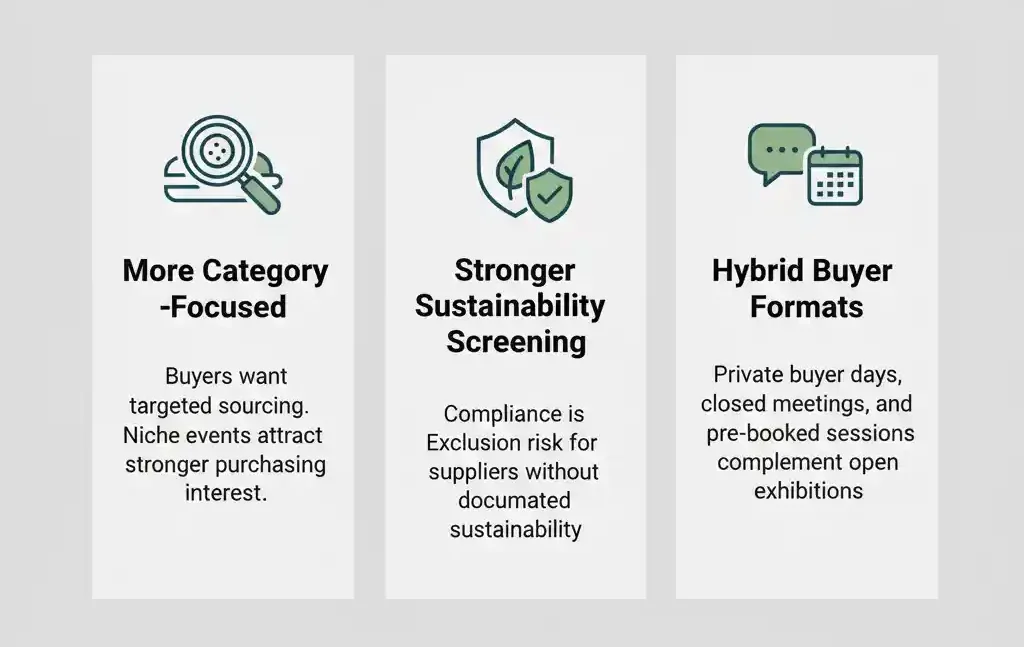
Three trends shape future event strategy:
More category-focused exhibitions
Buyers prefer targeted sourcing. Specialized food and beverage events attract stronger purchasing interest than broad mixed exhibitions.
Stronger sustainability screening
Suppliers unable to demonstrate compliance risk exclusion from retail sourcing pipelines.
Hybrid buyer formats
Private buyer days, closed meetings and pre-booked sourcing sessions increasingly complement open exhibitions.
Operational Impact on Retail and Supply Chains
Trade events increasingly influence operational planning.
Retailers now align exhibition visits with:
Annual assortment resets
Seasonal campaign planning
Supplier performance reviews
Packaging change timelines
Suppliers use exhibitions to coordinate:
Production planning
Logistics capacity
New product launch windows
This operational integration makes exhibitions part of the annual commercial calendar rather than optional marketing activities.
Conclusion
Editor’s Note: This article is based on publicly available exhibition data, industry attendance figures and trade market disclosures from recent editions. Visitor and exhibitor figures reflect historical performance and announced capacity ranges where exact 2026 data is not yet finalized.