
Woolworths has reported a 6.9% rise in Australian Food sales to A$14.84 billion in its first quarter, with higher item sales and online demand giving grocery suppliers a stronger start to the retailer’s Christmas trading period.
The company’s Australian announcement, dated 28 October, covers the 14 weeks to 4 October 2026. Group sales increased 4.7% to A$19.35 billion, while group e-commerce sales rose 16% to A$3.1 billion.
Within Woolworths Food Retail, comparable sales grew 6.1%. Comparable item growth was 4%, transactions increased 3% and items per basket rose 1%. Average prices fell 0.5%.
Those measures provide a more useful picture for suppliers than revenue growth alone. Customers were buying more items, while average prices moved down. The figures therefore do not describe a quarter driven simply by higher shelf prices.
Woolworths is a central customer for suppliers comparing Australia’s largest supermarket groups. For category managers, the next question is which products contributed to the extra shopping trips and basket growth.
The group said its Disney Ooshies collectibles campaign supported early-quarter trading. That matters when setting forecasts: a promotion can lift demand during a defined period without establishing the same growth rate for the rest of the year.
Management said Australian Food Retail sales growth in October to date was broadly in line with trading after the Ooshies campaign. It did not provide a new category-by-category sales forecast.
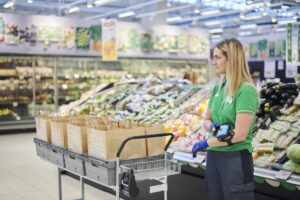
Online growth creates a separate operational requirement. Suppliers need accurate product information, reliable stock availability and packaging that works through picking and delivery, alongside the usual demands of a store listing.
The development of retail technology in Australia provides context for that shift. A product’s digital availability and the accuracy of its listing increasingly form part of how a supermarket range reaches customers.
The New Zealand figures also require care. Food sales increased 2.9% in local currency, according to the company, even though the Australian-dollar presentation showed a decline. Currency translation should not be treated as evidence of an equivalent fall in local customer demand.
For cross-border suppliers, that distinction affects how performance is assessed. Australian and New Zealand programmes need separate demand assumptions, currency calculations and commercial terms.
The quarter was a sales update, rather than a full profit announcement. Stronger revenue does not by itself establish an improvement in supermarket margins or a change to the terms offered to individual suppliers.
Attention now turns to how much of the Australian momentum continues through Christmas, how online demand is fulfilled and whether product availability keeps pace with additional shopping trips. Those will be more useful signals for suppliers than treating every part of the group as a single market.
Editor’s Note: Based on Woolworths Group’s official first-quarter sales announcement dated 28 October 2026. GTN has added analysis of item growth, fulfilment and currency comparisons for grocery suppliers.