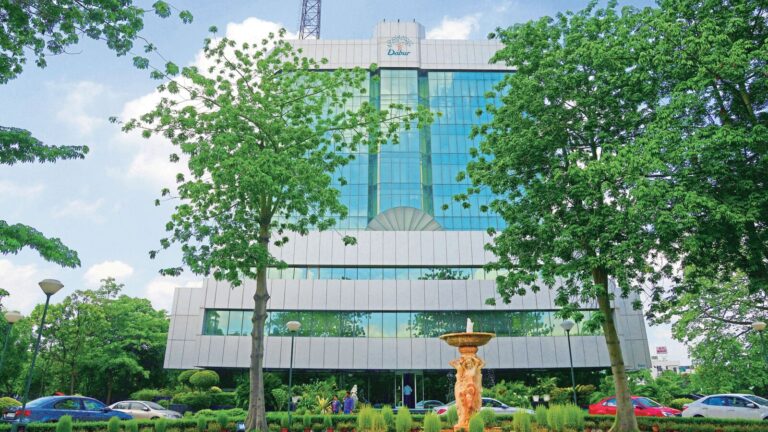

Dabur India reported a 17.4% rise in its food and beverages business for the quarter ended 30 September 2026, outpacing growth across the wider Indian FMCG operation. The results, announced on 4 November, were accompanied by the resignation of global chief executive Mohit Malhotra.
The Indian consumer-goods group recorded consolidated quarterly revenue of ₹3,563 crore, up 11.6% year on year. Net profit grew 11.7% to approximately ₹505 crore, while the India FMCG business expanded 10.7% with underlying volume growth of 5.5%.
Food and beverages were the fastest-growing of the main domestic product categories disclosed by the company. Dabur attributed the performance to stronger foods sales and a sequential recovery in beverages. Independent results coverage also highlighted growth in its Badshah spices business and the return of momentum in drinks.
For supermarket buyers, this matters because the two product areas have different supply and seasonal profiles. Packaged food and spices depend on distribution reach, merchandising and repeat purchases; juices and other beverages are more exposed to consumer preferences, weather and promotional activity. Quarterly revenue growth alone does not establish that all brands or pack sizes increased by the same amount.
The company’s food and drink portfolio includes the Réal fruit beverage brand and Badshah Masala. Dabur has been expanding premium offerings, and its latest results show premium products growing faster than its regular portfolio. That shift could affect shelf-space allocation and price points, although no new retailer listing deal was announced with the results.
Elsewhere, home and personal care sales increased 10.9%, while healthcare grew 6.9%. International business expanded 20% in rupee terms, supported by markets including Bangladesh, Egypt, Turkey and parts of sub-Saharan Africa. These figures cover different businesses and should not be added together as if they were separate contributions to consolidated growth.
Profitability remains a constraint. Dabur said it faced elevated input costs and geopolitical uncertainty. Independent analysis reported that operating profit grew 7.5% but operating margin fell by around 60 basis points to 17.8%. Strong sales therefore did not translate into a comparable improvement in every profit measure.
The leadership change adds another consideration. Malhotra is due to leave the global CEO position on 13 November after more than three decades with the group. India chief executive Herjit Bhalla has been appointed an additional whole-time director, while P. D. Narang continues to guide the group, including its overseas operations. Dabur has not yet announced a direct replacement for the departing global CEO.
For manufacturers and distributors doing business with Dabur, the immediate questions concern continuity of buying decisions, investment in food and beverage brands and plans for international distribution. Changes in leadership do not themselves prove a change in existing supplier agreements.
General financial reporting has focused heavily on Dabur’s earnings surprise and management departure. For grocery readers, the more useful question is whether stronger food and beverage growth can continue while operating margins remain under pressure and consumers face uneven purchasing conditions.
During the coming quarter, buyers will be watching volume growth, product availability, trade promotions and the appointment of a successor to the global CEO role. Continued growth in the food and beverage category would give Dabur an important lever for expanding its presence in organised retail.
Editor’s Note: Based on Dabur India’s 4 November 2026 earnings release and leadership filings, cross-checked against independent financial coverage. GTN’s analysis focuses on the grocery segment, volume changes and supplier implications rather than stock-market reaction.