
Lidl GB food waste reduction target aims to cut food waste by 70% by the end of FY2030 across the company’s supermarket operations in Great Britain.
The announcement was made during Food Waste Action Week and includes new trials designed to increase surplus food redistribution and reduce unsold products in stores.
The retailer previously set a goal to reduce food waste by 40% by FY2025, a target the company says it has already exceeded.
What is Lidl GB’s new food waste reduction plan?
The supermarket is raising its long-term food waste reduction target to 70% by FY2030, measured against a 2016 baseline.
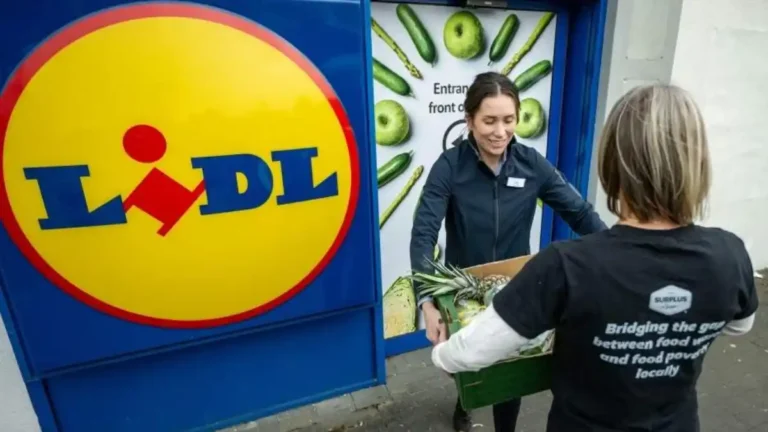
To support the new goal, Lidl GB will expand its partnership with Neighbourly to trial the Surplus Saviours programme during summer 2026 in the Midlands.
The scheme allows registered individuals, including charity volunteers and local residents, to collect unsold food from Lidl stores.
Extended collection hours will make it easier to redistribute fresh and chilled food items approaching their use-by date later in the evening.
Lidl expects the initiative could help redistribute more than 5,000 tonnes of surplus food during the trial period.
The company said the programme builds on its existing partnerships with charities that collect unsold food from stores.
Additional food waste trials
Alongside the redistribution initiative, Lidl GB is also launching a new animal feed trial in the Peterborough region.
Under the programme, bakery products that cannot be sold or donated — including items such as croissants and bread loaves — will be diverted to animal feed production.
The trial aims to reduce food waste while strengthening the retailer’s circular economy approach to unsold products.
Lidl has also introduced operational changes inside stores to help reduce waste.
One example is improved demand matching in its in-store bakery. By adjusting production levels throughout the day, Lidl reported a 30% reduction in bakery-related food waste last year.
Customers can also purchase discounted bakery items through the Lidl Plus app, which offers 20% off bakery products after 7pm.
Food redistribution across Lidl stores
Food redistribution has become a central part of Lidl GB’s waste reduction strategy.
Since 2016, the retailer says it has donated more than 50 million meals through its Feed it Back programme, delivered in partnership with Neighbourly.
Every Lidl store in Great Britain works with local organisations to ensure suitable surplus food is donated rather than discarded.
The company also works with WRAP to develop data-driven strategies that help reduce food waste across the supply chain.
Why the Lidl GB food waste reduction target matters
Food waste has become one of the biggest operational challenges in the UK supermarket sector.
Retailers across the industry are investing in supply-chain technology, demand forecasting and redistribution programmes to reduce unsold food.
By raising its target to 70%, Lidl GB is signalling a stronger commitment to sustainability while aligning with wider industry efforts to reduce waste across the grocery system.
The strategy combines redistribution, operational efficiency and circular economy solutions, which are increasingly becoming standard practices in the modern grocery market.
With more than 1,000 stores and 35,000 employees across Great Britain, Lidl GB’s waste reduction initiatives can have a significant impact on both local communities and the wider retail supply chain.
As supermarkets continue to focus on sustainability targets, food waste reduction is expected to remain a major operational priority for the industry in the coming years.
Editor’s Note: This article is based on information released by Lidl GB on 9 March 2026 about its updated Lidl GB food waste reduction target and related surplus food redistribution trials.