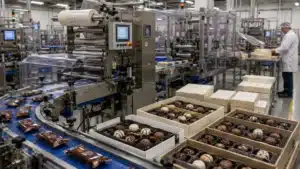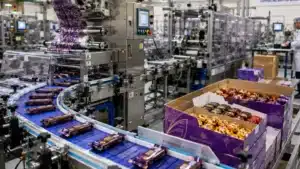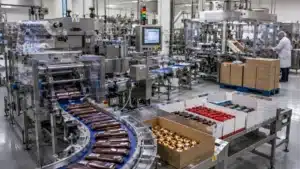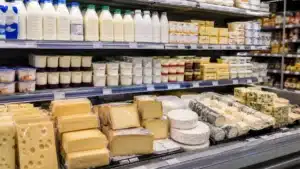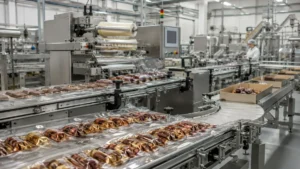


Hungary has one of Central Europe’s most diverse food industries.
The country produces and exports poultry, meat, dairy products, bakery goods, confectionery, wine, beverages, fruit, vegetables and processed foods. Hungarian manufacturers also supply private label and branded products to retailers across Central and Western Europe.
For suppliers hoping to enter Hungarian supermarket supply chains, legal food safety compliance is only the starting point. Retail buyers may also expect recognised third-party certification, reliable traceability, consistent audit performance and evidence that the production site can meet customer specifications throughout the year.
The most relevant certification depends on the product and the customer.
A private label food factory may prioritise IFS Food. A large beverage or ingredient manufacturer may prefer FSSC 22000. A fresh produce grower may need GLOBALG.A.P., while an organic producer must operate within Hungary’s official EU organic control system.
Hungary also has its own national quality programme: KMÉ, or Kiváló Minőségű Élelmiszer. This gives the Hungarian market a local quality mark that cannot be replaced by simply listing international standards.
This guide explains the top food safety certifications and frameworks used in Hungary, the organisations behind them and where each one fits within the country’s supermarket and food manufacturing sectors.
Which certifications do Hungarian supermarket suppliers need?
There is no single certification required from every supplier serving Hungarian supermarkets.
Requirements vary according to:
- product category
- food safety risk
- manufacturing process
- retailer policy
- private label involvement
- country of destination
- export customer requirements
HACCP-based controls remain essential for food businesses. However, large manufacturers and private label suppliers may also need certification under a retailer-recognised scheme such as IFS Food, BRCGS Food Safety or FSSC 22000.
Fresh produce suppliers are more likely to encounter GLOBALG.A.P., while organic farms, processors, traders and importers must operate under the official organic inspection and certification system.
Quick Comparison: Food Certifications in Hungary
| Certification or Framework | Hungarian Market Relevance | Export Value | Main Users |
|---|---|---|---|
| IFS Food | Very High | High | Retail and private label manufacturers |
| FSSC 22000 | High | Very High | Industrial manufacturers, ingredients and beverages |
| BRCGS Food Safety | High | Very High | Exporters and multinational retail suppliers |
| ISO 22000 | Medium to High | High | Processors, logistics and food businesses |
| HACCP | Essential | Essential | All food businesses |
| GLOBALG.A.P. | High | High | Fresh produce and agricultural suppliers |
| KMÉ Quality Mark | High domestically | Low to Medium | Hungarian food producers |
| EU Organic Certification | High for organic products | High | Organic farms, processors and traders |
| Halal Certification | Specialist | High in selected markets | Meat, poultry, dairy and exporters |
| Kosher Certification | Specialist | Medium to High | Ingredients, beverages and export manufacturers |
At a Glance: Top 10 Food Safety Certifications & Frameworks in Hungary
| Rank | Certification or Framework | Managing Organisation | Main Role in Hungary |
|---|---|---|---|
| 1 | IFS Food | IFS Management GmbH | Retail and private label supplier approval |
| 2 | FSSC 22000 | Foundation FSSC | Industrial food safety management |
| 3 | BRCGS Food Safety | BRCGS | International retail and export supply |
| 4 | ISO 22000 | International Organization for Standardization | Food safety management systems |
| 5 | HACCP | Codex Alimentarius framework | Legal and operational food safety foundation |
| 6 | GLOBALG.A.P. | FoodPLUS GmbH | Farm assurance and fresh produce |
| 7 | KMÉ | Élelmiszerlánc-biztonsági Centrum Nonprofit Kft. | Hungarian national food quality mark |
| 8 | EU Organic Certification | EU framework and recognised Hungarian control bodies | Organic production and labelling |
| 9 | Halal Certification | Various recognised certification bodies | Specialist domestic and export markets |
| 10 | Kosher Certification | Various recognised certification bodies | Specialist production and exports |
Why Hungary Needs a Country-Specific Certification Guide
A generic international certification list does not fully explain the Hungarian market.
IFS Food, BRCGS and FSSC 22000 are important because Hungarian manufacturers are closely connected to European retail and export supply chains. However, Hungary’s domestic market also includes national quality programmes and an official organic control structure.
The difference matters.
International certifications usually assess a factory, farm or management system. KMÉ is a Hungarian product quality mark. EU Organic Certification is a regulated control framework. HACCP is a food safety methodology rather than a commercial certification brand.
Suppliers need to understand what each system does instead of treating all ten entries as interchangeable certificates.
1. IFS Food
Best for: Private label manufacturers and suppliers serving European retailers
IFS Food is one of the most commercially relevant certification schemes for Hungarian manufacturers supplying supermarkets and private label programmes.
The standard assesses whether a processing site can consistently produce safe, authentic and good-quality food that meets legal and customer requirements.
Its main areas include:
- food safety management
- quality systems
- traceability
- product specifications
- supplier approval
- allergen controls
- food defence
- production monitoring
IFS Food is particularly relevant to Hungarian businesses producing:
- dairy products
- meat and poultry
- bakery goods
- frozen foods
- confectionery
- beverages
- packaged grocery
- private label products
IFS certification is not imposed on every Hungarian food business by law. Its importance is commercial. A retailer, wholesaler or export customer may make certification a condition of supplier approval.
Organisation Profile
| Company Profile | Information |
|---|---|
| Organisation | IFS Management GmbH |
| Headquarters | Berlin, Germany |
| Founded | 2003 |
| Organisation Type | Private standards organisation |
| Ownership | Jointly connected to the German retail association HDE and French retail association FCD |
| Sector | Food and product safety standards |
| Global Presence | International |
| Offices or Branches | Information not publicly disclosed |
| Employees | Information not publicly disclosed |
| Revenue or Income | Information not publicly disclosed |
| Primary Users | Manufacturers, retailers, wholesalers and private label suppliers |
2. FSSC 22000
Best for: Large manufacturers, ingredient businesses and beverage companies
FSSC 22000 is a full food safety management system certification scheme built around ISO 22000, sector-specific prerequisite programmes and additional FSSC requirements.
It is particularly useful for Hungarian companies operating complex production environments or supplying several international markets.
Typical users include:
- dairy manufacturers
- beverage producers
- ingredient suppliers
- confectionery businesses
- food processors
- packaging manufacturers
- multinational production sites
FSSC 22000 is less retailer-specific than IFS Food, but it is well suited to industrial food manufacturing and internationally aligned management systems.
The scheme can also integrate with wider management standards covering quality, environmental performance and social responsibility.
Organisation Profile
| Company Profile | Information |
|---|---|
| Organisation | Foundation FSSC |
| Headquarters | Netherlands |
| Founded | 2009 |
| Organisation Type | Independent non-profit foundation |
| Sector | Food safety and management system certification schemes |
| Global Presence | Worldwide |
| Certified Organisations | More than 42,000 listed by Foundation FSSC |
| Licensed Partners | More than 100 FSSC 22000 partners |
| Offices or Branches | Regional representation; full branch count not publicly disclosed |
| Employees | Information not publicly disclosed |
| Revenue or Income | Information not publicly disclosed |
| Primary Users | Food, ingredient, beverage, packaging and consumer goods manufacturers |
3. BRCGS Food Safety
Best for: Exporters and suppliers serving international retail customers
BRCGS Food Safety is widely recognised across international food and retail supply chains.
For Hungary, its strongest role is generally linked to exports, multinational customers and buyers with British or global procurement requirements.
The standard covers:
- food safety culture
- senior management commitment
- HACCP
- quality management
- site standards
- product control
- process control
- personnel
- traceability
- food defence
Hungarian companies exporting meat, dairy, confectionery, beverages, bakery products or packaged foods may use BRCGS to meet customer expectations outside the domestic market.
Organisation Profile
| Company Profile | Information |
|---|---|
| Organisation | BRCGS |
| Headquarters | London, United Kingdom |
| Founded | 1996 |
| Organisation Type | Standards and certification organisation |
| Sector | Food safety, packaging, storage and supply chain standards |
| Global Presence | International |
| Offices or Branches | Information not publicly disclosed |
| Employees | Information not publicly disclosed |
| Revenue or Income | Information not publicly disclosed |
| Primary Users | Manufacturers, packaging suppliers, retailers and exporters |
4. ISO 22000
Best for: Food processors, logistics companies and supply-chain operators
ISO 22000 is an international food safety management standard covering organisations throughout the food chain.
It can be used by:
- manufacturers
- ingredient suppliers
- logistics businesses
- warehouses
- caterers
- packaging-related operations
- storage and distribution companies
ISO 22000 provides a structured management framework, but ISO itself does not audit or certify food companies. Independent certification bodies perform those audits.
For suppliers seeking supermarket contracts, standalone ISO 22000 may not always carry the same retailer-specific weight as IFS Food or a GFSI-recognised certification scheme. It remains valuable for organisations seeking a globally recognised food safety management system.
Organisation Profile
| Company Profile | Information |
|---|---|
| Organisation | International Organization for Standardization |
| Headquarters | Geneva, Switzerland |
| Founded | 1947 |
| Organisation Type | Independent, non-governmental international standards organisation |
| Sector | International standards development |
| Global Presence | Network of national standards bodies worldwide |
| Offices or Branches | Member-body network rather than commercial branches |
| Employees | Information not publicly disclosed |
| Revenue or Income | Information not publicly disclosed |
| Primary Users | Manufacturers, processors, logistics providers and food-chain organisations |
5. HACCP
Best for: Every food business operating in Hungary
HACCP is the operational foundation of food safety management.
It is not a private certification company. It is a methodology used to identify, assess and control hazards before food reaches consumers.
A HACCP system examines risks such as:
- harmful microorganisms
- chemical contamination
- allergens
- foreign materials
- temperature failures
- cross-contamination
- process-control breakdowns
Food businesses use critical control points, monitoring procedures, corrective actions, verification and records to manage those risks.
HACCP alone may not satisfy every supermarket buyer. However, weak HACCP implementation will make it extremely difficult for a factory to pass IFS Food, BRCGS or FSSC 22000 audits.
Organisation Profile
| Company Profile | Information |
|---|---|
| Framework | HACCP |
| Main International Reference | Codex Alimentarius Commission |
| Headquarters | Rome, Italy |
| Codex Established | 1963 |
| Organisation Type | Joint FAO and WHO food standards programme |
| Sector | Food safety risk management |
| Global Presence | Worldwide |
| Offices or Branches | Not applicable |
| Employees | Not applicable |
| Revenue or Income | Not applicable |
| Primary Users | All food businesses |
6. GLOBALG.A.P.
Best for: Fresh produce growers, agricultural cooperatives and farm suppliers
GLOBALG.A.P. is one of the most relevant assurance standards for Hungarian fruit, vegetable and primary agricultural suppliers.
Unlike IFS Food or BRCGS, which assess food processing sites, GLOBALG.A.P. focuses mainly on production at farm level.
The standard covers areas including:
- food safety
- traceability
- responsible pesticide use
- environmental protection
- worker health and safety
- water and soil management
- responsible farming practices
In Hungary, GLOBALG.A.P. can be particularly important for:
- fruit growers
- vegetable producers
- greenhouse operators
- fresh produce exporters
- agricultural cooperatives
- suppliers serving international supermarket programmes
Hungarian growers exporting to Germany, Austria, Slovakia, the Czech Republic and other European markets may encounter GLOBALG.A.P. requirements during retailer or importer approval.
The certification does not replace legal agricultural or food safety obligations. Its main commercial value is providing buyers with an independently assessed farm assurance system.
Organisation Profile
| Company Profile | Information |
|---|---|
| Organisation | GLOBALG.A.P. / FoodPLUS GmbH |
| Headquarters | Cologne, Germany |
| Founded | 1997, originally as EUREPG.A.P. |
| Organisation Type | Private-sector farm assurance standards organisation |
| Sector | Agriculture, aquaculture and responsible production |
| Global Presence | International |
| Offices or Branches | Global partner and certification network; full office count not publicly disclosed |
| Employees | Information not publicly disclosed |
| Revenue or Income | Information not publicly disclosed |
| Primary Users | Farmers, growers, producer groups, exporters and agricultural suppliers |
7. KMÉ — Kiváló Minőségű Élelmiszer
Best for: Hungarian producers seeking national quality recognition
KMÉ, or Kiváló Minőségű Élelmiszer, translates as High Quality Food.
It is Hungary’s national food quality system and provides a local point of difference within this Top 10.
KMÉ should not be described as a replacement for IFS Food, HACCP or FSSC 22000. Those systems focus mainly on food safety management, factory controls or supplier assurance.
KMÉ has a different role.
It is a national product quality mark designed to identify Hungarian food products that meet defined quality requirements.
The scheme can be relevant across categories such as:
- dairy
- meat products
- bakery
- eggs
- honey
- processed foods
- fruit and vegetables
- beverages
For Hungarian suppliers, KMÉ can support domestic positioning by helping retailers and consumers identify products carrying recognised national quality credentials.
Its commercial value is strongest inside Hungary. International buyers are still more likely to focus on recognised food safety, organic or farm assurance schemes.
Organisation Profile
| Company Profile | Information |
|---|---|
| Programme | KMÉ — Kiváló Minőségű Élelmiszer |
| Trademark Holder | Élelmiszerlánc-biztonsági Centrum Nonprofit Kft. |
| Country | Hungary |
| Organisation Type | National non-profit quality programme |
| Sector | Food quality assurance and domestic product recognition |
| Geographic Presence | Hungary |
| Offices or Branches | Information not publicly disclosed specifically for the programme |
| Employees | Information not publicly disclosed specifically for the programme |
| Revenue or Budget | Information not publicly disclosed specifically for the programme |
| Professional Support | Hungarian food-chain and agricultural authorities |
| Primary Users | Hungarian food manufacturers, farmers and processors |
Why KMÉ Matters in Hungary
Hungarian retailers continue giving shelf space and promotional visibility to domestic food products.
A national mark such as KMÉ can help suppliers communicate quality and local production credentials more clearly.
However, suppliers should understand that the mark supports product positioning. It does not remove the need for HACCP, legal compliance or customer-specific certification.
8. EU Organic Certification
Best for: Organic farms, processors, packers, traders and importers
Organic production in Hungary operates under the European Union’s organic regulatory framework.
Businesses marketing food as organic must follow rules covering:
- agricultural production
- permitted inputs
- animal husbandry
- processing
- segregation
- traceability
- storage
- labelling
- import controls
Organic products meeting the applicable rules may carry the EU organic logo.
Hungary’s organic control system is implemented through recognised control and certification bodies. These organisations inspect farms, processors, traders and other operators to verify compliance.
Organic certification can be commercially important for Hungarian suppliers involved in:
- cereals
- fruit and vegetables
- honey
- dairy
- meat
- wine
- processed organic foods
For exporters, EU Organic Certification supports access to organic retail markets across the European Union.
Organisation Profile
| Company Profile | Information |
|---|---|
| Framework | EU Organic Certification |
| Regulatory Organisation | European Union |
| Headquarters | Brussels, Belgium |
| Organisation Type | European regulatory framework |
| Sector | Organic agriculture and food production |
| Geographic Presence | European Union and recognised trading arrangements |
| Hungarian Implementation | Recognised national control and certification bodies |
| Offices or Branches | Not a commercial branch structure |
| Employees | Not applicable to the certification framework |
| Revenue or Income | Not applicable |
| Primary Users | Organic farmers, processors, traders, importers and exporters |
Hungarian Organic Control Bodies
Hungarian organic operators work through recognised control organisations, including:
- Biokontroll Hungária Nonprofit Kft.
- Bio Garancia Kft.
These bodies inspect and certify operators under the applicable organic rules.
Their role should not be confused with the European Union’s role. The EU establishes the regulatory framework, while recognised control bodies carry out inspection and certification activities in Hungary.
9. Halal Certification
Best for: Poultry, meat, dairy and export-oriented food manufacturers
Halal certification is not a mainstream requirement across every Hungarian supermarket category.
Its importance is concentrated in specialist domestic markets and exports.
Hungary has strong poultry, meat and food-processing industries, making Halal certification commercially relevant for suppliers targeting:
- the Middle East
- North Africa
- Southeast Asia
- Muslim consumer markets in Europe
- specialist international food buyers
The certification may cover:
- ingredient suitability
- animal slaughter requirements
- processing controls
- cleaning procedures
- production segregation
- traceability
- storage and distribution
Suppliers must select a certification body accepted by the target market or customer. A certificate recognised by one buyer or country may not automatically be accepted by another.
Organisation Profile
| Company Profile | Information |
|---|---|
| Certification | Halal Certification |
| Managing Organisation | Various Halal certification bodies |
| Headquarters | Varies by organisation |
| Founded | Varies by organisation |
| Organisation Type | Religious certification organisations |
| Sector | Halal food assurance |
| Global Presence | International |
| Offices or Branches | Varies by certification body |
| Employees | Varies by certification body |
| Revenue or Income | Frequently not publicly disclosed |
| Primary Users | Meat processors, poultry suppliers, dairy companies, ingredient businesses and exporters |
10. Kosher Certification
Best for: Ingredient businesses, confectionery manufacturers, beverage companies and exporters
Kosher certification has a more specialised role in Hungary.
Domestic supermarket demand is limited compared with general food safety certification, but Kosher approval can support access to international markets and specialist buyers.
It may be relevant for:
- ingredients
- confectionery
- bakery
- beverages
- dairy products
- processed foods
- export manufacturing
Kosher certification involves detailed review of ingredients, processing equipment, production schedules, cleaning procedures and traceability.
Some international customers also view it as an additional indicator of disciplined ingredient control.
As with Halal certification, the supplier must confirm that the selected certification body is accepted by the intended buyer or destination market.
Organisation Profile
| Company Profile | Information |
|---|---|
| Certification | Kosher Certification |
| Managing Organisation | Various recognised Kosher certification bodies |
| Headquarters | Varies by organisation |
| Founded | Varies by organisation |
| Organisation Type | Religious certification organisations |
| Sector | Kosher food assurance |
| Global Presence | International |
| Offices or Branches | Varies by organisation |
| Employees | Varies by organisation |
| Revenue or Income | Frequently not publicly disclosed |
| Primary Users | Ingredient suppliers, confectionery businesses, beverage producers and exporters |
Which Hungarian Food Sectors Depend Most on Certification?
Poultry and Meat Processing
Hungary has a significant poultry and meat-processing industry supplying domestic and export markets.
Relevant systems may include:
- IFS Food
- BRCGS Food Safety
- FSSC 22000
- HACCP
- Halal Certification for selected export markets
Traceability, temperature control, hygiene, animal-origin documentation and supplier approval are particularly important in these categories.
Dairy
Dairy manufacturers may use:
- IFS Food
- FSSC 22000
- ISO 22000
- HACCP
- EU Organic Certification for organic ranges
The exact combination depends on whether the business supplies Hungarian retailers, international buyers, private label programmes or industrial customers.
Bakery and Confectionery
Hungary’s bakery and confectionery manufacturers commonly need strong controls around:
- allergens
- ingredient traceability
- foreign-material prevention
- cleaning
- product specifications
- supplier approval
IFS Food, BRCGS, FSSC 22000 and HACCP can all be relevant, depending on the customer.
Kosher certification may also support selected export or ingredient markets.
Wine and Beverages
Hungary has an established wine and beverage industry.
Relevant frameworks may include:
- FSSC 22000
- ISO 22000
- IFS Food
- HACCP
- EU Organic Certification for organic wine or beverage products
Large beverage and ingredient businesses may prefer ISO-aligned systems, while retail-focused manufacturers may encounter IFS requirements.
Fresh Produce
Fresh produce growers and agricultural suppliers may prioritise:
- GLOBALG.A.P.
- EU Organic Certification
- KMÉ where product eligibility and domestic positioning support its use
Retail and export customers may also request residue testing, traceability documentation and social compliance evidence.
Private Label Manufacturing
Private label suppliers carry increased responsibility because the product is sold under the retailer’s own name.
Common priorities include:
- IFS Food
- BRCGS Food Safety
- HACCP
- retailer-specific technical audits
- allergen controls
- packaging compliance
- traceability testing
Certification alone does not guarantee approval. Retailers may add product testing, ethical sourcing, sustainability or packaging requirements.
Recommended Certification Path by Supplier Type
| Supplier Type | Primary Certification Priorities |
|---|---|
| Private Label Manufacturer | IFS Food, HACCP, retailer-specific audits |
| Poultry Processor | IFS Food, BRCGS, HACCP, Halal where export-relevant |
| Meat Manufacturer | IFS Food, BRCGS, HACCP |
| Dairy Processor | FSSC 22000, IFS Food, HACCP |
| Beverage Manufacturer | FSSC 22000, ISO 22000, HACCP |
| Bakery or Confectionery Producer | IFS Food, BRCGS, HACCP |
| Fresh Produce Grower | GLOBALG.A.P., EU Organic where applicable |
| Organic Producer | EU Organic Certification through a recognised Hungarian control body |
| Domestic Premium Producer | KMÉ where eligible |
| Ingredient Supplier | FSSC 22000 or ISO 22000 |
| Export Manufacturer | IFS Food, BRCGS or FSSC 22000, depending on buyer |
| Specialist Export Supplier | Halal or Kosher Certification where required |
FAQ
What is the most important food certification in Hungary?
IFS Food is among the most commercially important certifications for Hungarian manufacturers supplying supermarkets and private label programmes.
However, the right certification depends on the supplier type. FSSC 22000 may be more suitable for industrial manufacturers, while GLOBALG.A.P. is more relevant to farms and fresh produce growers.
Is HACCP mandatory in Hungary?
Food businesses are expected to operate food safety procedures based on HACCP principles under applicable European food hygiene requirements.
HACCP forms the operational foundation of food safety, but supermarket buyers may also request recognised third-party certification.
Is IFS Food required by every Hungarian supermarket?
No universal rule applies to every retailer, product and supplier.
IFS Food is a commercial certification frequently recognised in European retail supply chains. A buyer may request it for private label or higher-risk products, but requirements depend on the contract and category.
What is KMÉ?
KMÉ stands for Kiváló Minőségű Élelmiszer, meaning High Quality Food.
It is Hungary’s national food quality mark. It supports domestic quality positioning but does not replace HACCP, legal food safety compliance or customer-required factory certification.
Which certification is best for Hungarian fresh produce suppliers?
GLOBALG.A.P. is one of the most relevant assurance standards for growers supplying supermarket and export markets.
Organic growers may also require EU Organic Certification through a recognised Hungarian control body.
Is ISO 22000 enough for supermarket supply?
It may be accepted in some supply relationships, but some retailers and private label buyers prefer a GFSI-recognised or more retailer-focused certification scheme.
Suppliers should confirm the buyer’s exact technical requirements before investing in certification.
What Happens Next for Food Certification in Hungary?
Hungarian food supplier requirements are expected to become more closely connected to traceability, sustainability and continuous operational performance.
Retailers and export customers are likely to place greater emphasis on:
- food safety culture
- digital traceability
- allergen management
- supplier transparency
- packaging compliance
- responsible sourcing
- environmental reporting
- unannounced or risk-based audits
The Hungarian supermarket sector will continue favouring suppliers that can demonstrate consistent food safety performance rather than preparing only for scheduled audits.
Growth across the Hungarian FMCG sector is also likely to increase demand for certification systems that support domestic distribution, private label production and exports.
The Hungarian private label market can create further opportunities for manufacturers with strong documentation, dependable traceability and recognised audit performance.
Hungary’s poultry, meat, dairy, bakery, confectionery, beverage, fresh produce and wider food manufacturing industries are likely to remain among the country’s most certification-intensive sectors.
For suppliers, certification is becoming more than a technical requirement.
It is increasingly part of long-term retailer access, export competitiveness and commercial credibility across Hungary’s food industry.
Editor’s Note: Information for this article was compiled from publicly available resources published by the Hungarian Ministry of Agriculture, the National Food Chain Safety Office (NÉBIH), KMÉ (Kiváló Minőségű Élelmiszer), Biokontroll Hungária Nonprofit Kft., Bio Garancia Kft., IFS Management GmbH, Foundation FSSC, BRCGS, the International Organization for Standardization (ISO), GLOBALG.A.P., the European Commission, the Codex Alimentarius Commission, and other recognised food safety and certification organisations. Organisation profiles and company information reflect publicly available information available at the time of publication.