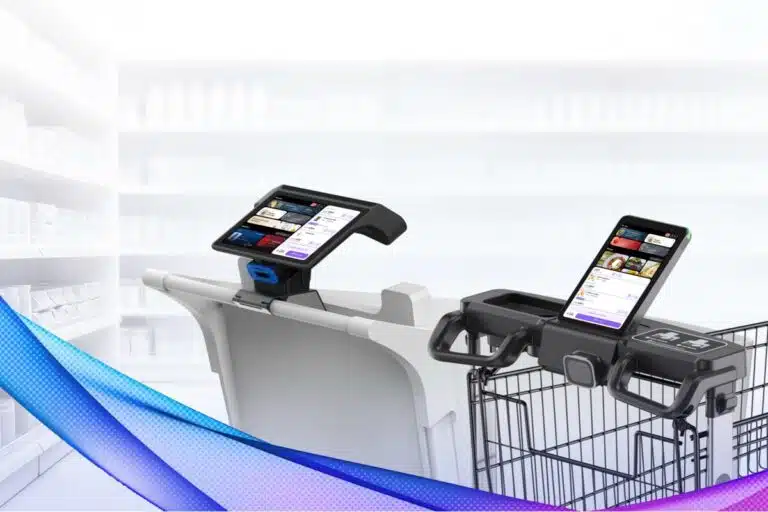

Hanshow has launched a smart shopping trolley with shopreme and Lucky cart that combines self-checkout with targeted in-store promotions and retail-media measurement.
Announced on 15 September, the product gives supermarket operators two hardware options: an integrated trolley with weight-based loss prevention, or a retrofit unit for compatible existing trolleys using an AI camera. Both run on the same shopreme software and integration framework.
Hanshow supplies the hardware and connected-store infrastructure, shopreme provides the checkout software, and Lucky cart adds promotion and retail-media capabilities. The partners are demonstrating the solution at NRF Europe in Paris from 15 to 17 September.
Shoppers can search for products, use synchronised shopping lists, receive location-based offers, scan purchases and pay. Retailers retain control over campaign activation and commercial terms, according to the announcement.
The launch extends an existing relationship. Hanshow and shopreme announced their smart-cart collaboration in December 2025; today’s three-company offer brings the advertising and promotion component into the combined proposition.
Hanshow already features among electronic shelf label suppliers serving supermarkets. Trolley-mounted screens add another customer-facing touchpoint, but their commercial case needs to be assessed separately from shelf-edge pricing infrastructure.
The announcement does not name a launch customer, disclose prices or provide measured results for shrinkage, checkout time or additional sales. The partners describe the two formats as requiring equal investment, without publishing a cost breakdown.
UK buyers already have a competing deployment to examine. Morrisons introduced Instacart’s Caper trolleys at its Preston supermarket on 28 July. That provides a live-store reference point, although results from one supplier cannot establish the performance of another.
For procurement teams, that makes a like-for-like tender important. Reusing existing trolleys does not, by itself, establish a cheaper project once installation, charging, maintenance, software and replacement units are included.
Loss prevention also needs testing in a working grocery store. Loose produce, multipacks, removed items and rescanning can create different demands from a controlled demonstration. A useful pilot would measure both missed items and legitimate purchases wrongly flagged for staff intervention.
The retail-media case raises a separate question for FMCG brands: did an offer generate an additional purchase, or merely appear before a purchase the shopper would have made anyway? Campaign reporting should distinguish screen exposure, offer redemption and incremental sales.
Those requirements sit alongside the wider integration choices facing buyers of supermarket technology platforms. Loyalty identification, product prices and checkout records need to remain consistent, while responsibilities for customer data and support should be clear across the three suppliers.
The next meaningful evidence will be a named retailer deployment with comparable operating results. Until then, the launch establishes a combined checkout-and-advertising offer, rather than a demonstrated return on investment.