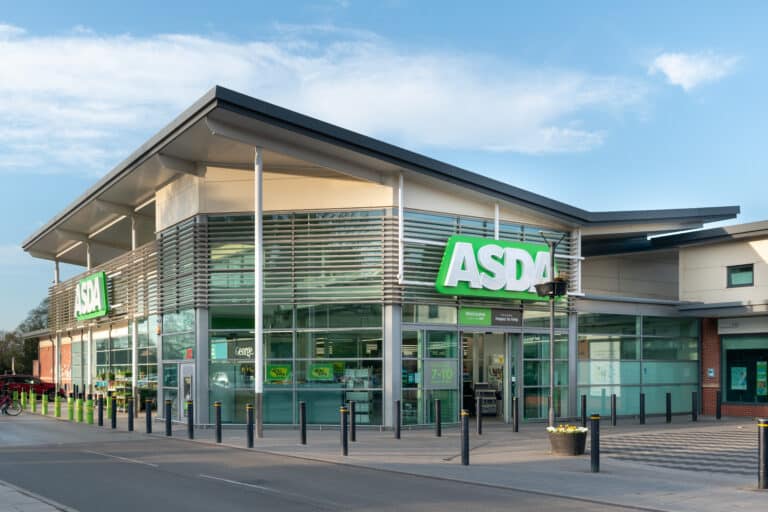

Asda has appointed former Morrisons chief executive David Potts as group CEO with immediate effect, the UK supermarket confirmed on 3 November 2026. Allan Leighton, who has led its recovery efforts as executive chairman, is moving to the position of non-executive group chairman.
Potts takes charge of one of Britain’s largest grocery businesses at a difficult point in its turnaround. Asda has been cutting prices, improving stock availability and trying to rebuild its market position in the face of competition from Tesco, Sainsbury’s, Aldi and Lidl.
The appointment brings a grocery operator with experience across stores, food supply chains, convenience and wholesale. Potts joined Tesco at 16 and went on to lead its businesses in Ireland, the UK and Asia. He then served as Morrisons’ chief executive from 2015 until 2023, overseeing improvements in the business and its transition to private ownership.
Leighton said the company had been stabilised and returned to some growth under its Formula for Growth plan. Asda has also described a broader strategy to build its identity beyond its traditional supermarket operation. Potts’s role is to turn those plans into more consistent results across the estate.
The near-term commercial test is Christmas. Potts said the immediate priority was to keep Asda prices low over the important festive trading period. The company also emphasised improvements that customers can notice in their weekly shopping trips.
Price reductions alone will not settle the competitive challenge. Retailers need dependable stock levels, accurate forecasts and workable promotional plans. For food producers and distributors supplying Asda, those operational details affect volumes, warehouse deliveries, production schedules and the cost of serving the retailer.
Independent reporting on the announcement has focused on Potts’s career and Asda’s market-share decline. The supplier question deserves equal attention: whether new leadership changes buying priorities, sharpens product selection or alters discussions around promotional funding. Asda has not announced specific new supplier terms alongside the appointment, so such changes remain possibilities, not confirmed policy.
Asda has recently reported limited signs of improvement after a long period of weak like-for-like sales. Reuters noted that the retailer returned to underlying sales growth in its third quarter, helped by pricing, availability and the customer experience. The stronger trading period should be viewed alongside the wider pressures from competition, debt and the cost of operational change.
Potts’s previous experience at Morrisons also brings knowledge of food manufacturing, wholesale distribution and smaller-store formats. Those activities are relevant to Asda as it assesses how to compete beyond large supermarkets, but no new deals or format investments were confirmed as part of this week’s appointment.
The group’s supplier base will want clarity on who makes buying decisions and how quickly operational priorities will change. The strongest early evidence of progress will be more reliable availability, improved execution of promotions, and sustained growth rather than a single positive trading period.
Asda has previously announced changes to product ranges and pricing, covered in GTN’s report on its store range and value programme. The wider competitive position can be seen in GTN’s UK supermarket revenue comparison.
Potts also takes over a workforce Asda put at 116,296 colleagues in its announcement. His immediate attention now turns to the Christmas season, when store execution, product availability and value perception will be closely watched by customers and suppliers alike.
Editor’s Note: Based on Asda’s 3 November 2026 appointment announcement and independent reporting on its trading performance. GTN’s added analysis concerns supplier operations and purchasing implications; no unannounced change in supplier policy is presented as fact.