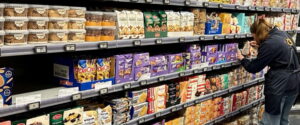

Seven Slovakia-based packaging suppliers offer different routes for chocolate, sweets, wafers, pastry boxes and confectionery transport: Chemosvit Folie in Svit, Flexoprint in Ružomberok, TOSIT in Nitra, Grafobal in Skalica, Kartok in Lučenec, Eco-Pack and VZOR in Detva. The first three explicitly show flexible-packaging capability for sweets or chocolate. Grafobal offers printed cartons and chocolate labels. The remaining businesses are better treated as candidates for secondary, pastry or gift packaging, not proven makers of direct-contact chocolate films. This distinction matters more to a buyer than a fabricated ranking by annual revenue.
This is a confectionery-specific sourcing guide, not another general list of Slovak packaging companies. It compares product evidence, production locations where disclosed, food-contact questions, practical pack types and supplier limitations. A converter of printed candy film should not be compared as though it provides the same product as a box manufacturer. Always ask for the exact construction, batch traceability and a suitable current declaration of compliance before approving a food-contact pack.
1. Slovakia confectionery packaging suppliers at a glance
| Supplier | Slovak link | Most relevant confectionery enquiry | Evidence limitation |
|---|---|---|---|
| Chemosvit Folie | Svit | Printed flexible food film and sweets structures | Qualify the precise barrier and sealing design |
| Flexoprint | Ružomberok | Printed wrappers for bars and sweets | Confirm current line capacity and minimum run |
| TOSIT | Nitra | Chocolate, praline and confectionery flexible packs | Confirm production site and final material specification |
| Grafobal | Skalica | Printed folding cartons and paper labels | Food-contact layer may need separate qualification |
| Kartok | Lučenec production | Pastry cartons and protective retail boxes | Some standard boxes expressly exclude direct food contact |
| Eco-Pack | Slovak corrugated-box manufacturer | Cake, pastry and grouped confectionery boxes | Not a proven primary flexible-film maker |
| VZOR Detva | Detva | Custom cartons, dividers and gift inserts | Verify suitability for the specific food-contact use |
The order reflects the packaging problems a grocery buyer is likely to solve. It is not a measured league table. Verified, comparable 2025 or 2026 revenue, employee totals and confectionery market shares are unavailable across the full group, so those figures are labelled undisclosed instead of estimated. A company’s own description can establish a product offering but does not replace certification and buyer sampling.
2. Chemosvit Folie: direct evidence of sweets films
Chemosvit Folie gives its business address as Štúrova 101, 059 21 Svit, Slovakia. Its official food-packaging page includes a dedicated sweets category alongside dairy, frozen goods, snacks, coffee and other food sectors. Its wider manufacturing information lists film production, gravure and flexographic printing, lamination, slitting and other conversion processes. These are relevant starting capabilities for a brand seeking printed film for wrapped bars or confectionery formats.
A confectionery buyer should not assume that every film construction works for every sweet. Chocolate may require aroma protection and suitable oxygen or moisture performance; a dry sugar sweet may have a different shelf-life risk. Sealing jaws, production-line speed, machine direction, reel diameter, printed registration marks and heat sensitivity can determine whether a printed film actually works. Ask Chemosvit for samples based on the buyer’s packing equipment and the intended product, not simply the company catalogue.
The wider Chemosvit name appears in general Slovak packaging market lists, including our existing Slovakia packaging company overview. This article addresses the narrower evidence that its current food-film catalogue actually includes confectionery. The group-level size of a packaging business is not the same as the capacity available for one chocolate pack. We did not verify a comparable stand-alone 2025 revenue, employee count or sweets-market-share figure for Chemosvit Folie, and none is invented.
For a trial enquiry, send the product fat content, target shelf life, average storage temperature, pack dimensions and a drawing of the sealing process. Request migration and food-contact documents for the proposed layer structure, plus tests from the same manufacturing line and converter combination. A printed prototype alone does not establish suitability for prolonged direct contact.
3. Flexoprint: candy and protein-bar wrappers
Flexoprint is based at Bystrická cesta 69 in Ružomberok. Its official page specifically titled “Manufacture of packaging for bars and confectionery” shows packaging for protein bars, sweets and other sweet products. It identifies polypropylene as a frequently used food-packaging material. The company describes graphic design, flexographic printing and packaging conversion, including printing equipment in its current product information.
Its company-history page states that Flexoprint was founded in 2005 and operates in Slovakia with some activity in the Czech and Hungarian markets. That page also reports approximately 30 employees and more than 2,700 packaging designs printed over its history. Because that company page is not a dated audited report, the staff figure should be labelled as a company statement rather than a current 2026 verified headcount. The company’s audited latest annual revenue and confectionery market share were not confirmed.
For a high-volume bar producer, the key checks are sealing reliability, packaging-web tension, print consistency and the capability to keep roll lengths uniform. A smaller branded confectioner may care more about manageable minimum print runs and artwork changes. Ask whether the supplier can print a short pilot and whether tooling or cylinder charges apply if the print design changes next season.
Make the specification concrete: a wrapped wafer bar, a 30-gram chocolate-coated snack or an individually wrapped sweet may each need a different film structure, barrier and conversion process. Get a written recommendation for your exact packaging machine. Do not order a full production run on the strength of photographs from another customer’s product.
4. TOSIT: flexible packaging aimed at chocolates and pralines
TOSIT identifies itself as a Slovak producer of flexible packaging operating since 2013. Its published contact address is Štúrova 140, 949 01 Nitra. The company’s product page explicitly lists chocolate bars, pralines, filled chocolates, sweet bars and sweets among its applications. It describes structures including BOPP, LDPE, CPP and PET, plus printed, laminated and converted packaging options. The technical information names flexographic and digital print, lamination and slitting.
These details make TOSIT a relevant direct enquiry for printed sweets film, small packaged treats or pouch formats. The company says it can offer food-contact-certified materials, but a buyer must obtain the actual certificate or declaration for the proposed structure. A generic quality statement cannot prove that an ink, coating, adhesive or recycled component is suitable for chocolate that will touch the pack under specific storage conditions.
TOSIT’s public pages do not provide verified comparable current revenue, employee numbers, sweets-only sales or confectionery market share. Those metrics remain undisclosed here. The useful evidence is the company’s stated product scope and technical process, not an unsupported claim that it is one of Slovakia’s biggest converters.
Ask for material-layer details, intended contact side, dimensions, print-protection strategy, seal-temperature window and evidence of barrier performance. A quality-conscious praline producer should also check odour transfer and the risk of packaging affecting delicate flavours. If the finished chocolate is wrapped in an inner foil and placed in a decorative pouch, identify which component is actually in direct contact with the food.
5. Grafobal: cartons, printed presentation and chocolate labels
Grafobal is headquartered at Mazúrova 2 in Skalica, Slovakia. Its company site describes more than 120 years of packaging and printing heritage. It specialises in offset-printed folding cartons, laminated corrugated packaging and related printed products. The product description expressly notes labels used as wrappers for chocolates, while its folding carton portfolio includes surface finishes such as embossing and foil effects.
That gives Grafobal a different buying role from a primary flexible-film converter. A chocolate maker might use it for an outer carton, sleeve, label or premium boxed presentation. A festive confectionery assortment could need several layers: individual inner wraps, trays or inserts, and an outer branded carton. Grafobal’s documented print and carton capability does not automatically demonstrate that its standard carton can touch an unwrapped chocolate. Ask for evidence applicable to the precise food-contact surface.
For a premium gift product, printed finish and dimensional accuracy affect perceived quality and transport damage. But the buyer should test shelf handling, barcode scanning, stack strength and the box’s behaviour in humid storage. Embossing or metallic treatments can improve presentation while increasing lead times, tooling costs or recycling complexity. Obtain physical samples under the intended conditions before setting a launch date.
Grafobal’s public company description supports a long history and local operating address, not a precise audited share of the Slovak sweets-packaging market. Any latest revenue number should identify whether it covers Grafobal a.s. or the wider group and the correct fiscal year. Those comparability checks prevent group sales from being mistaken for revenue from chocolate cartons.
6. Kartok: practical cake and sweet gift boxes
Kartok makes cardboard boxes in Slovakia and lists production in Lučenec, with a registered company address in Kalinovo. Its company history says the business was created on 25 March 2014, then moved its operation from Tomášovce to Lučenec in April 2021. It describes itself as a family business, and the company page refers to three employees. As with any undated self-reported staff figure, buyers should treat that number as a site statement rather than audited 2026 employment data.
For pastry and confectionery shops, Kartok can be relevant for cake boxes, bakery packaging and secondary gift cartons. The company sells standard dimensions and says it can make bespoke sizes. Buyers should pay close attention to an unusually useful warning printed on some Kartok product pages: standard corrugated boxes are not necessarily approved for direct food contact. The company specifically advises using an appropriate food-safe liner for certain items. That disclosure is a reason to check the pack specification, not to assume that every box sold for food is a direct-contact material.
Carton sourcing is not the same as printed chocolate-film sourcing. A bakery selling cookies, pastries or chocolates inside approved inner packs may need a protective outer box with predictable dimensions and simple decoration. A retailer selling bare chocolates in direct contact with a carton needs separate migration and material verification. A practical buyer should ask for samples and written contact-use limits.
Kartok’s site describes Slovak manufacture, but no independently comparable latest annual turnover or confectionery packaging market-share metric was verified. A small team size also does not reveal the maximum monthly quantity available without asking about automation, outsourcing, working shifts and production scheduling.
7. Eco-Pack: cake and pastry cartons with transport strength
Eco-Pack presents itself as a Slovak manufacturer of corrugated board packaging and custom boxes. Its range specifically includes cake and pastry boxes, trays, transport packaging and consumer cartons. This is most relevant when a producer needs secondary confectionery packaging or a stable retail presentation that must survive warehouse and store handling.
For a retailer receiving multiple trays of pastries or boxed sweets, carton geometry matters. Test the pack at both individual-unit and pallet level. Ask about compression strength, print rub, moisture sensitivity, dimensions when folded, packing efficiency and whether inserts are required to prevent movement. Also confirm which parts touch the food and which parts act only as an outer transport layer.
The company lists different constructions and made-to-order solutions, but its public product pages checked here did not give a verified 2025 confectionery-specific revenue, staff count or national market share. Nor does a photo of a cake box establish the food-contact suitability of all corrugated products. Ask for a specification for the exact board, coatings and any liner, and test the finished box with the real product.
8. VZOR Detva: bespoke cartons and protective inserts
VZOR, the manufacturing cooperative in Detva, describes more than 65 years of experience producing cardboard packaging. It lists corrugated and solid-board boxes, dividers, inserts, die-cut shapes and printing options. Its address is Požiarnická 2/1354, 962 12 Detva. It is a plausible enquiry for protective inserts and gift or transport cartons, but there is no basis to call it a producer of branded chocolate film.
A confectionery producer packing delicate pralines may require an insert that holds individually wrapped pieces apart. A seasonal gift product may need a die-cut box with secure closure and retail-ready dimensions. VZOR’s stated custom conversion and inserts may suit those problems if sampling confirms fit, tolerance and appropriate materials. The direct-contact status of any divider or inner board must be checked for the food itself, not assumed from the company’s general packaging portfolio.
VZOR does not publish comparable audited confectionery-only market share or current revenue in the material checked. Its history does not by itself establish national production capacity. Ask for die-cut tolerances, tooling fees, sample lead times, minimum production batch, repeat-order schedule and the exact entity that would invoice the product.
9. What is new in 2026: EU food-contact and packaging rules
The EU Packaging and Packaging Waste Regulation, Regulation (EU) 2025/40, began general application on 12 August 2026, according to the European Commission. Its food-contact packaging PFAS restrictions now matter, while some later obligations on recyclability, labels and recycled-content targets phase in through future years. A buyer should not assume every 2030 measure already applies in November 2026. Seek legal advice where a material choice or country of sale creates uncertainty.
The framework for food-contact materials also includes Regulation (EC) 1935/2004 and, for applicable plastic materials, Regulation (EU) 10/2011 and its amendments. A printed film converter should be able to identify its composition, provide relevant declarations, and supply migration and good-manufacturing evidence for the intended application. If a printed outer carton never contacts the food because an approved inner wrap separates them, the risk and evidence requirements differ from direct chocolate contact.
Do not accept “recyclable” or “eco” as a substitute for compliance. Ask whether the exact package is collected and sorted in the target market, whether a laminate is technically recyclable, and what evidence supports the claim. An outer board and an inner multilayer film may need different instructions. Packaging weight, protection, food waste and product shelf life must all be weighed before choosing a lighter but less effective construction.
10. Match the supplier to the confectionery product
| Product | Likely packaging question | First supplier type |
|---|---|---|
| Wrapped sweets and snack bars | Film barrier, sealing and reel specifications | Flexible-film converter |
| Chocolate tablets | Inner contact layer plus printed sleeve | Film/foil converter and carton printer |
| Pralines or seasonal gift assortments | Trays, inserts, decorative cartons, protection | Box converter plus approved direct-contact components |
| Wafers and biscuits | Moisture barrier, print and shelf life | Film converter, then shelf-ready outer carton |
| Pastries and cakes | Crush resistance, lining and temperature | Bakery-box producer, checked for direct contact |
| Multipack confectionery for grocery | Retail barcode, shelf-ready case, pallet strength | Outer-carton producer and packer |
One supplier can sometimes provide several parts of a system, but buyers should not assume this. Ask if printing, lamination, cutting and assembly are done in-house, by another group company or by a third-party subcontractor. Document the responsibility for each process. This is especially important when failures arise after the finished confectionery has been packed.
11. Building a quotation brief that suppliers can answer
Start with the confectionery itself: dimensions, composition, fat and moisture profile, intended storage conditions, shelf life, pack weight and manufacturing-line speed. Add the current artwork or a simple dieline, target retail channel, annual forecast and initial order size. Name the contact layer and where a tamper-evident feature is needed. For a premium gift range, specify whether it will be sold loose, in a sleeve or in a display-ready retail box.
Ask for a sample structure and a technical explanation of why it fits. A transparent film that seals on one machine may not seal at a different temperature or speed. A carton that looks strong in a showroom may deform when stacked on pallets. Require test evidence for the exact intended conditions, particularly where the product has high fat content, delicate aromas, fragile shapes or seasonal storage peaks.
Quote comparisons should use consistent terms: cost per finished pack, tooling amortisation, waste allowance, minimum order, delivery terms, payment terms and storage. A low printed-film unit price can be misleading if the minimum roll run ties up months of inventory. A more expensive carton might cost less overall if it reduces transit breakage. Buyers need landed and usable cost, not price per sheet alone.
12. A practical seven-stage approval process
- Define the use: direct food contact, secondary presentation or transport protection.
- Screen suppliers: confirm the specific manufacturing or conversion ability stated above.
- Request documents: obtain relevant declarations, test reports, specifications and quality evidence.
- Test samples: run actual packing machinery and storage trials with the finished sweet.
- Approve artwork: verify labels, allergens, barcodes, origin claims and print consistency.
- Trial a batch: record rejects, seal quality, transport damage and the first delivery’s traceability.
- Sign controls: agree change notification, non-conformance handling, recall procedures and reorder conditions.
Assign responsibility for every approval. Packaging development, purchasing, operations, regulatory and quality staff may each see different risks. A packaging sample approved only for visual appearance is not necessarily approved for direct food contact or a high-speed wrapping machine. The go-live decision should rest on signed technical and commercial evidence.
13. Financial comparisons without false rankings
Do not compare a multinational group turnover with a Slovak family company without explaining reporting scope. The public sources checked for this guide do not provide a full, comparable series of 2025 revenue and employee figures for all seven suppliers, nor verified market shares for confectionery packaging. Those data are undisclosed or not comparable here, rather than filled with estimates. Flexoprint’s own company page states 30 employees, and Kartok’s describes a three-person team; both are site statements and may not reflect a verified 2026 headcount.
Production sites and branches should also be labelled correctly. Grafobal’s Skalica address, Chemosvit Folie’s Svit address, Flexoprint’s Ružomberok location, TOSIT’s Nitra address, Kartok’s Lučenec production and VZOR’s Detva site establish geographic links. They are not proof of a national branch network. An office or sales address does not automatically establish the location of every manufacturing operation.
For a financially important contract, buyers can request the exact Slovak legal company name and use annual accounts or a business registry, when available, to compare the same fiscal year and entity type. A high turnover figure can coexist with limited available capacity for a niche print run. Commercial continuity, material availability and responsive quality support may matter more than annual sales size.
14. Do not confuse this niche guide with general packaging coverage
Our existing Slovakia packaging companies article surveys the wider sector, including industrial, corrugated and flexible materials. This guide answers a different purchasing question: who has direct evidence of sweets films, printed wrappers, chocolate cartons or pastry/gift boxes, and what must be checked before ordering. It includes suppliers omitted from general size-based lists because specialist product evidence matters more than scale.
Cross-border buyers may also compare manufacturing options in nearby markets. The Czechia confectionery packaging guide is useful for distinguishing local converters, carton makers and contract packers. The Austria confectionery packaging guide offers another regional reference. Do not treat one country’s pack compliance certificate as proof that an unrelated structure from another supplier is covered.
15. Frequently asked questions
Which Slovak companies explicitly mention packaging for sweets?
Chemosvit Folie lists confectionery among its food-film sectors. Flexoprint shows an application gallery for bars and sweets. TOSIT lists chocolate, pralines and confectionery flexible packaging. These are the most direct application matches among the seven businesses surveyed.
Who should a buyer approach for chocolate gift boxes?
Grafobal has printed carton and chocolate-label capabilities. Kartok, Eco-Pack and VZOR offer different protective, pastry, folding or transport box options. Their suitability depends on the finished product, required finishes, food contact and order size.
Can a cardboard confectionery box touch unwrapped chocolate?
Not automatically. The food-contact suitability of the exact board, inks, coatings and adhesives must be demonstrated. Kartok’s product pages even warn that certain standard corrugated boxes are not approved for direct food contact. A compliant inner wrap or liner may be required.
Has the EU packaging regulation started applying in 2026?
Yes. The EU Packaging and Packaging Waste Regulation began general application on 12 August 2026, while some specific obligations enter into effect later. Buyers should check the current official requirements for their exact material and destination market.
Are these the seven biggest packaging firms in Slovakia?
No. This is a buyer-fit selection based on confirmed product evidence and relevant local supply routes. Publicly available figures do not support a consistent revenue or market-share ranking of the seven firms for confectionery packaging.
16. Buyer verdict
Start with Chemosvit Folie, Flexoprint or TOSIT for printed primary sweets film. Consider Grafobal for printed cartons and chocolate labels. Ask Kartok, Eco-Pack or VZOR about protective and presentation boxes when the product and required contact layer match their capability. Get a sample, a written specification and evidence for the actual use before placing a production order. The best supplier is the one that meets the pack’s technical and commercial requirements, not necessarily the largest company on a general packaging list.
Editor’s Note: The research checked current product and company pages of Chemosvit Folie, Flexoprint, TOSIT, Grafobal, Kartok, Eco-Pack and VZOR, plus the European Commission’s August 2026 packaging regulation update. Founding and employment details are described as company claims where public audited verification was unavailable. No external links appear in this published guide.