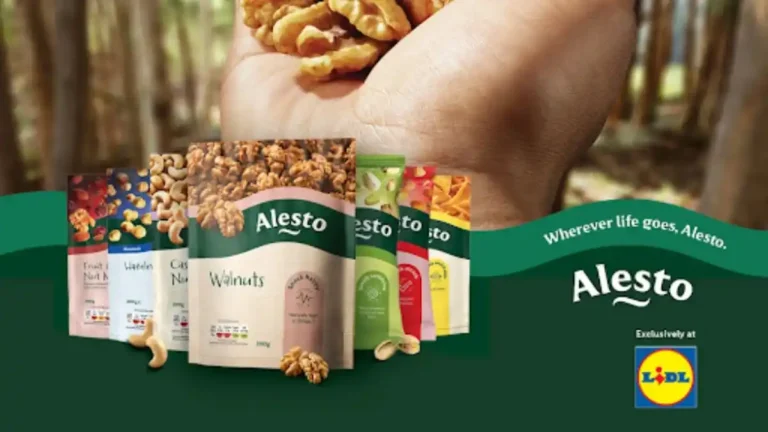

Lidl has unveiled a new look for its Alesto nuts and dried fruit range as the supermarket steps up its investment in healthy snacking and private-label growth. Announced on 10 July, the nationwide relaunch introduces redesigned packaging and a refreshed brand identity aimed at strengthening Alesto’s position in one of grocery retail’s fastest-growing categories.
The retailer says the rebrand is intended to make the range more recognisable while highlighting quality, convenience and everyday wellbeing. The updated packaging will appear across Alesto’s assortment of nuts, nut mixes and dried fruits sold in Lidl stores.
What is Alesto?
Alesto is Lidl’s own-brand range of nuts, dried fruits and snack mixes. The portfolio includes everyday and premium products designed for consumers looking for convenient snack options, from natural nuts to flavoured mixes and dried fruit selections.
At a glance
- Lidl has refreshed the Alesto brand across its nuts and dried fruit range.
- New packaging is being introduced nationwide.
- The relaunch supports Lidl’s healthy snacking strategy.
- Alesto remains Lidl’s dedicated nuts and dried fruit private label.
- The initiative aligns with Lidl’s sustainability commitments.
- A new omnichannel marketing campaign will support the rollout.
- Lidl aims to strengthen Alesto’s position as a leading European snack brand.
Why has Lidl refreshed the Alesto brand?
The supermarket says the new identity is designed to modernise the brand while making it easier for shoppers to recognise products on the shelf.
The refreshed design focuses on simple, contemporary packaging that reflects the range’s emphasis on natural ingredients, premium quality and convenient snacking. Lidl hopes the stronger branding will help Alesto appeal to consumers looking for healthier everyday food choices.
How does the relaunch fit Lidl’s sustainability plans?
The Alesto update also supports Lidl’s wider Healthy and Sustainable Diets strategy.
The retailer has committed to increasing the share of plant-based protein sources compared with animal-based proteins by up to 25% by 2030, in line with its sustainability objectives and the scientific principles of the Planetary Health Diet. Nuts and dried fruits are among the product categories that support those ambitions.
Why are supermarkets investing in healthy snacking?
Healthy snacking has become an increasingly competitive area for food retailers as shoppers look for products that combine convenience with nutritional value.
Across Europe, supermarkets are expanding own-brand ranges in categories such as nuts, seeds, dried fruit and plant-based snacks as they compete with the largest snack companies in Europe and respond to changing consumer eating habits. Private-label products have become an important way for retailers to build customer loyalty while maintaining value.
How will Lidl support the new Alesto range?
Alongside the packaging redesign, Lidl has launched a new omnichannel marketing campaign promoting Alesto across digital and retail channels.
The campaign highlights different everyday snacking occasions, from work and travel to sport and evenings at home, while reinforcing the brand’s focus on quality and accessible pricing.
What happens next?
The refreshed Alesto packaging will be rolled out across Lidl stores as the retailer continues investing in its private-label portfolio. Across the UK supermarket sector, demand for healthier snacks is expected to drive further investment in plant-based products, stronger own-brand ranges and sustainability-focused food choices, making categories such as nuts and dried fruits increasingly important to grocery retailers.
Editor’s Note: This article is based on information provided by Lidl Great Britain and has been reviewed with additional background on Lidl’s healthy and sustainable diets strategy, private-label development and the Alesto product range. The article has been independently rewritten and edited by Global Supermarket News for clarity, context and editorial style.