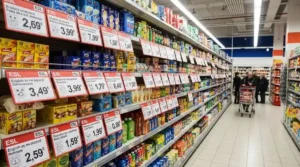


Switzerland has become one of the world’s reference markets for supermarket refrigeration. Many countries adopted natural refrigerants gradually. Swiss retailers began investing in commercial CO₂ refrigeration systems years before they became mainstream across Europe.
That early commitment has made Switzerland a testing ground for refrigeration engineering, energy efficiency and sustainable food retail. Retailers such as Migros, Coop Switzerland, Lidl Schweiz and ALDI SUISSE continue modernising stores with advanced refrigeration technologies. These cut emissions and improve operational performance.
Behind those projects is a specialist ecosystem of engineers, equipment manufacturers and refrigeration contractors. It has helped shape modern supermarket refrigeration far beyond Switzerland’s borders.
At a Glance
| Rank | Company | FY Revenue | Strategic Role |
|---|---|---|---|
| 1 | Frigo-Consulting AG | Private | Independent supermarket refrigeration engineering |
| 2 | Carrier Commercial Refrigeration Switzerland (Haier) | Private | CO₂ supermarket refrigeration systems |
| 3 | Epta Switzerland | Private | Refrigerated cabinets and retail refrigeration solutions |
| 4 | Arneg Switzerland | Private | Commercial display cabinets and supermarket equipment |
| 5 | Beijer Ref Switzerland / SCM Frigo | Private | CO₂ refrigeration packs and natural refrigerant systems |
Methodology
This ranking evaluates companies on their demonstrated contribution to Switzerland’s supermarket refrigeration sector. It does not reflect global corporate revenue.
The assessment considers:
- Documented supermarket projects.
- Refrigeration engineering expertise.
- Equipment supplied to food retail.
- Natural refrigerant technologies.
- Lifecycle support.
- Publicly available project references.
Some retailer procurement information is not public. In those cases, companies are assessed on verified project activity. They are also assessed on their established role in Switzerland’s supermarket refrigeration ecosystem.
Why Switzerland Matters
Switzerland occupies a unique position in global supermarket refrigeration.
Swiss supermarket groups do not rely only on equipment manufacturers. They often start major refrigeration projects by appointing independent engineering specialists. These specialists write technical specifications, evaluate technologies and oversee project delivery. Equipment manufacturers, refrigeration contractors and controls suppliers then work within those performance requirements.
This approach has helped Switzerland become one of the earliest adopters of transcritical CO₂ refrigeration. Migros and Coop have invested in natural refrigerants for many years. They combine refrigeration with heat recovery, intelligent energy management and advanced building technologies to improve overall store efficiency.
Switzerland has also played a pioneering role in commercial ejector technology. Projects have shown significant cuts in electricity use while keeping food safety standards.
In many markets, procurement is driven mainly by equipment suppliers. Switzerland’s refrigeration sector is heavily influenced by engineering expertise. That makes the country one of Europe’s most technically advanced and closely watched supermarket refrigeration markets.
1. Frigo-Consulting AG
Key facts
- Founded: 1988
- Headquarters: Geneva, Switzerland
- FY Revenue: Private
What it does
Frigo-Consulting AG occupies a unique position in Switzerland’s supermarket refrigeration industry. Unlike traditional refrigeration manufacturers, it does not produce display cabinets, compressors or refrigeration packs.
Instead, it designs the systems that many of Switzerland’s largest food retailers ultimately install.
The company specialises in:
- Refrigeration engineering.
- Technical consultancy.
- Project management.
- Commissioning.
- Quality assurance for complex commercial refrigeration projects.
This independent approach lets retailers judge technologies on technical performance. They are not tied to a single equipment manufacturer.
Key projects
Its influence can be seen across several landmark supermarket developments. Frigo-Consulting has worked on projects including Migros Surseepark, Migros Kreuzplatz, Coop Marktgass Bern, and Coop Etagnières. This helps retailers implement advanced CO₂ refrigeration systems, heat recovery technologies and energy-efficient store concepts.
One of Switzerland’s best-known supermarket refrigeration projects was the redevelopment of Coop Marktgass Bern. Conventional installation methods were impossible. Engineers had to lift a two-tonne gas cooler onto the building by helicopter.
Projects such as these show the company can deliver refrigeration solutions in demanding urban environments.
Why it matters to supermarket buyers
Beyond individual stores, Frigo-Consulting has helped advance natural refrigerant technologies. It has contributed to developments in transcritical CO₂ systems, ejector technology and integrated heat recovery. These help Swiss supermarkets reduce energy use and lower greenhouse gas emissions.
Swiss retailers often separate engineering from equipment procurement. Frigo-Consulting has therefore become one of the country’s most influential refrigeration specialists. It does not manufacture equipment. It shapes the technical standards that many supermarket refrigeration projects follow.
2. Carrier Commercial Refrigeration Switzerland (Haier)
Key facts
- Founded: Legacy Carrier Commercial Refrigeration business
- Swiss Operations: Nationwide
- Ownership: Haier Smart Home
- FY Revenue: Private
History in Switzerland
Carrier Commercial Refrigeration has had a significant presence in Switzerland for more than two decades. It has played an important role in the country’s move towards natural refrigerants.
The company’s connection with Switzerland dates back to 2004. That year it completed one of the world’s earliest commercial transcritical CO₂ supermarket refrigeration installations.
That pioneering project helped set the technical foundations for Carrier’s CO₂OLtec® platform. It later became one of Europe’s best-known commercial CO₂ refrigeration systems.
Switzerland proved to be an ideal environment for early CO₂ adoption. Strict environmental expectations, high energy costs and retailers willing to invest in advanced technology encouraged rapid innovation. Carrier kept refining its systems through Swiss supermarket projects before expanding the technology across Europe.
What it supplies
Today, Carrier supplies:
- Refrigerated display cabinets.
- Integrated refrigeration systems.
- Freezer solutions.
- Heat recovery technologies suitable for supermarkets, hypermarkets and food distribution facilities.
Haier Smart Home acquired Carrier Commercial Refrigeration in October 2024. The business continues to operate with the support of Haier’s global commercial refrigeration resources. It keeps its established presence across European food retail.
Why it matters to supermarket buyers
Carrier’s long involvement in Swiss CO₂ supermarket projects gives it a distinctive place in the country’s refrigeration market. It did not simply enter an established sector. It helped develop technologies that are now widely used across the international supermarket industry.
3. Epta Switzerland
Key facts
- Founded: Epta Group established 2003 (through earlier brand heritage)
- Swiss Operations: Active nationwide
- FY Revenue: Private
What it supplies
Epta has built a strong presence in Switzerland’s supermarket refrigeration sector. Its commercial refrigeration brands include Costan and Bonnet Névé. Both are widely recognised throughout European food retail.
The company supplies:
- Refrigerated multidecks.
- Freezer cabinets.
- Service counters.
- Complete supermarket refrigeration solutions designed for modern grocery environments.
Its equipment is used across supermarkets, convenience stores and specialist food retailers. In these stores, energy efficiency, product visibility and environmental performance are key purchasing priorities.
Why it matters to supermarket buyers
Switzerland’s supermarket operators keep demanding refrigeration systems that support natural refrigerants and cut electricity use. Epta has responded by expanding its range of efficient refrigeration technologies. They are compatible with CO₂-based supermarket systems.
Engineering consultants focus on project design. Epta’s strength is the visible refrigeration infrastructure that shoppers use every day. Cabinet performance influences product presentation, customer experience and energy use. This makes refrigeration equipment a significant operational investment for retailers.
The company’s continued investment in sustainable refrigeration technologies fits Switzerland’s long-term focus on lower-emission food retail and energy-efficient supermarket development.
4. Arneg Switzerland
Key facts
- Founded: 1963
- Swiss Operations: Nationwide through the Arneg Group network
- FY Revenue: Private
What it supplies
Arneg has a solid position in Switzerland’s commercial refrigeration market. It supplies:
- Refrigerated display cabinets.
- Freezer islands.
- Service counters.
- Integrated retail refrigeration solutions.
The company serves supermarket operators across Europe. Its Swiss business focuses on retailers that need flexible store layouts, high merchandising standards and lower energy consumption.
Its refrigeration systems are designed to work with natural refrigerants and modern remote refrigeration architectures. This helps retailers meet increasingly demanding environmental requirements.
Cabinet efficiency, LED lighting, improved insulation and advanced airflow management remain central to Arneg’s product development.
Why it matters to supermarket buyers
Switzerland presents particular challenges for supermarket refrigeration. Premium grocery formats, limited urban retail space and high customer expectations call for equipment that balances product presentation with operating efficiency.
Arneg has kept adapting its range to meet those needs through modular cabinet designs and custom retail solutions.
Independent engineering consultants often define the technical specifications for major Swiss supermarket projects. Manufacturers such as Arneg remain an important part of the delivery chain. They provide the refrigeration furniture that forms the customer-facing side of every store.
Swiss retailers continue modernising stores and replacing older HFC-based equipment. Arneg remains one of the recognised suppliers serving the country’s commercial refrigeration market.
5. Beijer Ref Switzerland / SCM Frigo
Key facts
- Founded: SCM Frigo 1979
- Swiss Operations: Through Beijer Ref Switzerland
- FY Revenue: Private
What it supplies
Supermarket shoppers rarely see the equipment installed behind refrigerated cabinets. Yet the machinery in the plant room determines how efficiently an entire supermarket runs.
This is where SCM Frigo and Beijer Ref play an important role.
SCM Frigo specialises in factory-built transcritical CO₂ refrigeration packs used in commercial food retail. Through Beijer Ref’s distribution and technical support network, these systems reach refrigeration contractors working on supermarket projects across Switzerland.
Unlike cabinet manufacturers, SCM Frigo focuses on the central refrigeration plant. These packaged systems contain compressors, valves, controls and safety equipment. They circulate refrigerant throughout the supermarket.
They are engineered to deliver reliable cooling. They also support heat recovery, lower electricity use and reduced environmental impact.
Why it matters to supermarket buyers
Switzerland has long been recognised as one of Europe’s most advanced CO₂ refrigeration markets. Retailers keep investing in natural refrigerants. Factory-assembled CO₂ packs have become more attractive because they cut installation time, improve commissioning quality and simplify long-term servicing.
Beijer Ref complements this approach with technical support, spare parts distribution and specialist refrigeration expertise across the Swiss market.
Together, the two businesses form an important part of the country’s supermarket refrigeration supply chain. They typically work behind the scenes, not directly with grocery shoppers.
Supporting Refrigeration Ecosystem
Switzerland’s supermarket refrigeration sector relies on a wider network of technology specialists. They support the companies ranked above.
BITZER Switzerland supplies compressors that power many commercial refrigeration systems installed throughout Europe. It does not make supermarket display cabinets. Its compressor technology is still a critical part of many CO₂ refrigeration installations.
Danfoss Switzerland provides electronic expansion valves, pack controllers, monitoring systems and energy management technologies. These digital control platforms let supermarket operators optimise refrigeration performance and improve food safety. Continuous monitoring also reduces electricity use.
LU-VE Group supplies gas coolers, condensers and heat exchangers used in commercial refrigeration systems. Heat recovery is becoming more important in Swiss supermarkets. These components help improve energy efficiency and lower operating costs.
Specialist refrigeration contractors also play a vital role. They install, commission and maintain supermarket refrigeration systems. They also ensure compliance with Switzerland’s strict technical and environmental standards.
Industry Outlook
Switzerland continues to set the pace for supermarket refrigeration innovation.
The country’s early investment in transcritical CO₂ systems has grown into broader energy strategies. These combine refrigeration, heating and intelligent building management.
Retailers increasingly do not treat refrigeration as an isolated system. They use waste heat from refrigeration equipment to provide space heating and hot water. This improves the overall efficiency of supermarket buildings.
Digital technologies are also becoming more important. Cloud-based monitoring, predictive maintenance and real-time energy optimisation let retailers detect performance issues early. They can act before issues affect food quality or raise operating costs.
Looking ahead, Switzerland is expected to remain an important reference market. Refrigeration manufacturers and engineering firms use it to develop the next generation of natural refrigerant technologies. Many innovations proven in Swiss supermarkets are later adopted across Europe and other international grocery markets.
Frequently Asked Questions
Who is ranked first for supermarket refrigeration in Switzerland?
Frigo-Consulting AG is ranked first. It is an independent engineering specialist that designs the systems many Swiss food retailers install.
Why is Switzerland a reference market for CO₂ refrigeration?
Swiss retailers invested in commercial CO₂ refrigeration years before it became mainstream across Europe. Carrier completed one of the world’s earliest commercial transcritical CO₂ supermarket installations there in 2004.
Does the ranking show confirmed market share?
No. The ranking is an assessment of market influence. It is not confirmed market share.
What Happens Next?
Switzerland’s supermarket refrigeration sector is expected to keep investing in natural refrigerants, intelligent controls and integrated energy management systems.
Across the Switzerland retail technology sector, refrigeration is increasingly connected with digital monitoring, predictive maintenance and building automation.
For the Swiss supermarket industry, future investment is likely to focus on reducing emissions. It will also aim to improve operational efficiency and food safety.
Across the wider Swiss FMCG sector, advanced refrigeration infrastructure will keep supporting premium food quality, supply-chain resilience and long-term sustainability.
Editor’s Note: This report evaluates companies according to their verified contribution to Switzerland’s supermarket refrigeration sector. The assessment considers refrigeration engineering, documented supermarket projects, equipment manufacturing, natural refrigerant technologies, lifecycle support and publicly available industry information.
Where supermarket procurement information is not publicly disclosed, companies have been assessed according to verified project involvement and their established role within Switzerland’s commercial refrigeration market. The ranking should therefore be viewed as an assessment of market influence rather than confirmed market share.