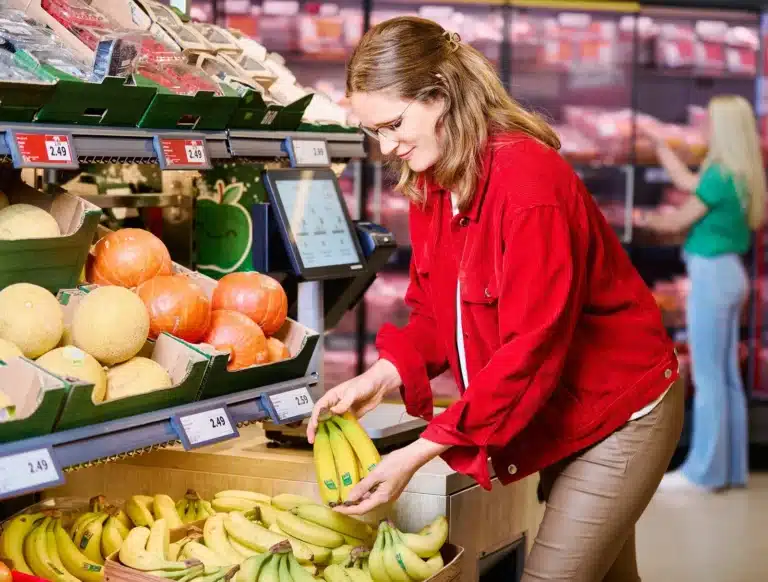

Lidl Netherlands plans to make certified organic products account for 12% of the potatoes, vegetables and fruit it sells by weight by 2030, setting a new sourcing direction for growers supplying the discounter.
The retailer announced the target on 25 September, alongside a separate ambition for organic products to reach 10% of its own-label fresh liquid dairy sales in the same year.
The produce measure is a share of kilograms sold, not a share of shelf space, product lines or revenue. That distinction matters: listing additional organic products would not, by itself, demonstrate that Lidl had reached the target.
Lidl sustainability specialist Imre ter Hedde told RetailTrends that organic produce currently accounts for 8% of the category, while the corresponding dairy share is just below 7%.
Moving from 8% to 12% would increase the organic share by four percentage points, or 50% relative to its present level. It does not automatically imply a 50% rise in organic tonnage, because the eventual requirement also depends on how Lidl’s total produce sales change.
The announcement follows the retailer’s 2024 Hutspotakkoord agreement with prospective organic farmers. Lidl says it exceeded the agreement’s aim of doubling its organic produce share a year early, in 2025 rather than 2026.
For growers, the new ambition offers a clearer indication of future buying priorities. It is not yet a published purchasing commitment: Lidl’s release does not specify annual tonnage, individual crop requirements, supplier allocations or guaranteed contract prices.
Those details will determine how useful the target becomes for businesses planning production. A supplier considering additional organic acreage needs to know when volumes will be required, which grades and pack sizes are acceptable, and how seasonal demand will be shared across growing regions.
For the Dutch fresh produce supply base, the practical opportunity extends beyond growing more organic crops. Buyers will also need dependable packing, segregation and delivery arrangements so that certified produce reaches stores consistently.
Organic documentation is one part of that preparation. Suppliers should agree the certification evidence and lot-level records required by the buying team, alongside the wider food-certification requirements of Dutch supermarkets. The commercial discussion should cover rejected loads, substitutions and responsibility for unsold stock as well as the headline purchase price.
The dairy ambition requires a separate supply plan. It covers own-label fresh liquid dairy, not the entire dairy aisle, and should not be read as a target for branded products, cheese or every chilled category.
For dairy processors, the buyer questions are therefore specific: which products will change, how certified milk supply will be secured, and whether filling schedules and delivery frequency can support the proposed sales mix. The release provides no product-by-product timetable.
Lidl presents affordability as central to its organic strategy. For procurement teams, the challenge is to turn that positioning into repeat sales without transferring all the uncertainty to growers and processors. Promotional demand, normal weekly demand and agreed purchasing volumes need to be distinguished before suppliers commit capacity.
The next test will be whether Lidl translates its 2030 percentages into annual buying plans and workable supplier terms. That would give the supply chain a firmer basis for investment than the targets alone.
Editor’s Note: Based on Lidl Netherlands’ 25 September 2026 announcement and RetailTrends’ same-day reporting. Grocery Trade News translated the Dutch material and added analysis of sourcing, volume measurement and supplier planning.