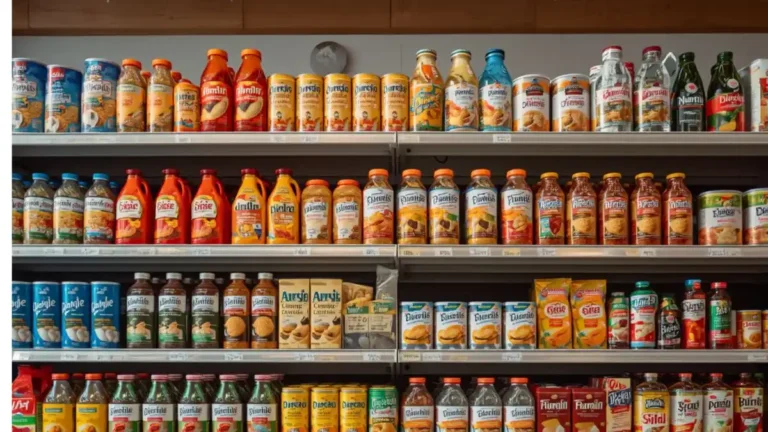

As of Q2 2026, the Estonian FMCG (Fast-Moving Consumer Goods) sector is defined by aggressive consolidation and a “local-first” consumer mandate. Total market revenue for the top 10 producers exceeds €1.1 billion, driven by the dominance of AS Maag Eesti in the protein sector and Valio Eesti in dairy. Despite global inflationary pressures, local brands like Kalev and A. Le Coq maintain over 80% market penetration, leveraging high brand equity to offset rising raw material costs.
FMCG (Estonia): A specialized market segment comprising high-turnover consumer products—primarily food, beverages, and household goods—produced or distributed within Estonia. It is characterized by high purchase frequency, short shelf lives, and a unique structural reliance on “National Champion” producers over global conglomerates.
Executive Summary: Top 10 FMCG Powerhouse Table (FY2025/26)
| Rank | Entity (HQ) | FY25 Rev (Est) | Key Strategic Impact |
| 01 | Maag Eesti (Rakvere) | €198.3M | Absolute protein market dominance. |
| 02 | Valio Eesti (Võru/Laeva) | €187.9M | Leader in functional dairy & exports. |
| 03 | Eesti Pagar (Paide) | €109.4M | Bakery sector leader; export growth. |
| 04 | Liviko (Tallinn) | €106.0M | High-margin spirits & premium imports. |
| 05 | Tere AS (Tallinn) | €103.7M | Part of Nordic Milk; dairy innovation. |
| 06 | A. Le Coq (Tartu) | €90.2M | Beverage leader by volume & portfolio. |
| 07 | Orkla Eesti (Jüri) | €88.5M | Brand equity leader (Kalev, Põltsamaa). |
| 08 | Saku Õlletehas (Saku) | €80.2M | Premium segment leader (Carlsberg Group). |
| 09 | Farmi Piimatööstus | €72.0M | High-growth fresh dairy segment. |
| 10 | Bambona (Tallinn) | €35.2M | Supply chain backbone for fresh produce. |
01. AS Maag Eesti (Formerly HKScan Assets)
Founded: 1991 (Group) / HQ: Rakvere, Estonia
FY Revenue: €198.3M (2025 Forecasted)
Employees: ~1,150
Core Segments: Meat processing, Poultry (Tallegg), Dairy (Farmi integration), Ready-meals.
Operational Relevance
Maag Eesti functions as the vertical anchor of the Estonian food supply chain. Following its landmark acquisition of HKScan’s Baltic assets, it controls the “farm-to-fork” journey for nearly 45% of domestically consumed meat products. Its facilities in Rakvere and Tabasalu serve as the primary processing hubs for local farmers, making them indispensable to national food security.
Why it matters
MAAG EESTI CONTROLS ~40% OF SHELF SPACE IN FRESH PROTEIN SECTIONS NATIONWIDE.
Why it matters:
Maag’s dominance creates a “price-setter” environment. While this ensures stability for local farmers, it creates significant barriers for small-scale artisanal producers. Their FY25 revenue growth of 1.8% in a stagnating market proves that their economy of scale is their greatest defensive moat.
02. Valio Eesti AS
Founded: 1992 / HQ: Võru & Laeva, Estonia
FY Revenue: €187.9M (2025 Prelim)
Employees: ~480
Core Segments: Fresh Milk (Alma), Hard Cheeses (Võru Forte), Functional Yogurts (Gefilus).
Operational Relevance
Valio Eesti is the primary innovator in the Baltic dairy sector. It operates one of the largest cheese plants in the Baltics (Võru), producing the world-renowned “Forte” hard cheese. Unlike many local peers, Valio is heavily export-oriented, with roughly 25-30% of its production reaching over 20 global markets, including Italy and Greece.
Why it matters
Executive Insight: Valio has successfully decoupled revenue from raw milk price volatility by pivoting to “Functional Foods” (probiotics and lactose-free).
Why it matters:
By focusing on the Alma brand’s “Clean Label” (Puhtad etiketid) initiative, Valio has captured the Gen-Z and Millennial demographic in Estonia, allowing them to maintain higher margins than competitors like Tere, even as raw material costs fluctuated in early 2026.
03. AS Eesti Pagar
Founded: 1914 / HQ: Paide, Estonia
FY Revenue: €109.4M (2025 Actual)
Employees: ~520
Core Segments: Fresh Bread (Leib), Frozen Bakery Goods, Pastries, Tortilla/Flatbreads.
Operational Relevance
Eesti Pagar is the heartbeat of the Estonian “staple food” chain. Operating from its centralized, highly automated production facility in Paide, it leverages its geographic location to minimize logistics costs to both Tallinn and Tartu. Beyond fresh bread, the company has successfully dominated the “Bake-off” segment, supplying frozen dough and pre-baked goods to every major retail chain and convenience store (Circle K, Olerex) across the Baltics.
Why it matters
EESTI PAGAR HAS SECURED 70% OF THE FROZEN BAKERY EXPORT QUOTA TO NEIGHBORING FINLAND AND LATVIA.
Why it matters:
While traditional bread consumption is declining globally, Eesti Pagar’s pivot to “Frozen-to-Shelf” technology has insulated its margins. By 2026, they have effectively marginalized smaller regional bakeries by out-investing them in automation, allowing them to maintain price points that global competitors like Fazer struggle to match in the local “Price-Sensitive” tier.
04. AS Liviko
Founded: 1898 / HQ: Tallinn, Estonia
FY Revenue: €106.0M (2025 Actual – Net of Excise)
Employees: ~270
Core Segments: Spirits (Vana Tallinn, Crafter’s Gin), Wine Distribution, Premium Imports.
Operational Relevance
Liviko is a dual-threat entity: a world-class producer and the region’s most sophisticated distributor. While Vana Tallinn remains its flagship export, the company’s revenue is increasingly driven by its “Liviko Store” retail footprint and its role as the exclusive Baltic partner for global beverage giants (e.g., Bacardi-Martini, Rémy Cointreau). Its logistics hub in Tallinn is one of the few in Northern Europe capable of handling high-complexity bonded warehousing at this scale.
Why it matters
Executive Insight: Liviko is no longer a “Vodka Company.” Their revenue mix in 2026 shows a 15% shift toward “Premiumization”—higher margins on lower volumes.
Why it matters:
By successfully branding Crafter’s Gin as a global craft icon, Liviko has avoided the “Commodity Trap” that plagues other Baltic distillers. Their ability to command shelf space in high-end global travel retail (Airports/Ferries) provides a hedge against local Estonian alcohol tax hikes, which have historically crippled purely domestic players.
05. Tere AS (Nordic Milk Group)
Founded: 1996 / HQ: Tallinn, Estonia
FY Revenue: €103.7M (2025 Actual)
Employees: ~410
Core Segments: Skimmed Milk, Butter, Functional Yogurts (Hellus), Cottage Cheese.
Operational Relevance
Tere AS, operating under the Nordic Milk umbrella alongside Farmi, represents the “Scientific” side of Estonian FMCG. Their focus is on the bio-technology of dairy. The Hellus brand, containing the ME-3 bacteria (discovered by Estonian scientists), is a cornerstone of the national health-food identity. Tere operates as a high-volume processor, essential for the liquid milk supply of the northern Estonian population centers.
Why it matters
TERE AS AND FARMI COMBINED CONTROL NEARLY 38% OF THE ESTONIAN RAW MILK PROCUREMENT MARKET.
Why it matters:
Despite a turbulent financial history and ownership shifts, Tere’s 2026 recovery is built on “Brand Sentiment.” Estonians view Tere as a heritage brand. However, their reliance on high-volume, low-margin liquid milk makes them more vulnerable to energy price spikes than Valio. Their survival strategy in 2026 relies entirely on the synergies found in the Nordic Milk merger to slash overhead costs.
06. AS A. Le Coq
Founded: 1807 / HQ: Tartu, Estonia
FY Revenue: €90.2M (2025 Forecasted)
Employees: ~350
Core Segments: Beer (Premium, Alexander), Juices (Aura), Water, Ciders, Long Drinks.
Operational Relevance
As part of the Olvi Group, A. Le Coq is the dominant beverage producer in Southern Estonia. Its Tartu plant is a marvel of FMCG efficiency, producing everything from mineral water to high-end craft beer. Its Aura brand is the undisputed leader in the juice category, often outperforming global brands like Cappy or Tropicana in local supermarkets due to its perceived “local freshness” and competitive pricing.
Why it matters
Executive Insight: A. Le Coq has transitioned 40% of its beer portfolio to non-alcoholic or low-ABV variants by 2026 to stay ahead of tightening health regulations.
Why it matters:
They are winning the “Share of Throat” battle by diversifying faster than their rivals. While beer remains their heritage, their growth in 2025/26 came from Aura Fruit and functional waters. This flexibility allows them to dominate the vending and “On-the-Go” retail segments where traditional breweries usually fail.
07. Orkla Eesti AS
Founded: 1806 (Kalev heritage) / HQ: Jüri, Estonia
FY Revenue: €88.5M (2025 Actual)
Employees: ~600
Core Segments: Confectionery (Kalev), Preserved Foods (Põltsamaa), Snacks (Taffel).
Operational Relevance
Orkla Eesti is the custodian of Estonia’s most valuable intellectual property in the food sector. Their facility in Jüri is the most modern confectionery plant in the Baltics, producing over 15,000 tons of products annually. By owning both Kalev (sweets) and Põltsamaa (soups, juices, pickled goods), Orkla controls two distinct “Heritage Anchors.” Their supply chain is unique because it integrates local agricultural sourcing (for Põltsamaa vegetables) with global commodity sourcing (for Kalev cocoa).
Why it matters
KALEV MAINTAINS A 95% BRAND AWARENESS SCORE, THE HIGHEST OF ANY FMCG BRAND IN ESTONIA.
Why it matters:
Orkla’s strength is emotional, not just financial. In 2026, they successfully warded off the entry of discount confectionery brands by leaning into “nostalgia marketing” and limited-edition anniversary releases. Their revenue is “inflation-proof” because Estonian consumers view Kalev chocolate as a non-negotiable luxury, even when household budgets tighten.
08. Saku Õlletehase AS
Founded: 1820 / HQ: Saku, Estonia
FY Revenue: €80.2M (2025 Actual)
Employees: ~300
Core Segments: Beer (Saku Originaal, Saku Kuld), Mineral Water (Vichy), Cider (Somersby – local production/bottling).
Operational Relevance
As a key member of the Carlsberg Group, Saku Õlletehas serves as the technological spearhead for the group’s Nordic-Baltic hub. Saku’s operations are characterized by extreme efficiency and high automation. Their revenue is bolstered by a massive “Private Label” bottling arm, where they produce beverages for major retail chains across Northern Europe, utilizing their excess capacity to maintain a high ROI on their stainless-steel assets.
Why it matters
Executive Insight: Saku’s 2026 strategy has pivoted toward “Zero-Proof Excellence,” with non-alcoholic revenue now accounting for 22% of total turnover.
Why it matters:
While A. Le Coq (Rank 06) wins on total volume and diversity, Saku wins on Value-per-Litre. By positioning Saku Kuld and Vichy VivaFresh as premium, lifestyle-oriented products, they maintain a higher net profit margin than their Tartu-based rivals, effectively becoming the “Apple” of the Estonian beverage world.
09. Farmi Piimatööstus AS
Founded: 1999 / HQ: Jõhvi, Estonia
FY Revenue: €72.0M (2025 Actual)
Employees: ~180
Core Segments: Fresh Dairy, Skyr, Greek Yogurt, “Kohuke” (Curd snacks).
Operational Relevance
Farmi (now part of the Maag Group structure but operating as a distinct brand entity) is the “Trendy” sibling in the Estonian dairy market. While Valio (Rank 02) focuses on hard cheese and traditional milk, Farmi dominates the high-growth Snacking & Breakfast category. Their production line in Jõhvi is optimized for small-format packaging—essential for the “Grab-and-Go” culture that has exploded in Tallinn by 2026.
Why it matters
FARMI CAPTURED 60% OF THE PROTEIN-ENRICHED DAIRY SEGMENT GROWTH IN FY2025.
Why it matters:
Farmi’s agility is their weapon. They were the first to successfully mass-market Skyr in Estonia, pre-empting global brands. Their revenue growth is driven by high-frequency purchases from health-conscious urbanites, a demographic that is less price-sensitive than the general population.
10. Bambona AS
Founded: 1995 / HQ: Tallinn, Estonia
FY Revenue: €35.2M (2025 Actual)
Employees: ~75
Core Segments: Fresh Produce Wholesale, Logistics, Fruit & Vegetable Processing.
Operational Relevance
Bambona is the “Enabler” of the top 10. While they are a wholesaler/distributor rather than a traditional brand manufacturer, their revenue scale and impact on the supply chain are undeniable. They serve as the primary gateway for imported fresh produce into Estonia. Without Bambona’s cold-chain infrastructure, the “Fresh” sections of Coop, Selver, and Rimi would effectively cease to function during the winter months.
Why it matters
Executive Insight: In 2026, Bambona transitioned from a “Box Mover” to a “Solution Provider,” launching pre-cut, packaged salad lines for the retail sector.
Why it matters:
This move into “Value-Added” produce has increased their margins by 4.5% in a single fiscal year. As labor costs in Estonia rise, retailers are increasingly outsourcing the “prep work” of fresh produce to Bambona, making them an integrated part of the retail kitchen ecosystem.
Industry Outlook: Estonia 2026–2030
The Estonian FMCG sector is entering a “Post-Consolidation” era. The battle for the next five years will not be fought on volume, but on Data & Personalization.
Direct-to-Consumer (D2C): Watch for brands like Orkla and Liviko to launch their own subscription models, bypassing traditional retailers.
The Green Premium: Companies failing to reach “Net Zero” by 2028 will face “Carbon Taxes” at the retail shelf level, a policy currently under debate in the Riigikogu (Estonian Parliament).
Conclusion
The Estonian FMCG sector in 2026 is increasingly dominated by a few national champions who control key categories from protein to beverages. Companies like Maag Eesti, Valio Eesti, and Orkla Eesti are leveraging scale, automation, and strong brand equity to maintain market leadership, while smaller producers face pressure to innovate or specialize.
Looking forward, Estonia’s supermarkets will continue to favor established local brands and private-label partnerships, driving growth in the fresh-produce segment and high-turnover consumer goods. Success in the next five years will depend on efficiency, sustainability, and the ability to adapt to changing consumer preferences, keeping Estonia at the forefront of a dynamic FMCG market.
Editor’s Note: Data for this report was synthesized from the Estonian Business Register (Äriregister), Kantar Emor Brand Surveys 2025/26, and preliminary Q1 2026 corporate filings.